



Cases of bluetongue virus have exploded over the weekend in areas such as west Devon in the southwest of England, a vet in the area has warned.
Johnathan Hobbs is a vet and director of North Park Vets in west Devon and he is also junior vice-president of the Sheep Veterinary Society.
“We started seeing cases early last week – Monday, Tuesday – building through the week and peaking through the weekend and continuing today Monday 3 August,” he said in an update on Facebook.
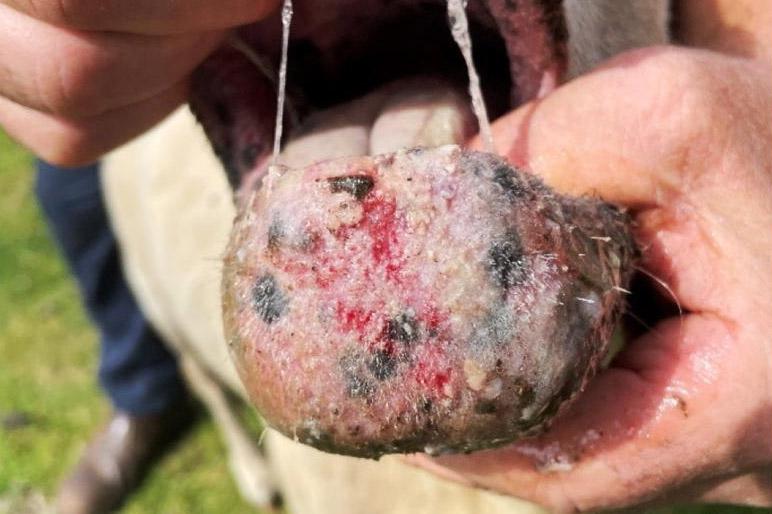
Hobbs said that symptoms that the clinic is seeing in sheep include swollen feet, sheep off their feet, swollen heads, lesions in their mouths, erosions on the dental pads on the upper part of the mouth.
Many of the clients at the clinic have vaccinated for bluetongue Hobbs highlighted. However, mainly breeding stock have been vaccinated, therefore cases of the virus are being seen more in lambs.
“For farms that have vaccinated their breeding stock, the lambs do seem to be more mildly affected than those that didn’t do any vaccine, which is suggesting that there has been at least some colostrum transfer and that colostrum antibody is still having some benefit.
“We are yet to find any cases in sheep or cattle that have received a vaccine.
“Although we’ve had a phone call today [about] a dairy cow that may be bluetongue positive that was vaccinated a few months ago.
“No vaccine is 100%, but, really, vaccination is absolutely key here.”
Misinformation
He also warned that there is a lot of misinformation circulating online about “along the line of that we shouldn’t vaccinate, vaccination is pointless, there’s 29 strains of bluetongue”.
However, he pointed out that only three strains of bluetongue have been detected in the UK so far and 97% of these are strain three.
“So what we’re dealing with now is almost certainly bluetongue three that has overwintered off the run of a large number of cases that were seen towards the back end of last year.
“This hot dry weather has led to rapid viral replication in the midges.”
Peak season for bluetongue is around the months of September and October, as viral load continues to increase, he said. Vaccination is crucial, he added.
Hobbs noted that there is plenty of vaccine available from manufacturers. However, supply is challenging currently due to the sudden surge in demand, with wholesalers struggling to keep up with the number of orders.
Case numbers
Since the Irish Farmers Journal last reported on case numbers in the UK, which as of 30 July stood at over 130 sheep and cattle testing positive, an additional 17 animals have tested positive for the virus.
The vast majority of these newly identified cases have been detected in southwest England in the areas of Devon and Somerset, according to the Department for Environment, Food & Rural Affairs.
Hobbs highlighted that testing labs are running about two weeks behind on testing. Therefore, the reported case numbers are a long way behind the actual number of current bluetongue cases.
“Undoubtedly, the case numbers are in the 400s or 500s-plus,” he said.




SHARING OPTIONS