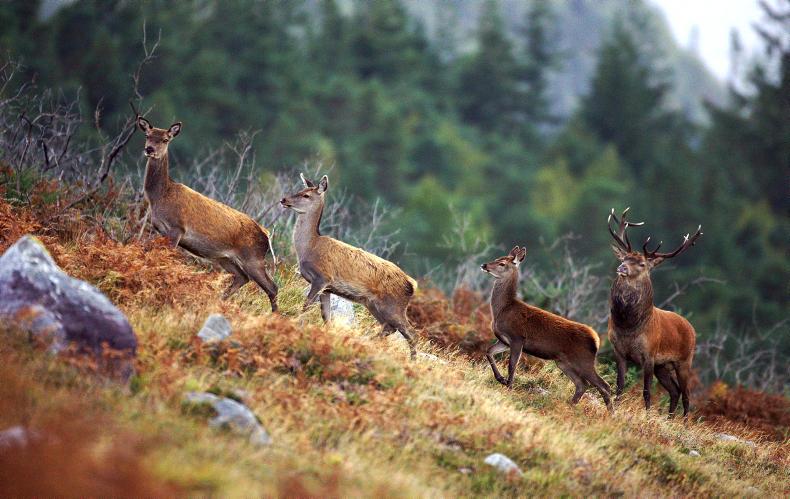
The wild deer population is carrying very low levels of BVD and IBR diseases and is free of bluetongue, according to a study carried out by scientists in the Department of Agriculture, AHI and UCD.
ADVERTISEMENT
The wild deer population is carrying very low levels of BVD and IBR diseases and is free of bluetongue, according to a study carried out by scientists in the Department of Agriculture, AHI and UCD.
Levels of the Schmallenberg virus are in line with what is reported in cattle and sheep.
The study looked for the presence of antibodies that would indicate exposure to BVD, Schmallenberg and bluetongue viruses in samples taken from 390 deer killed by licensed hunters across the Republic and Northern Ireland. It looked for antibodies relating to the virus that is linked to IBR disease. Hunters were provided with sampling kits, instructions, a submission form and packaging for retuning samples. They identified the date and location of sampling as well as the species, sex and age of the animal.
This content is available to digital subscribers and loyalty code users only. Sign in to your account, use the code or subscribe to get unlimited access.
The reader loyalty code gives you full access to the site from when you enter it until the following Wednesday at 9pm. Find your unique code on the back page of Irish Country Living every week.
CODE ACCEPTED
You have full access to the site until next Wednesday at 9pm.
CODE NOT VALID
Please try again or contact support.
The wild deer population is carrying very low levels of BVD and IBR diseases and is free of bluetongue, according to a study carried out by scientists in the Department of Agriculture, AHI and UCD.
Levels of the Schmallenberg virus are in line with what is reported in cattle and sheep.
The study looked for the presence of antibodies that would indicate exposure to BVD, Schmallenberg and bluetongue viruses in samples taken from 390 deer killed by licensed hunters across the Republic and Northern Ireland. It looked for antibodies relating to the virus that is linked to IBR disease. Hunters were provided with sampling kits, instructions, a submission form and packaging for retuning samples. They identified the date and location of sampling as well as the species, sex and age of the animal.
If you would like to speak to a member of our team, please call us on 01-4199525.
Link sent to your email address
We have sent an email to your address. Please click on the link in this email to reset your password. If you can't find it in your inbox, please check your spam folder. If you can't find the email, please call us on 01-4199525.
ENTER YOUR LOYALTY CODE:
The reader loyalty code gives you full access to the site from when you enter it until the following Wednesday at 9pm. Find your unique code on the back page of Irish Country Living every week.





SHARING OPTIONS