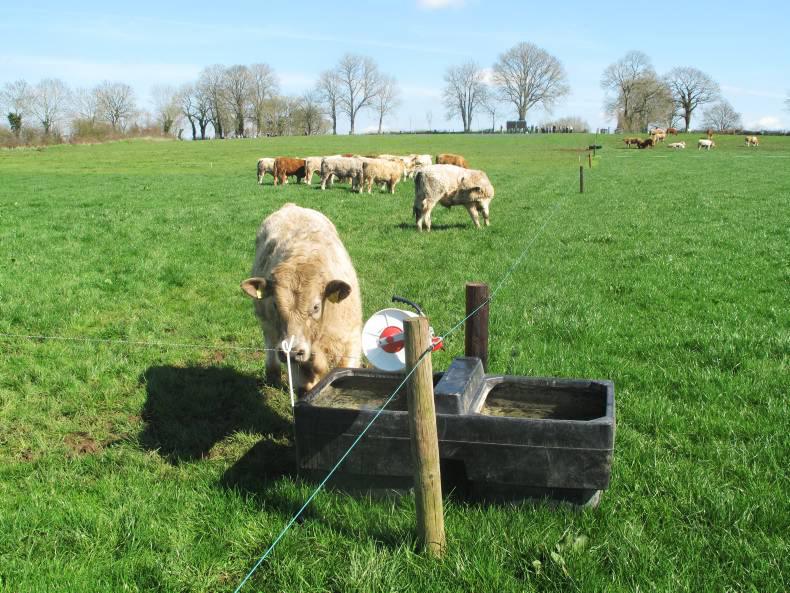
Teagasc Spring Grass Walk on the farm of Peter Hynes, Aherla, Co Cork. Photo: Donal O'Leary.
ADVERTISEMENT
The main criterion for spring grazing is a flexible attitude. Do not be afraid to turn animals out early and bring them back in if soils get too saturated. Any increase in the proportion of grass in the diet will pay dividends.
On/off grazing has been successfully used on beef farms to retain animals at pasture during periods of heavy rainfall. It is also used as a strategy for earlier turnout of animals on heavier soil types. On/off grazing is where the animals are let out to grass with an appetite (feed is restricted when indoors). They then graze continuously and are removed from the paddock when finished grazing (when you see animals start to lie down or walk about) and brought back to the shed. This minimises soil damage but ensures that grass is being well utilised.
Dos:
ADVERTISEMENT
Have a flexible attitude.
Strip grazing can be used in smaller paddocks. One section could be used per day.
Where possible use a back fence (ie, put a temporary wire behind animals preventing them from grazing or walking on the grazed area).
Where possible, practice on/off grazing (ie, leaving the animals out to graze and then taking them off the pasture again).
Have multiple access points into a paddock.
Place water troughs so that they will service several strips or divisions when a strip wire is used.
Don’ts:
Don’t let animals poach excessively.
Don’t give animals a full paddock as grass will be soiled, trampled into the ground and not utilised.
Do not graze the paddocks with high covers (ie, those with the most grass on them) as they will be grossly under-utilised.
Do not let animals walk long distances to water troughs.
This article is an excerpt from Grazing Guide, which was published jointly by the Irish Farmers Journal and Teagasc.
This content is available to digital subscribers and loyalty code users only. Sign in to your account, use the code or subscribe to get unlimited access.
The reader loyalty code gives you full access to the site from when you enter it until the following Wednesday at 9pm. Find your unique code on the back page of Irish Country Living every week.
CODE ACCEPTED
You have full access to the site until next Wednesday at 9pm.
CODE NOT VALID
Please try again or contact support.
The main criterion for spring grazing is a flexible attitude. Do not be afraid to turn animals out early and bring them back in if soils get too saturated. Any increase in the proportion of grass in the diet will pay dividends.
On/off grazing has been successfully used on beef farms to retain animals at pasture during periods of heavy rainfall. It is also used as a strategy for earlier turnout of animals on heavier soil types. On/off grazing is where the animals are let out to grass with an appetite (feed is restricted when indoors). They then graze continuously and are removed from the paddock when finished grazing (when you see animals start to lie down or walk about) and brought back to the shed. This minimises soil damage but ensures that grass is being well utilised.
Dos:
Have a flexible attitude.
Strip grazing can be used in smaller paddocks. One section could be used per day.
Where possible use a back fence (ie, put a temporary wire behind animals preventing them from grazing or walking on the grazed area).
Where possible, practice on/off grazing (ie, leaving the animals out to graze and then taking them off the pasture again).
Have multiple access points into a paddock.
Place water troughs so that they will service several strips or divisions when a strip wire is used.
Don’ts:
Don’t let animals poach excessively.
Don’t give animals a full paddock as grass will be soiled, trampled into the ground and not utilised.
Do not graze the paddocks with high covers (ie, those with the most grass on them) as they will be grossly under-utilised.
Do not let animals walk long distances to water troughs.
This article is an excerpt from Grazing Guide, which was published jointly by the Irish Farmers Journal and Teagasc.
If you would like to speak to a member of our team, please call us on 01-4199525.
Link sent to your email address
We have sent an email to your address. Please click on the link in this email to reset your password. If you can't find it in your inbox, please check your spam folder. If you can't find the email, please call us on 01-4199525.
ENTER YOUR LOYALTY CODE:
The reader loyalty code gives you full access to the site from when you enter it until the following Wednesday at 9pm. Find your unique code on the back page of Irish Country Living every week.
SHARING OPTIONS