That means it has rained for almost 80% of the year and for 98 days more than the northwest had received by this time last year.
Both January and February saw continuous rainfall and not one day was without rain in Bellmullet, Co Mayo.
During the first month of the year, 186mm of rain fell, making it the wettest month so far this year.
While June gave seven continuous dry days in the northwest, it also gave a large amount of rainfall in the region – 20mm less than January to be precise. The 14 June gave 25.9mm of rain alone, making it the wettest day of the year to date.
To put this in perspective, Met Éireann defines a “wet day” as one where 1mm of rain is recorded in a day and a “heavy precipitation day” as one where at least 10mm is recorded.
July also saw a lot of rain, more so than April and May combined, and with only six days completely rain free.
August, with 11 dry days, was considerably better than May, June and July.
Since Monday, September has given 41.5mm of rain in Belmullet, giving an average of 8.3mm per day.
This time last year, only 2.8mm of rain had fallen by 5 September.
What does all this rain mean for farmers?
Speaking to the Irish Farmer’s Journal, Michael Chance, IFA chair for Donegal and a tillage farmer near Letterkenny, said that although “it’s been difficult this end of the county, with cotton and cereal being very wet from the very difficult weather, down the south of the county it’s been worse”.
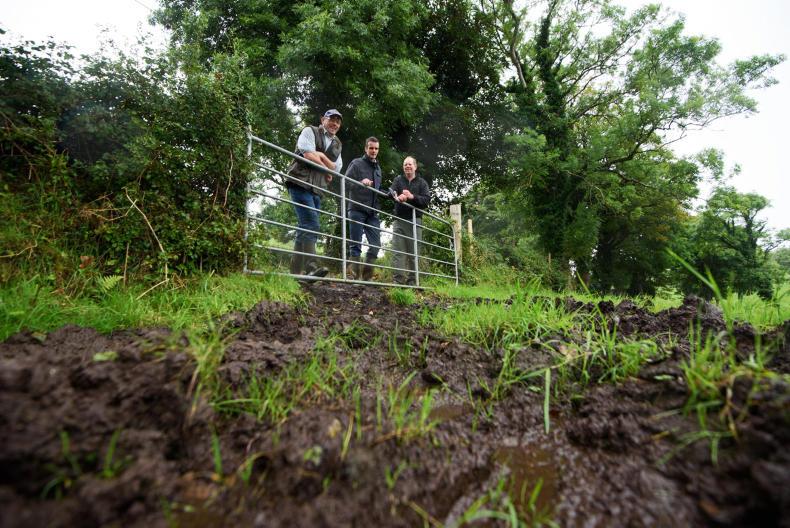
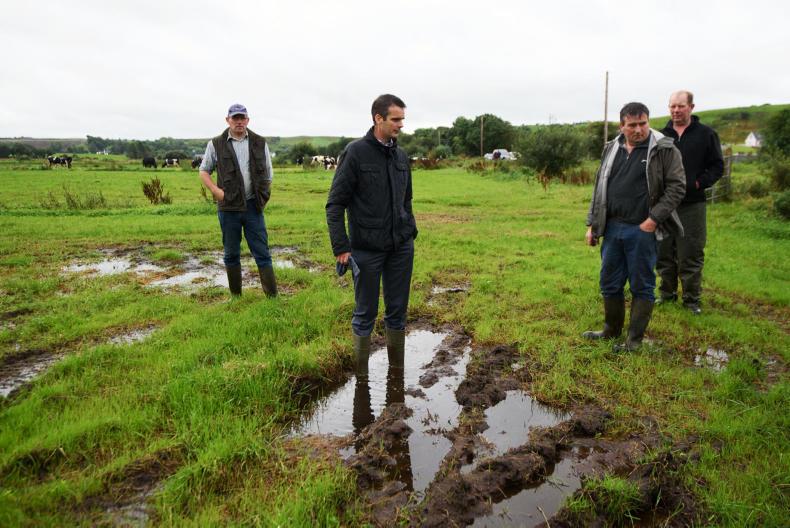
Chance said that areas like Ballintra have been hit badly, “where it has been raining every night for the last five nights”.
Though the weather has been mild, the rain has been continuous and it is putting pressure on farmers in the area for the harvest.
In south Donegal, Chance noted: “Farmer’s can’t get to the stage where silage can be cut, so people are using up their winter supplies.”
He gave the example of George Anderson’s farm: “They are having difficulty with the council and the Environmental Protection Agency who won’t allow drainage of his fields.
“He has a field cut in a week but the silage equipment isn’t going to fit in and he’s going to try go in with a round baler. Areas like Sligo and down that way are similarly bad,” Chance added.
IFA president Joe Healy visited farms in Ballintra and Dunikeely earlier this week and said: “The situation is very bad in many parts of Donegal at the moment and the reality is that unless we see some drier weather, we could be heading for a crisis in the sector.”
Read more:
http://www.farmersjournal.ie/met-ireann-issues-blight-warning-223837
http://www.farmersjournal.ie/welsh-farmers-save-festival-goers-cars-223845
That means it has rained for almost 80% of the year and for 98 days more than the northwest had received by this time last year.
Both January and February saw continuous rainfall and not one day was without rain in Bellmullet, Co Mayo.
During the first month of the year, 186mm of rain fell, making it the wettest month so far this year.
While June gave seven continuous dry days in the northwest, it also gave a large amount of rainfall in the region – 20mm less than January to be precise. The 14 June gave 25.9mm of rain alone, making it the wettest day of the year to date.
To put this in perspective, Met Éireann defines a “wet day” as one where 1mm of rain is recorded in a day and a “heavy precipitation day” as one where at least 10mm is recorded.
July also saw a lot of rain, more so than April and May combined, and with only six days completely rain free.
August, with 11 dry days, was considerably better than May, June and July.
Since Monday, September has given 41.5mm of rain in Belmullet, giving an average of 8.3mm per day.
This time last year, only 2.8mm of rain had fallen by 5 September.
What does all this rain mean for farmers?
Speaking to the Irish Farmer’s Journal, Michael Chance, IFA chair for Donegal and a tillage farmer near Letterkenny, said that although “it’s been difficult this end of the county, with cotton and cereal being very wet from the very difficult weather, down the south of the county it’s been worse”.
Chance said that areas like Ballintra have been hit badly, “where it has been raining every night for the last five nights”.
Though the weather has been mild, the rain has been continuous and it is putting pressure on farmers in the area for the harvest.
In south Donegal, Chance noted: “Farmer’s can’t get to the stage where silage can be cut, so people are using up their winter supplies.”
He gave the example of George Anderson’s farm: “They are having difficulty with the council and the Environmental Protection Agency who won’t allow drainage of his fields.
“He has a field cut in a week but the silage equipment isn’t going to fit in and he’s going to try go in with a round baler. Areas like Sligo and down that way are similarly bad,” Chance added.
IFA president Joe Healy visited farms in Ballintra and Dunikeely earlier this week and said: “The situation is very bad in many parts of Donegal at the moment and the reality is that unless we see some drier weather, we could be heading for a crisis in the sector.”
Read more:
http://www.farmersjournal.ie/met-ireann-issues-blight-warning-223837
http://www.farmersjournal.ie/welsh-farmers-save-festival-goers-cars-223845






SHARING OPTIONS