


Farmers were faced with a further price cut during October, with prices falling 4c in all factories in the second week of the month. Positions remain unchanged in the league, with reports of farmers supplying the most southerly factories benefiting by an extra cent or two. However, this isn’t much consolation when prices are on average 17c below production costs.
Across Europe, markets continue to prove difficult and farmers are still feeling the effects of the Russian ban. New markets, such as China, have taken some of this surplus product, but it has failed to prove as economically beneficial as the Russian market due to the type of cuts being exported.
EU forecast meeting
As executive of IFA’s National Pigs Committee, I attended the forecast working group meeting on pigmeat in Brussels during October.
The main items discussed were future slaughter numbers and prices. The total number of animals slaughtered is expected to increase by 2.7% in 2015 compared with 2014.
Data presented for Belgium, Denmark, Germany, Ireland, France, Italy, Hungary, Holland, Austria and Romania seems to indicate a decrease in the number of sows in May to June 2015 when compared with the same period of 2014.
The number of breeding sows decreased by 0.6%, the number of served sows decreased by 0.7% and the number of sows served for the first time decreased by 3.4%.
This seems to suggest that production may slow down (or even decrease) in 2016.
The weekly EU price for pig carcases is currently well below (€0.12) the average price (2010 to 2014), reflecting the impact of the Russian ban on import of pig products from the EU, but also the increase of production in the EU.
The commission is expected to open a private storage scheme by the end of the year. The objective is to remove a considerable volume of product from the market which should enable the market to recover by stimulating the fragile recovery in prices. The impact will depend on the opening date, duration of the scheme, the amount of aid and the type of products included.
In the first seven months of 2015, the total EU exports in terms of product weight increased by 4.9% when compared with the same period of 2014.
In this period, the biggest markets for EU exports in terms of product weight were China with 551,906t (32.9%), Japan with 160,964t (9.6%), South Korea with 139,049t (8.3%) and Hong Kong with 136,206t (8.1%)..
WHO report
The World Health Organistion (WHO) has received a number of queries, expressions of concern and requests for clarification following the publication of a report from the International Agency for Research on Cancer (IARC) relating to processed meat and colorectal cancer.
IARC’s review confirms the recommendation in WHO’s 2002 Diet, nutrition and the prevention of chronic diseases report, which advised people to moderate consumption of preserved meat to reduce the risk of cancer. The latest IARC review does not ask people to stop eating processed meats.
Cancer is a complex disease that may depend on many factors, such as genetics, diet, aging and our environment and lifestyle. It is not just one specific food group alone that defines the risks associated with health, but our diet as a whole, together with any of the aforementioned factors and physical activity.
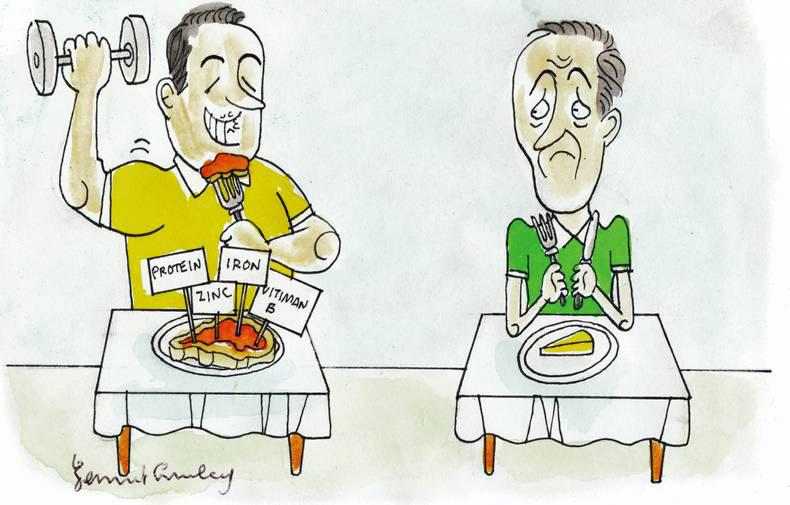
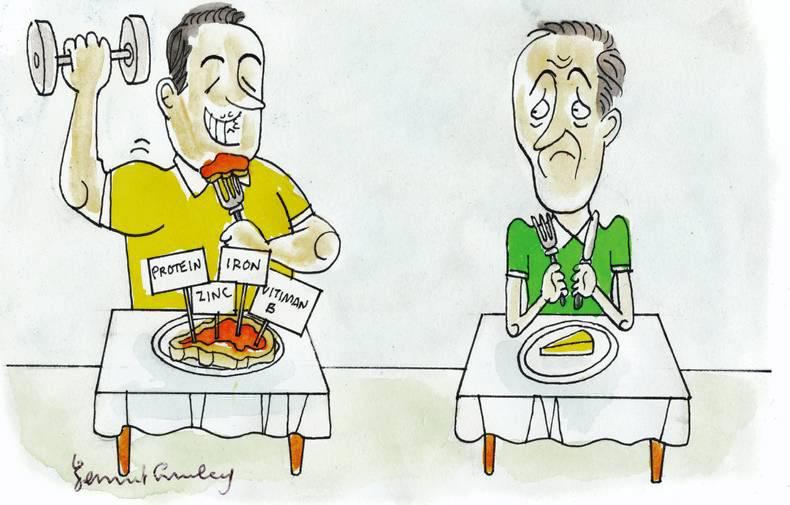
Red meat provides high biological value proteins and it is an important source of nutrients, such as B vitamins, iron and zinc, which support the growth, development and upkeep of our bodies.
Red meat is also a rich source of vitamin B12, which is vital to ensure the proper functioning of our bodies. It also contains significant levels of other B vitamins, including thiamine, riboflavin, pantothenic acid, folate and vitamin B6.
Red and processed meats play an important role in a balanced diet, providing protein, iron, zinc and B vitamins. There’s no evidence that removing meat from your diet protects against cancer.
In fact, a major long-term study by Oxford University has shown no difference in colorectal cancer rates between meat eaters and vegetarians.




SHARING OPTIONS