



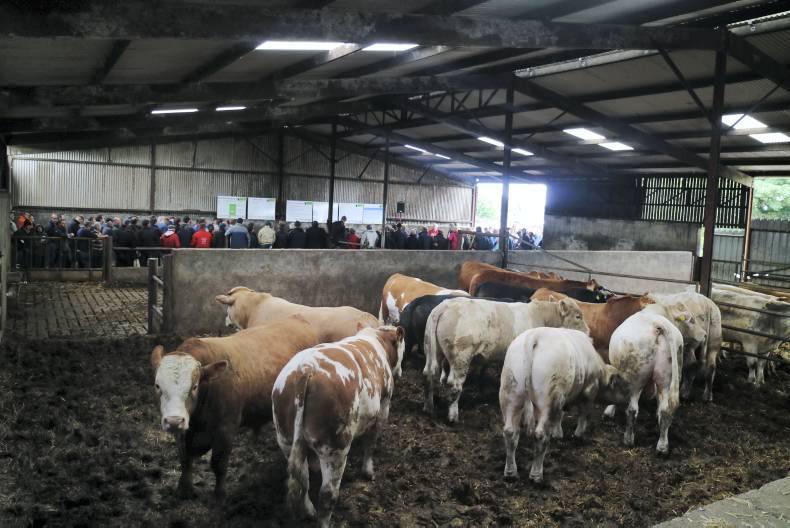
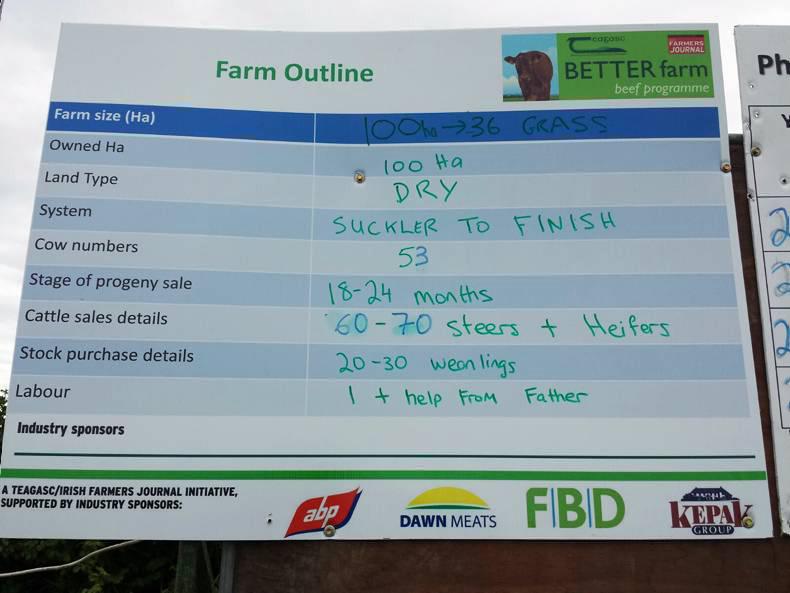

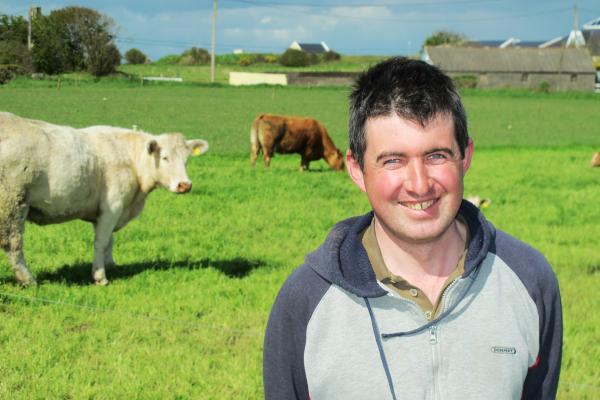
James operates a spring-calving herd of 55 cows, bringing all progeny to slaughter. He also buys in extra cattle for finishing and grows wheat, barley, beet and peas – some of which are incorporated into his finishing rations.
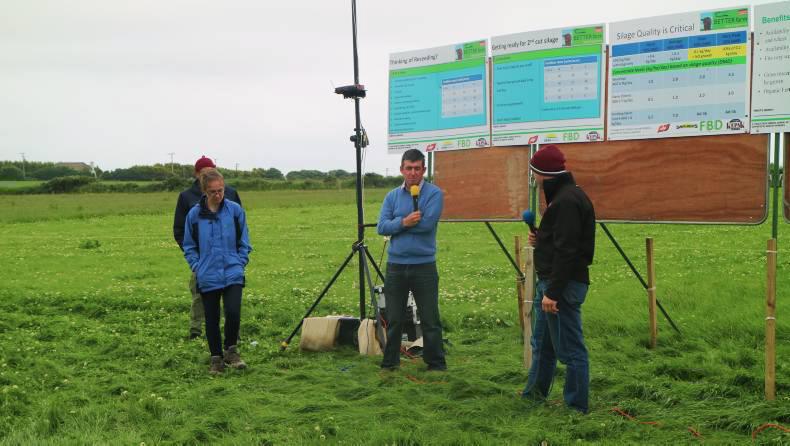
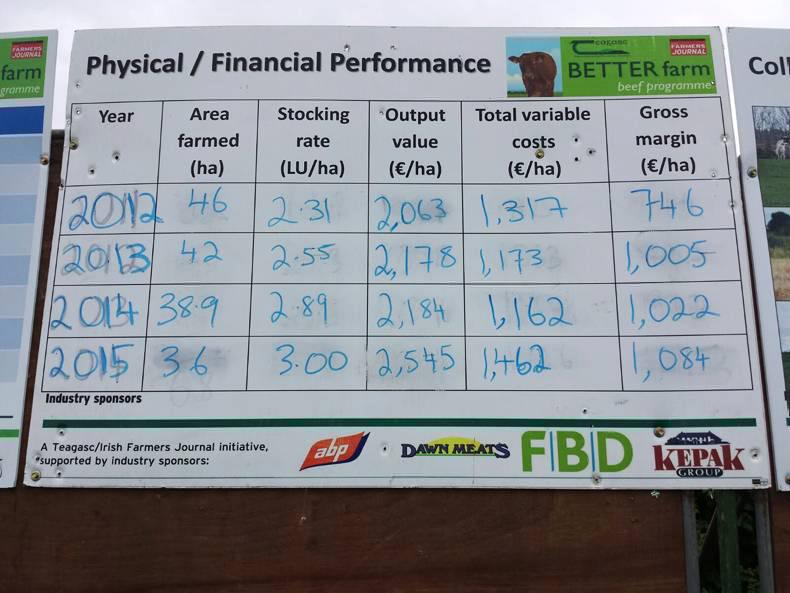
At the first stand, James’s advisor John Horgan told the crowd of how the farm has intensified since joining the programme in 2013. James has pushed his stocking rate from 2.3 to 3.0 LU/ha. As a result, the farm’s gross profit has increased by 45%.
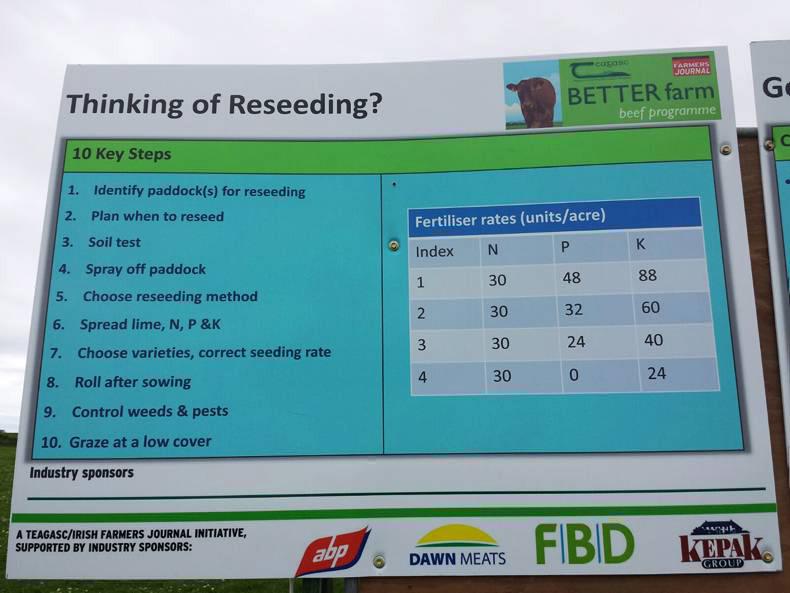
The focus then turned to reseeding. Karen Dukelow showed patrons how to use the Teagasc pasture profit index when selecting grass varieties. Land type and harvesting method (grazing/silage) must be taken into account when selecting grass mixes. She said that the benefits of reseeding are felt in the shoulders of the year in the form of an earlier turnout.
Optimum concentrates
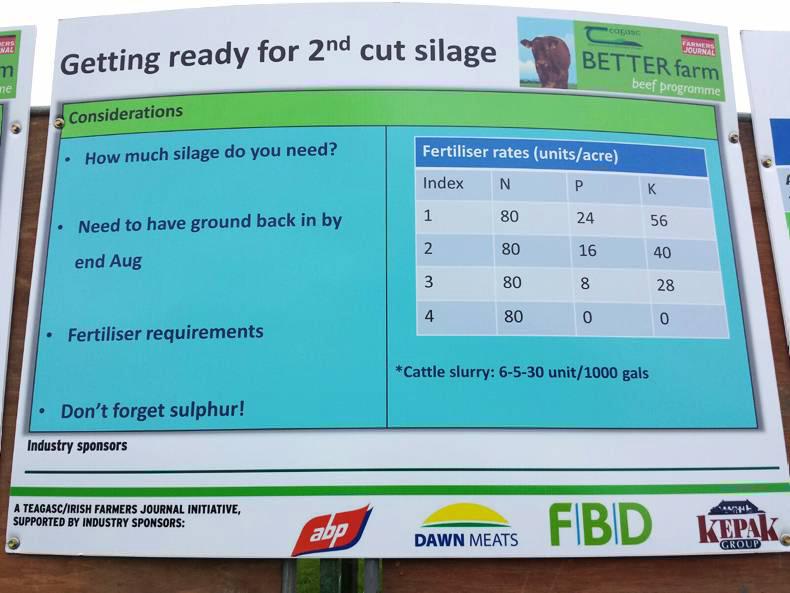
The crowd learned of how 85% and 90% of James’s soils contained optimum concentrations of P and K, respectively. In addition 80% of the land was within the desired pH (lime) range. The farm’s nutrient-rich soils are driving grass growth rates – last year the Kenneally farm grew 13t DM/ha, 45% ahead of the national average. Indeed, paddocks cut a fortnight beforehand were at grazing height on the day of the walk. Dukelow urged the crowd to keep up nitrogen application to prevent sward stemminess. She reminded us that ‘grass is a crop that gets stressed and needs feeding’.
Teagasc tillage adviser Eamon Lynch presented data pertaining to recent experiments on dock control. He showed how spraying with the herbicide Dockstar at sowing offered 91% dock control for almost five years. To combat mature docks, Forefront offered 81% control for two years. The take home message was to take action when sowing, rather than adopting a fire-fighting approach, when eradicating docks.
Herd fertility performance
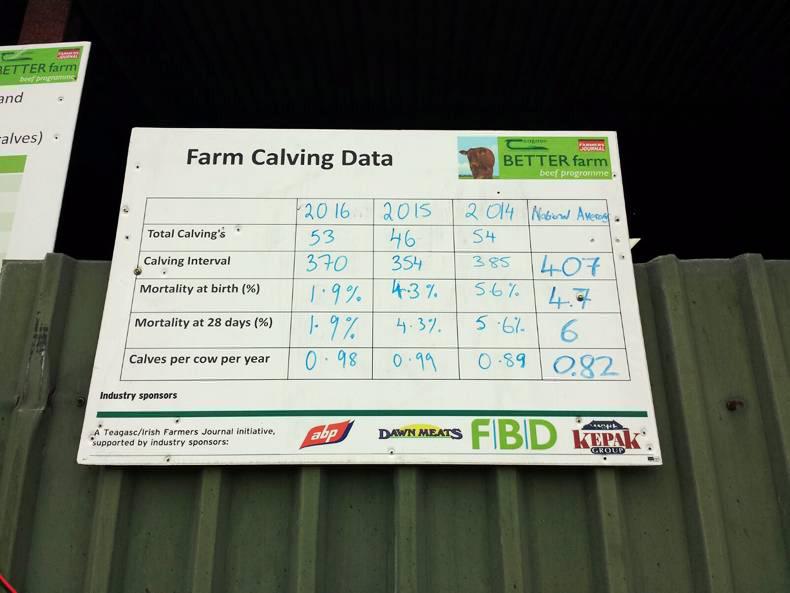
At stand three, advisers Conor Kavanagh and Ruth Fennell compared James Kenneally’s herd fertility performance with that of the national average. James’s calving interval is 370 days while the national average is 407. This alone translates into a difference of over €90 per cow yearly. His calves per cow figure of 0.98 is also streets ahead of the national average figure 0.80. To achieve this performance, James has simply identified his most fertile, milky cows and focused on retaining their progeny as replacements.
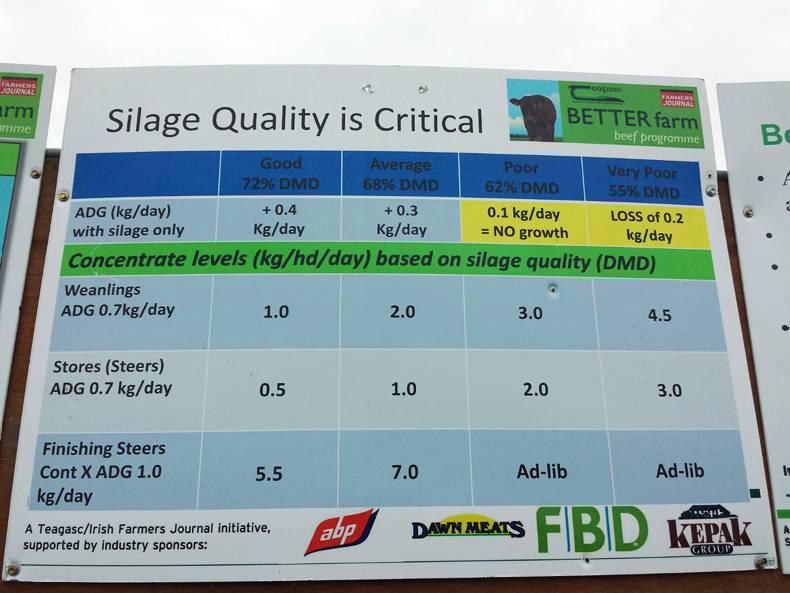
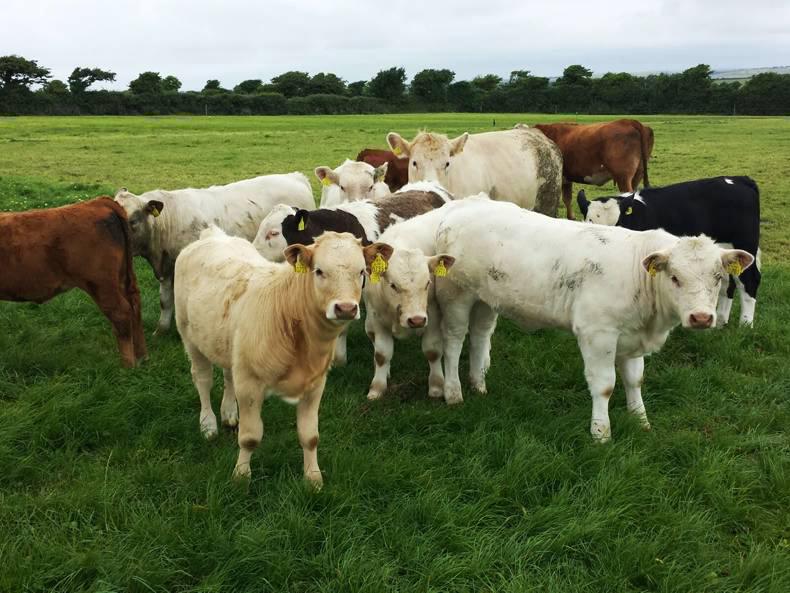
At the final stand, beef adviser Michael Byrne talked cattle finishing. He outlined the important aspects to look for in both weanling and finishing rations, as well as presenting James’s budgets for bulls and heifers. Having consumed 1.6t of meals in their lifetime and requiring a breakeven price of €3.90 (vs. €3.30 for bulls), James is hesitant to kill any heifers young (15-18 months) going forward. What drives this heifer system is the expected elevated beef price at slaughter time, but both Michael Byrne and programme manager Alan Dillon were sceptical as to its viability. Alan then reminded the crowd of the risks in undertaking an under 16-month bull system.
Clickable Text">Attention to detail saves BETTER farm €14,800 per year



SHARING OPTIONS