


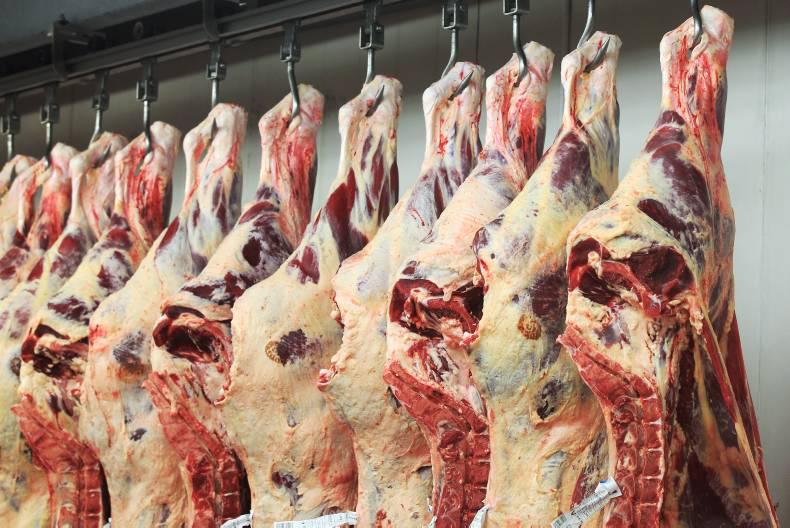
The weekly kill last week hit 30,426, which is up 2,760 on the week before. The rise was driven by a larger than usual disposal of cows, with over 1,200 more killed last week than the week before, while the heifer and steer kill was also up, by 835 and 530 respectively.
Extra cows in the system had been well flagged recently, with numbers at mart sales also well up and factory agents actively buying at them.
Despite the extra steers and heifers, many agents have informed the Irish Farmers Journal that there is no great rush of cattle, with most of what they look at being several weeks away from being ready.
Of course, factory feedlots and contracted cattle are part of the mix. Emptying of feedlots at this time of year can give the impression of more cattle about than there really is.
No doubt this has been a feature of the trade in the past week.
As for prices, there is a clear effort by factories to get money out of the base price. €4.10/kg has been paid in many cases this week so far on steers and €4.20/kg on heifers.
For the end of this week and going into next week, some factories are trying to offer €4.00/kg for steers and €4.10/kg for heifers, but the view is that they won’t succeed in getting many cattle at this level.
It is generally accepted that if they succeed in cutting prices at all, it will be limited to 5c/kg on steers and heifers.
The steak meat trade continues to be strong in the home market, as does the rib trade to France, while top-spec QA burger meat is in strong demand also.
Against this background and with grass cattle still not coming on to the market in any great numbers, farmers are still in a strong negotiating position.
IFA national livestock chair Angus Woods is also encouraging farmers to be strong sellers, as his information confirms that very few grass cattle are ready in any part of the country.
Young bull numbers are steady and heading out of season and it is thought that €4.00/kg will be the going rate for those that are under-16 months.
Older bulls are a speciality this time of year and produced almost to order, with special arrangements made with factories to handle them.
The cow trade has been cooler over the past number of weeks, with almost a preference for plainer cows and little enthusiasm for the top-quality suckler cows.
They are making €3.50/kg for exceptional U grades and €3.40/kg for R grades. O3 cows are making €3.20/kg or maybe a little more where there are good numbers. P+ grades are making €3.10 and plainer P grades making €3.00/kg.
Northern Ireland
Although the kill was up, reported prices remained strong. The average was well ahead of quotes at £3.31p/kg (€4.51/kg) for U3 steers and £3.32p/kg (€4.52/kg) for U3 heifers.
Quotes are still in the £3.22p/kg (€4.39/kg) to £3.26p/kg (€4.44/kg) range, with plenty of cattle bought at these prices or below if they incur penalties.
However, farmers with batches of cattle are making £3.30/kg (€4.50/kg) at least, with as high as £3.40/kg (€4.64/kg) paid.
Britain
In Britain, steer numbers were down slightly at 14,168, as were heifer numbers at 7,917.
Prices continued to strengthen, with the average steer price up by 2.4p/kg (3c/kg) to £3.23/kg (€4.40/kg), while heifers were also marginally higher at almost £3.26/kg (€4.44/kg) average.
The cow kill in Britain was 10% higher than the previous week at 6,072, with average price for O+3 grades £2.55/kg (€3.48/kg).




SHARING OPTIONS