Photosensitisation refers to a painful condition where the affected animal’s skin is sensitive to light. This is a condition that can affect all farm animals, although it is much more common in cattle. It can lead to skin damage and loss. Farmers must be especially aware of the signs during sunny weather.
Cause
There are three types of photosensitisation in cattle.
Primary photosensitisation occurs following the ingestion of a plant or weed containing photochemical agents. These chemicals build up within the skin allowing light to induce a painful inflammatory response. Plants associated with this type of photosensitisation include St John’s Wort and Bog Asphodel. This type of photosensitisation is not very common.Secondary photosensitisation is by far the most common form of this disease and it occurs secondary to liver disease. This can be mild to moderate liver disease, usually due to liver fluke, or it can occur as one of the signs of liver failure associated with ragwort poisoning, for example. In the case of secondary photosensitisation, the breakdown products of grass, which are normally broken down by the liver following absorption from the rumen, are not removed sufficiently, allowing the build-up of these chemicals (particularly phyloerythrin) in the skin. These react with light to set off a severe, painful inflammatory reaction in the skin with resulting clinical signs.Tertiary photosensitisation is due to a genetic abnormality with porphyrin metabolism in the body and this is extremely rare.Symptoms
The first parts of the body to be affected in cases of photosensitisation are the hairless areas, ie the muzzle, the eyes, the teats/udder and the scrotum. These areas become reddened and sore.
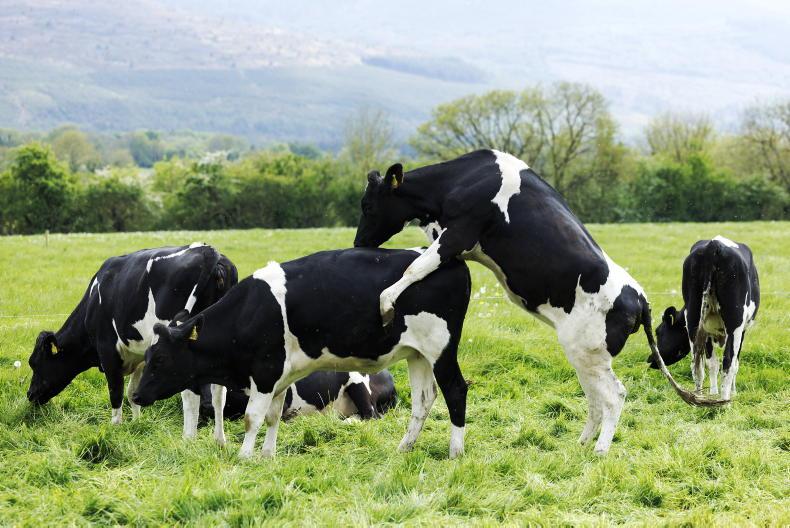
Following this, the white areas of the body are affected and, as a result, animals with more white on their bodies are more prone to photosensitisation. The skin in the white areas of the body becomes very sore and the animal can become extremely agitated. Cattle stop eating due to pain and instinctively try to find shelter in many cases and so are often found on their own next to a ditch or under a tree.
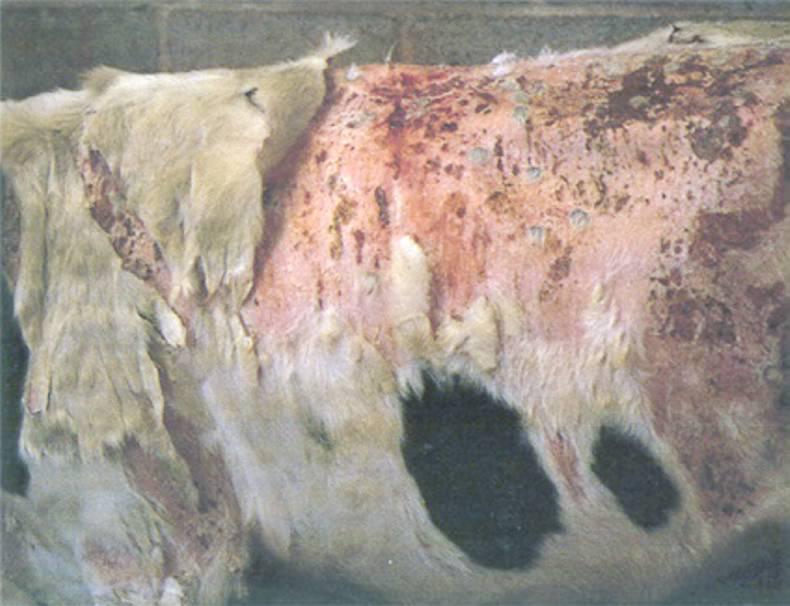
In the most severe and painful cases, cattle can be seen to roll around on the ground similar to an animal with a pain in the abdomen. Affected animals often have scant faeces or pass dry, pale-coloured dung. After a few days, even the coloured skin can be sore and inflamed. In some cases, large areas of white skin will slough completely off the body and it can take a few weeks before the underlying softer skin looks normal. Occasionally skin that sloughs off can be replaced by hard horn-like tissue which is permanent.
Treatment
First and foremost, the animal must be kept in out of the sun for at least a week to ten days, and longer in cases with skin sloughing. The animal should be injected with anti-inflammatories to relieve the worst of the pain in the early stages. Long-acting antibiotics can be given in cases where skin sloughing is likely in order to prevent secondary skin infections (bacterial dermatitis). As secondary photosensitisation mainly occurs in animals with an underlying fluke burden, it is important that all cases are routinely treated for liver fluke.
Prevention and control
Good control of liver fluke on-farm will automatically reduce the likelihood of cases of photosensitisation. Certainly, removing plants such as ragwort and St John’s Wort from the grazing and silage/hay meadows will also significantly reduce the risk of disease.
Read more
Keeping cows cool in the sun
Photosensitisation refers to a painful condition where the affected animal’s skin is sensitive to light. This is a condition that can affect all farm animals, although it is much more common in cattle. It can lead to skin damage and loss. Farmers must be especially aware of the signs during sunny weather.
Cause
There are three types of photosensitisation in cattle.
Primary photosensitisation occurs following the ingestion of a plant or weed containing photochemical agents. These chemicals build up within the skin allowing light to induce a painful inflammatory response. Plants associated with this type of photosensitisation include St John’s Wort and Bog Asphodel. This type of photosensitisation is not very common.Secondary photosensitisation is by far the most common form of this disease and it occurs secondary to liver disease. This can be mild to moderate liver disease, usually due to liver fluke, or it can occur as one of the signs of liver failure associated with ragwort poisoning, for example. In the case of secondary photosensitisation, the breakdown products of grass, which are normally broken down by the liver following absorption from the rumen, are not removed sufficiently, allowing the build-up of these chemicals (particularly phyloerythrin) in the skin. These react with light to set off a severe, painful inflammatory reaction in the skin with resulting clinical signs.Tertiary photosensitisation is due to a genetic abnormality with porphyrin metabolism in the body and this is extremely rare.Symptoms
The first parts of the body to be affected in cases of photosensitisation are the hairless areas, ie the muzzle, the eyes, the teats/udder and the scrotum. These areas become reddened and sore.
Following this, the white areas of the body are affected and, as a result, animals with more white on their bodies are more prone to photosensitisation. The skin in the white areas of the body becomes very sore and the animal can become extremely agitated. Cattle stop eating due to pain and instinctively try to find shelter in many cases and so are often found on their own next to a ditch or under a tree.
In the most severe and painful cases, cattle can be seen to roll around on the ground similar to an animal with a pain in the abdomen. Affected animals often have scant faeces or pass dry, pale-coloured dung. After a few days, even the coloured skin can be sore and inflamed. In some cases, large areas of white skin will slough completely off the body and it can take a few weeks before the underlying softer skin looks normal. Occasionally skin that sloughs off can be replaced by hard horn-like tissue which is permanent.
Treatment
First and foremost, the animal must be kept in out of the sun for at least a week to ten days, and longer in cases with skin sloughing. The animal should be injected with anti-inflammatories to relieve the worst of the pain in the early stages. Long-acting antibiotics can be given in cases where skin sloughing is likely in order to prevent secondary skin infections (bacterial dermatitis). As secondary photosensitisation mainly occurs in animals with an underlying fluke burden, it is important that all cases are routinely treated for liver fluke.
Prevention and control
Good control of liver fluke on-farm will automatically reduce the likelihood of cases of photosensitisation. Certainly, removing plants such as ragwort and St John’s Wort from the grazing and silage/hay meadows will also significantly reduce the risk of disease.
Read more
Keeping cows cool in the sun







SHARING OPTIONS