Beet is a high-yielding fodder crop with the potential to be fed at significant inclusion rates in the diet of ruminant animals. Beet – both fodder beet and sugar beet – is still an important crop in Ireland, with over 9,200ha (23,000 acres) sown in 2015. Fodder beet accounts for 93% of the sown area, with sugar beet making up the difference. Cork is the county with most beet grown, accounting for over 25% of national beet area sown. On an energy basis, 5kg of fresh fodder beet provides the equivalent energy as 1kg of barley. Beet is very palatable and high intake levels are possible, making it a very suitable feed for finishing cattle.
On the negative side, fodder beet is low in protein, phosphorus and calcium, so supplementation is essential. It is also a potentially dangerous feed if introduced into diets too quickly and can lead to acidosis. Slow build-up in the diet is essential. Poorly chopped or whole fodder beet can lead to choking, and there are casualties reported each year. Additional costs of fodder beet include washing and associated tare, frost losses and transportation costs.
Feeding fodder beet
Introduce fodder beet into cattle or sheep diets gradually. Freshly harvested beet must be stored for four to five days before feeding as it can contain high levels of potentially poisonous nitrate. As a rough guide, you can feed 3kg to 4kg of fodder beet per 100kg of animal liveweight.
Farmers finishing heavy cattle could feed in excess of 25kg per day, but always start off at low levels. For heavy cattle, start by feeding 3kg to 5kg fresh beet and increase by 3kg to 5kg every five days. If you follow this guide, it can take up to 21 days for maximum intake to be achieved.
All cattle should be eating beet before the feed rate is increased. It is advisable that cattle have free access to forage such as straw or dry silage to keep the rumen working correctly.
As all cattle will want access to eat fresh beet when it is fed, feed space of 600mm for finishing cattle is required. If the daily feed rate to cattle goes above 15kg, then feed twice per day. For weanlings weighing between 300kg and 400kg, a feeding rate up to 15kg of beet per day is possible after the build-up phase.
Fodder beet is always fed with a protein balancer as beet alone is on average 9% crude protein (CP) on a dry matter basis. Finishing cattle require an overall diet of 12% to 13% CP, while a level of 16% is desirable in young weanlings. One of the simplest balancers is feeding soyabean meal.
As a guide, a feed level of 20kg fodder beet to finishing cattle needs an addition of 0.5kg soyabean meal, but supplementation depends on other ingredients being fed in the mix. You should speak to your Teagasc adviser and ask them to check the overall mix in the ration reckoner programme before you start feeding.
Other protein balancers which are priced well at the moment include maize distillers and maize gluten. Rapeseed meal is less competitive at current prices.
Washing and chopping
The issue of washing and chopping beet comes up in discussion at this time each year as farmers plan their winter feeding regime. The necessity to wash or chop beet is dependent on issues such as the variety being grown, the dry matter of the beet variety and conditions around harvest.
Research carried out by Teagasc has shown that unwashed, freshly harvested beet can carry up to 18% clay as tare in a very wet year. This year you would expect tare to be much less given current favourable ground conditions.
Most farmers accept that feeding dirty beet to cattle is undesirable. A high level of clay entering the rumen has the potential to cause digestive upset. Clay has no feed value. An accumulation of clay in the rumen is, at best, taking up valuable space which could otherwise be filled with feedstuffs full of energy and protein.
There is no real scientific evidence or research to show that clay has a negative effect on rumen bacterial function, but perhaps this is an area that needs further study. Cattle fed beet with high clay content have been observed passing dung with clay periodically, so by this we assume that at least some clay is passed from the system.
Intake of soil containing high levels of iron and molybdenum can result in reduced adsorption of dietary copper. Poor thrive can result.
Dirty beet will also have a certain level of pebble of stone. Small pebbles of stone can cause significant damage to the teeth of cattle, resulting in reduced feed intake. This is of particular concern where dirty beet is being fed to younger stock.
Unwashed beet should never be fed to replacement heifers which you plan to bull and retain in the herd. Loose, brittle or broken teeth are of little use to a future suckler or dairy cow which is expected to utilise grazed grass over a long number of years.
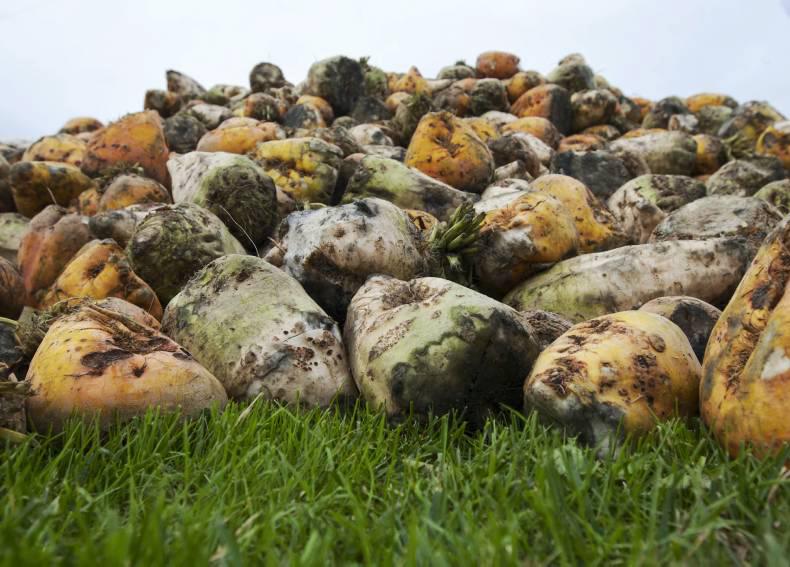
Chopping is another issue of discussion among advocates of beet. High dry matter varieties of beet are too hard to feed whole and chopping is essential if high intakes are to be achieved.
While whole beet will store for months, once protected from frost, freshly chopped beet has a limited shelf life, typically three to four days before quality deteriorates. Washing and chopping beet does come at a cost, typically adding €5/t of product.
Read more
Focus: Winter feeding equipment
Beet is a high-yielding fodder crop with the potential to be fed at significant inclusion rates in the diet of ruminant animals. Beet – both fodder beet and sugar beet – is still an important crop in Ireland, with over 9,200ha (23,000 acres) sown in 2015. Fodder beet accounts for 93% of the sown area, with sugar beet making up the difference. Cork is the county with most beet grown, accounting for over 25% of national beet area sown. On an energy basis, 5kg of fresh fodder beet provides the equivalent energy as 1kg of barley. Beet is very palatable and high intake levels are possible, making it a very suitable feed for finishing cattle.
On the negative side, fodder beet is low in protein, phosphorus and calcium, so supplementation is essential. It is also a potentially dangerous feed if introduced into diets too quickly and can lead to acidosis. Slow build-up in the diet is essential. Poorly chopped or whole fodder beet can lead to choking, and there are casualties reported each year. Additional costs of fodder beet include washing and associated tare, frost losses and transportation costs.
Feeding fodder beet
Introduce fodder beet into cattle or sheep diets gradually. Freshly harvested beet must be stored for four to five days before feeding as it can contain high levels of potentially poisonous nitrate. As a rough guide, you can feed 3kg to 4kg of fodder beet per 100kg of animal liveweight.
Farmers finishing heavy cattle could feed in excess of 25kg per day, but always start off at low levels. For heavy cattle, start by feeding 3kg to 5kg fresh beet and increase by 3kg to 5kg every five days. If you follow this guide, it can take up to 21 days for maximum intake to be achieved.
All cattle should be eating beet before the feed rate is increased. It is advisable that cattle have free access to forage such as straw or dry silage to keep the rumen working correctly.
As all cattle will want access to eat fresh beet when it is fed, feed space of 600mm for finishing cattle is required. If the daily feed rate to cattle goes above 15kg, then feed twice per day. For weanlings weighing between 300kg and 400kg, a feeding rate up to 15kg of beet per day is possible after the build-up phase.
Fodder beet is always fed with a protein balancer as beet alone is on average 9% crude protein (CP) on a dry matter basis. Finishing cattle require an overall diet of 12% to 13% CP, while a level of 16% is desirable in young weanlings. One of the simplest balancers is feeding soyabean meal.
As a guide, a feed level of 20kg fodder beet to finishing cattle needs an addition of 0.5kg soyabean meal, but supplementation depends on other ingredients being fed in the mix. You should speak to your Teagasc adviser and ask them to check the overall mix in the ration reckoner programme before you start feeding.
Other protein balancers which are priced well at the moment include maize distillers and maize gluten. Rapeseed meal is less competitive at current prices.
Washing and chopping
The issue of washing and chopping beet comes up in discussion at this time each year as farmers plan their winter feeding regime. The necessity to wash or chop beet is dependent on issues such as the variety being grown, the dry matter of the beet variety and conditions around harvest.
Research carried out by Teagasc has shown that unwashed, freshly harvested beet can carry up to 18% clay as tare in a very wet year. This year you would expect tare to be much less given current favourable ground conditions.
Most farmers accept that feeding dirty beet to cattle is undesirable. A high level of clay entering the rumen has the potential to cause digestive upset. Clay has no feed value. An accumulation of clay in the rumen is, at best, taking up valuable space which could otherwise be filled with feedstuffs full of energy and protein.
There is no real scientific evidence or research to show that clay has a negative effect on rumen bacterial function, but perhaps this is an area that needs further study. Cattle fed beet with high clay content have been observed passing dung with clay periodically, so by this we assume that at least some clay is passed from the system.
Intake of soil containing high levels of iron and molybdenum can result in reduced adsorption of dietary copper. Poor thrive can result.
Dirty beet will also have a certain level of pebble of stone. Small pebbles of stone can cause significant damage to the teeth of cattle, resulting in reduced feed intake. This is of particular concern where dirty beet is being fed to younger stock.
Unwashed beet should never be fed to replacement heifers which you plan to bull and retain in the herd. Loose, brittle or broken teeth are of little use to a future suckler or dairy cow which is expected to utilise grazed grass over a long number of years.
Chopping is another issue of discussion among advocates of beet. High dry matter varieties of beet are too hard to feed whole and chopping is essential if high intakes are to be achieved.
While whole beet will store for months, once protected from frost, freshly chopped beet has a limited shelf life, typically three to four days before quality deteriorates. Washing and chopping beet does come at a cost, typically adding €5/t of product.
Read more
Focus: Winter feeding equipment






SHARING OPTIONS