


Hedge cutters come in all shapes and sizes to suit every level of usage from entry-level farmer machines to high-end telescopic units.
Price tags for new or secondhand hedge cutters vary enormously but there is a machine to suit everyone.
An entry-level farmer’s machine will likely be mounted to the tractor by a three-point linkage. This is convenient for speedy fitting to the tractor, and removal if the tractor is needed for another task. Professional level, axle-mounted hedge cutters are tied to one tractor.
Farmer spec machines typically feature simple and generally reliable cable controls. These require a bit more effort to operate than electric or servo hydraulic controls, but are more than adequate for most farmers’ requirements.
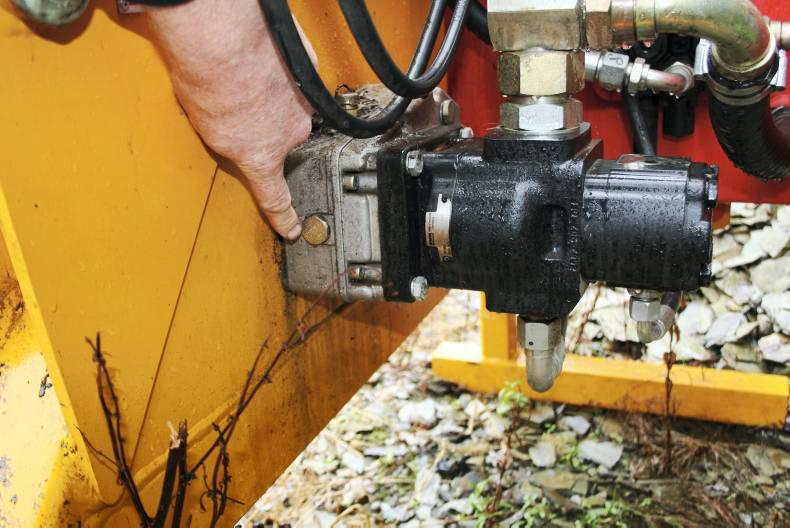
Virtually all entry-level hedge cutters feature independent hydraulics. A large hydraulic pump drives the hedge cutter head. Piggybacked on to the large pump is a smaller pump providing oil for the hedge cutter’s hydraulic ram movements.
There are various hedge cutter arm configurations. At entry level, the arm may be fixed. Higher-spec models will have power slew. This allows the hedge cutter arm and head to swing back behind the tractor for travelling on the road or tackling tricky corners.
Power slew would generally have a parallel main arm. This simplifies arm movements and reduces the number of controls the user has to operate. Above this spec level, you enter the realm of the professional hedge cutter.
Professional machines may include telescopically extendable arms, forward-reach arm geometry, twin heads and axle mounting. Controls vary from non-proportional electric to programmable proportional electric or even servo-hydraulic controls.
Here we will concentrate on looking at pre-season maintenance checks on entry-level machines.
While figures are not available, a huge number of farmers have their own machines. The vast majority would typically be what we describe here as entry-level models.
As always, if in doubt about any aspect of maintenance or the condition of something, ask your local garage for advice or even to do the jobs you are not comfortable or confident in doing. Never take a chance as this can often lead to more trouble.
Picture 1
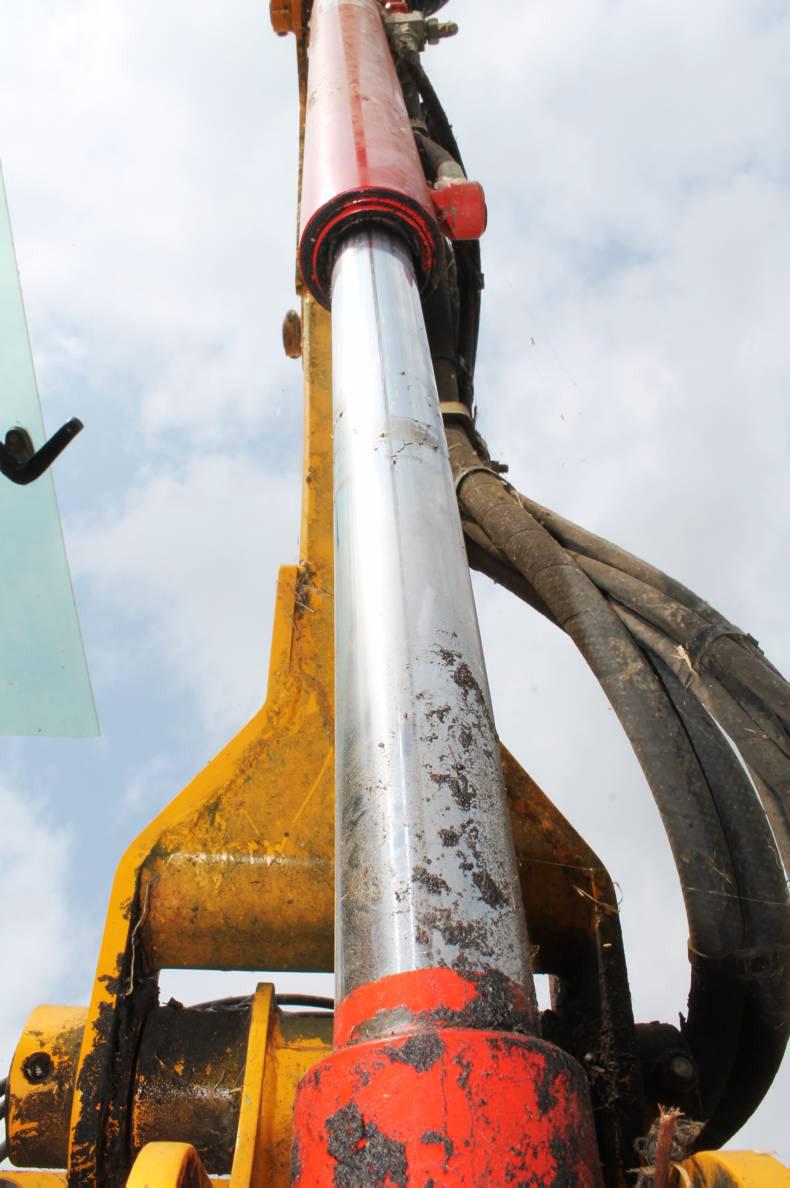
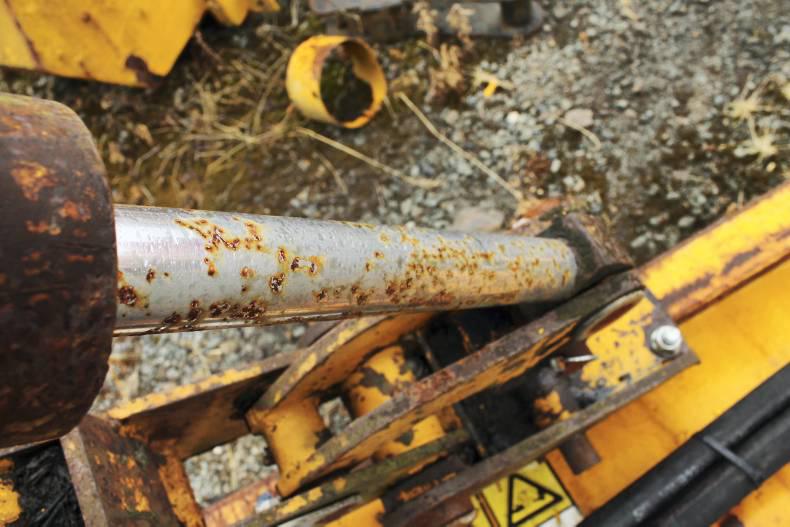
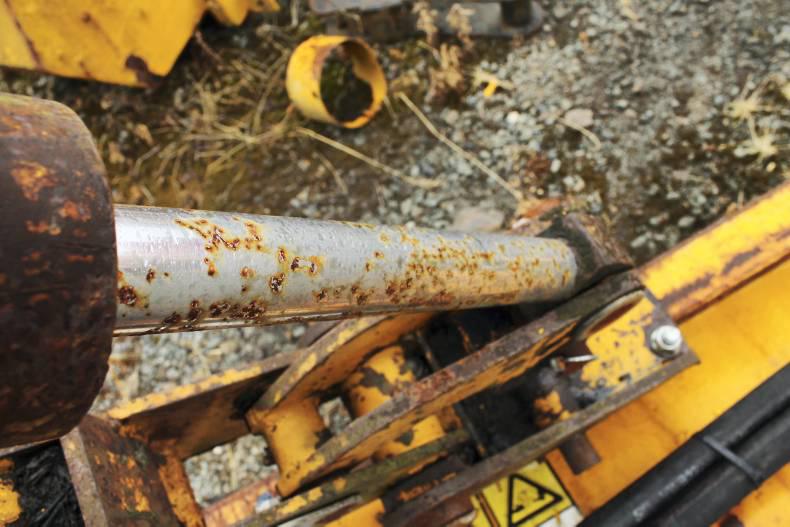
It is not a good idea to store a hedge cutter outside. The first thing to suffer will be the exposed chrome on the hedge cutter’s hydraulic rams. These are expensive to replace and if not replaced/repaired, will tear the hydraulic ram’s seals.
Picture 2
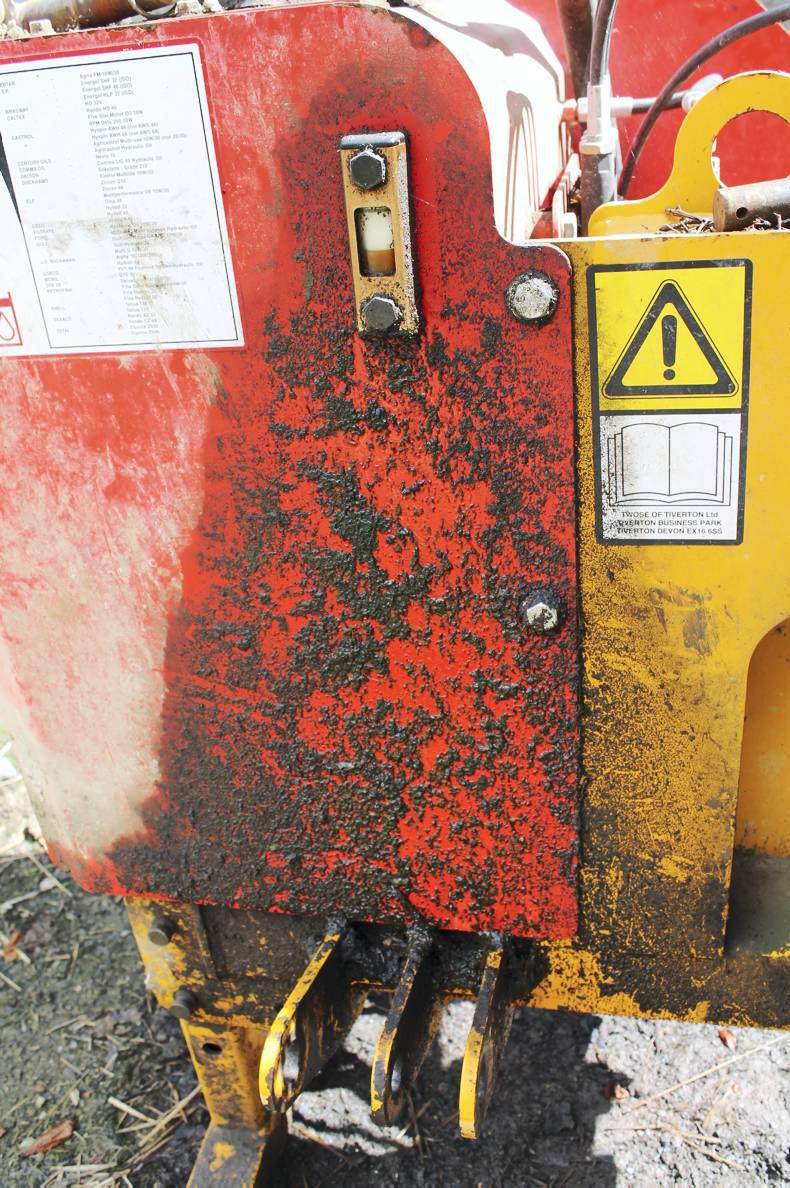
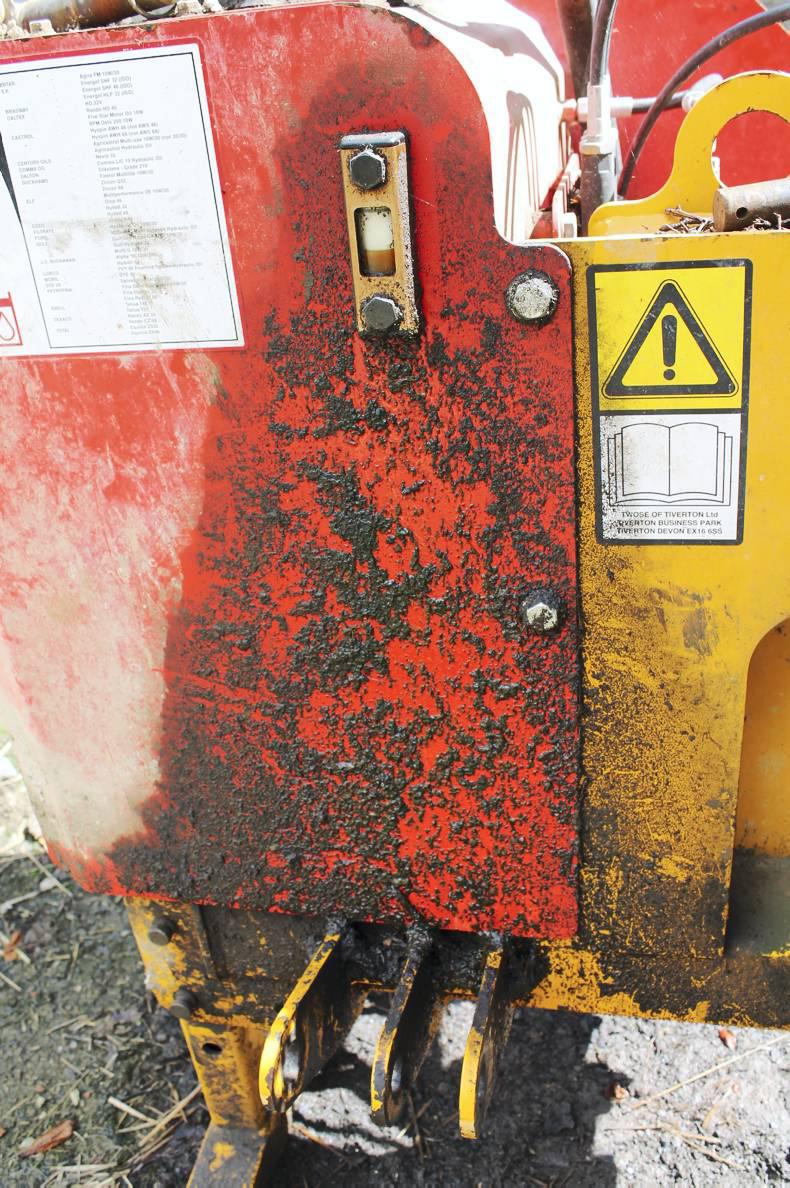
Before running up a hedge cutter, inspect its oil level and the quality of the oil (and that the sight glass is not leaking). The hydraulic oil should be clear (hydraulic oil 32) or golden (hydraulic oil 46), not milky or black. The latter two would indicate water or dirt contamination. Neither is good for the hedge cutter’s two hydraulic pumps or motors. Most modern machines will specify hydraulic oil 46. Many professional hedge cutting contractors use hyd 68, which is thicker than hyd 46 and is ideal where they cut for long hours or in hot weather.
Picture 3
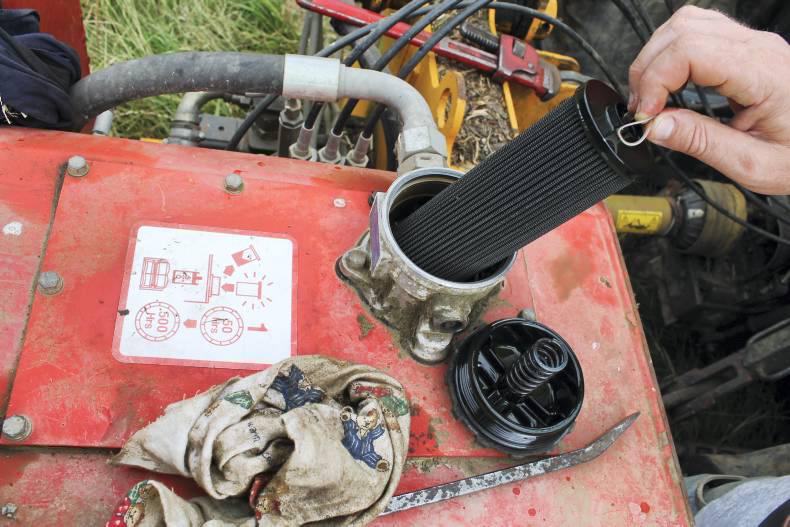
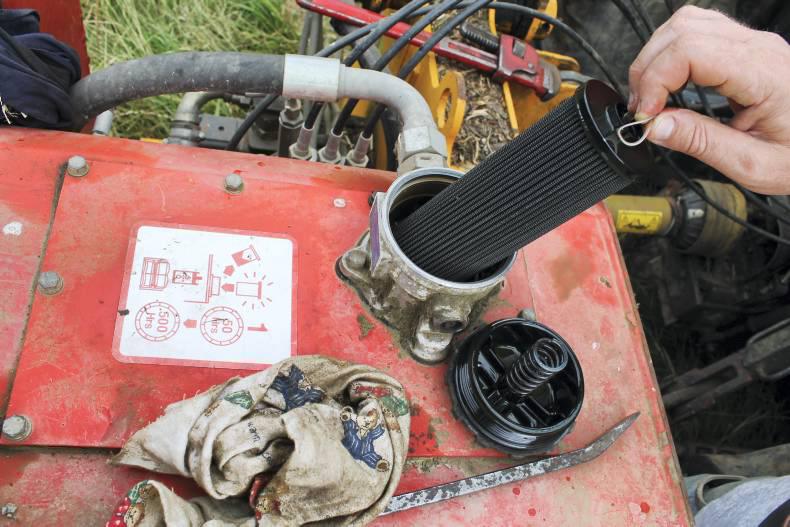
If all is OK with the oil, it is always good practice to change hedge cutter filters annually. Filters are not expensive in comparison with pumps and motors. Many entry-level machines will feature a cartridge suction filter like the one pictured and perhaps a spin-on filter. Filters can be on the return side of the hydraulic circuit as well.
Picture 4
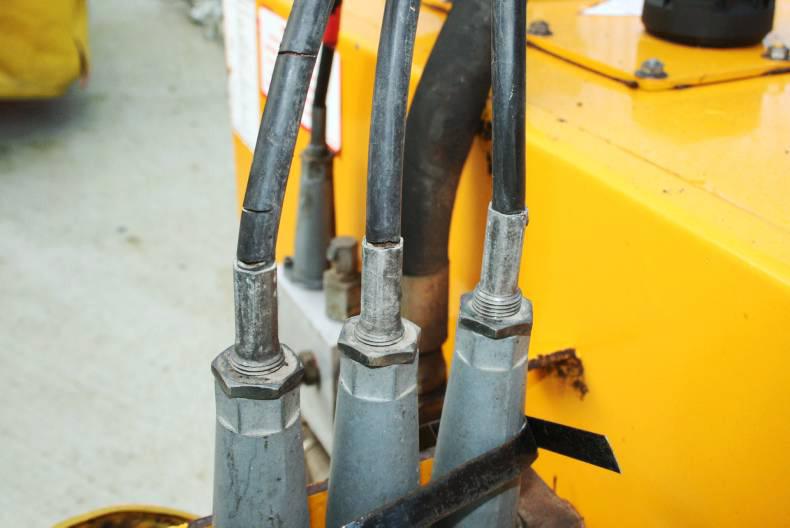
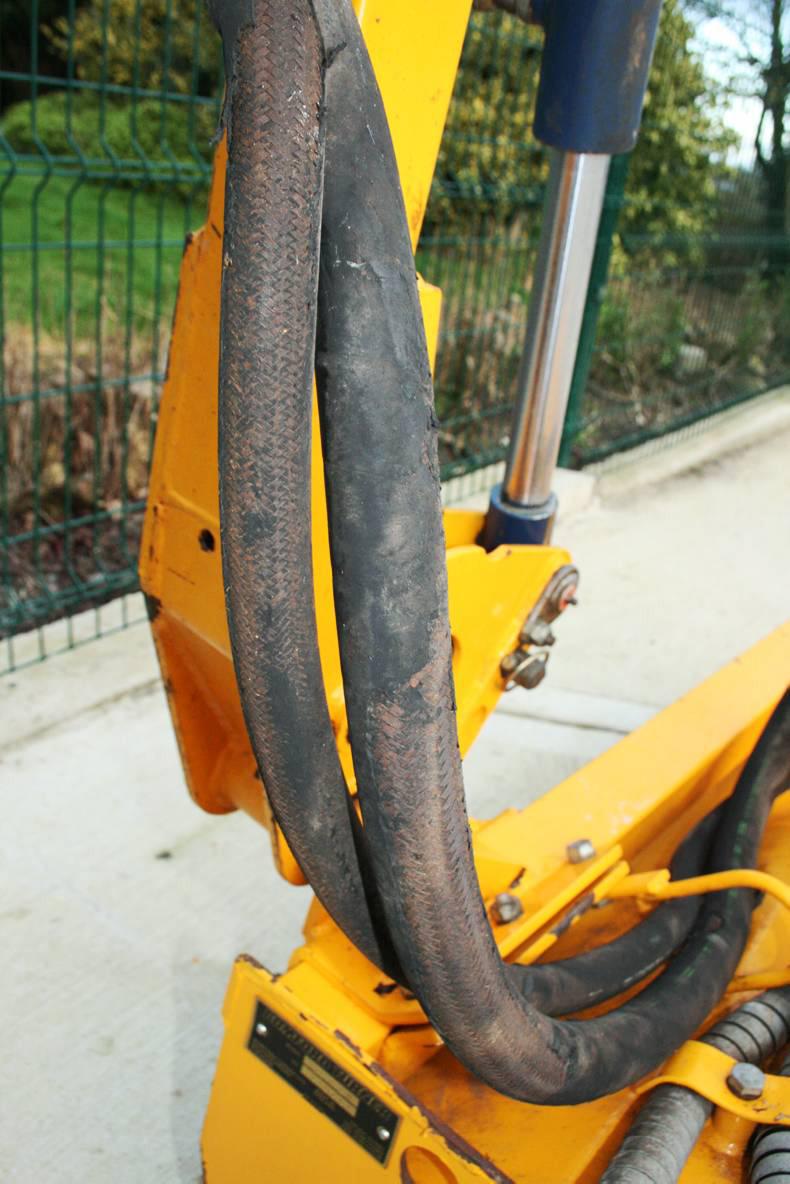
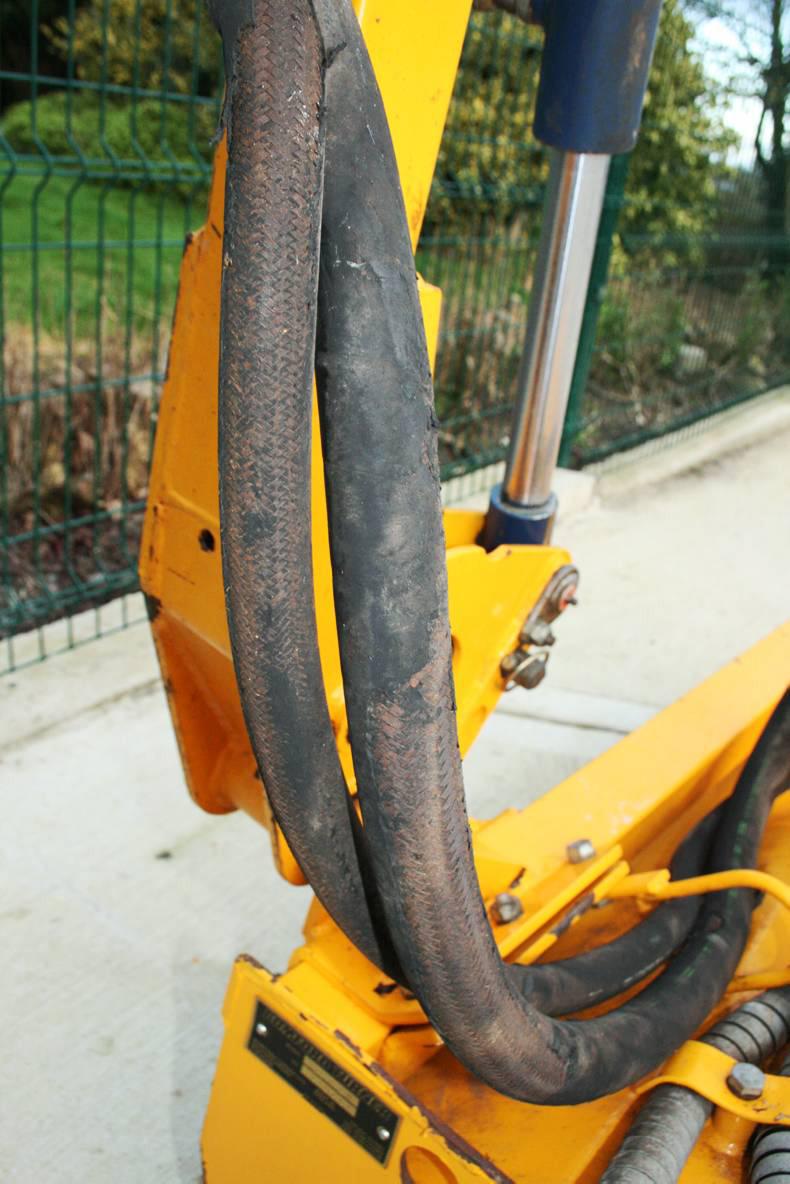
A hedge cutter is a bit like an agricultural octopus in that it can move in all sorts of directions. It is inevitable that at some stage a hydraulic pipe or pipes will suffer wear or get damaged. It may be from a bent or damaged bracket or sustained use in a particular position.
Any hydraulic pipes that are damaged need to be replaced as a matter of urgency. A burst pipe could result in the arm dropping or pumping high-pressure, hot oil out on to people, the tractor or the roadway.
Picture 5
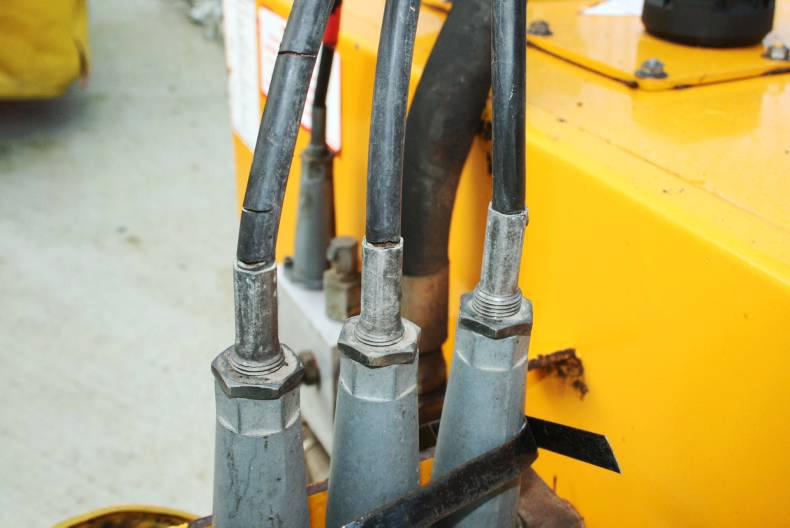
Most farmer-type hedge cutters are cable controlled and for the most part are very reliable. Operation of levers must be smooth and slick, returning to the neutral position when the lever is released. Sticking controls are a recipe for disaster if an arm movement cannot be stopped, so replace damaged cables as required.
Pictures 6 & 7
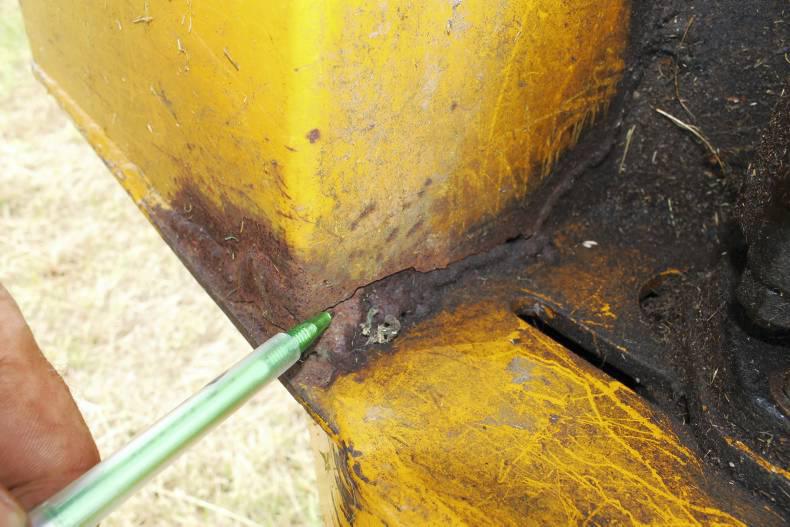
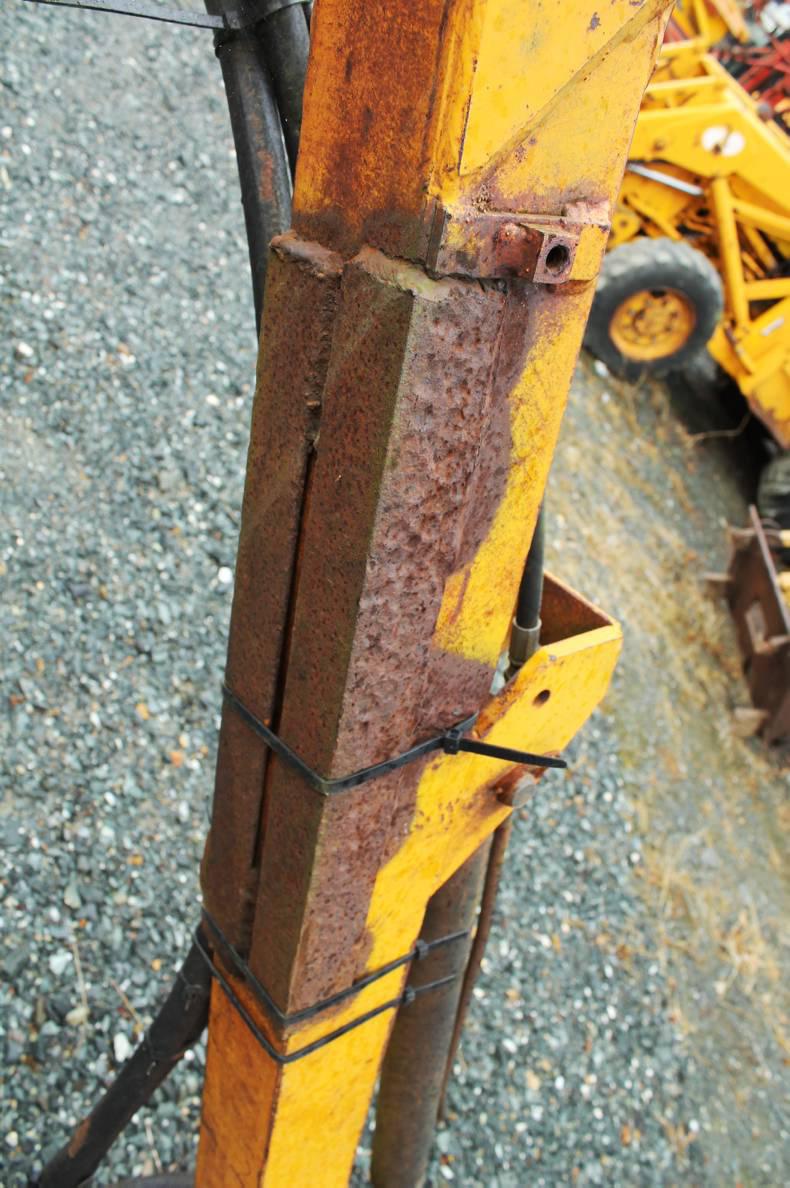
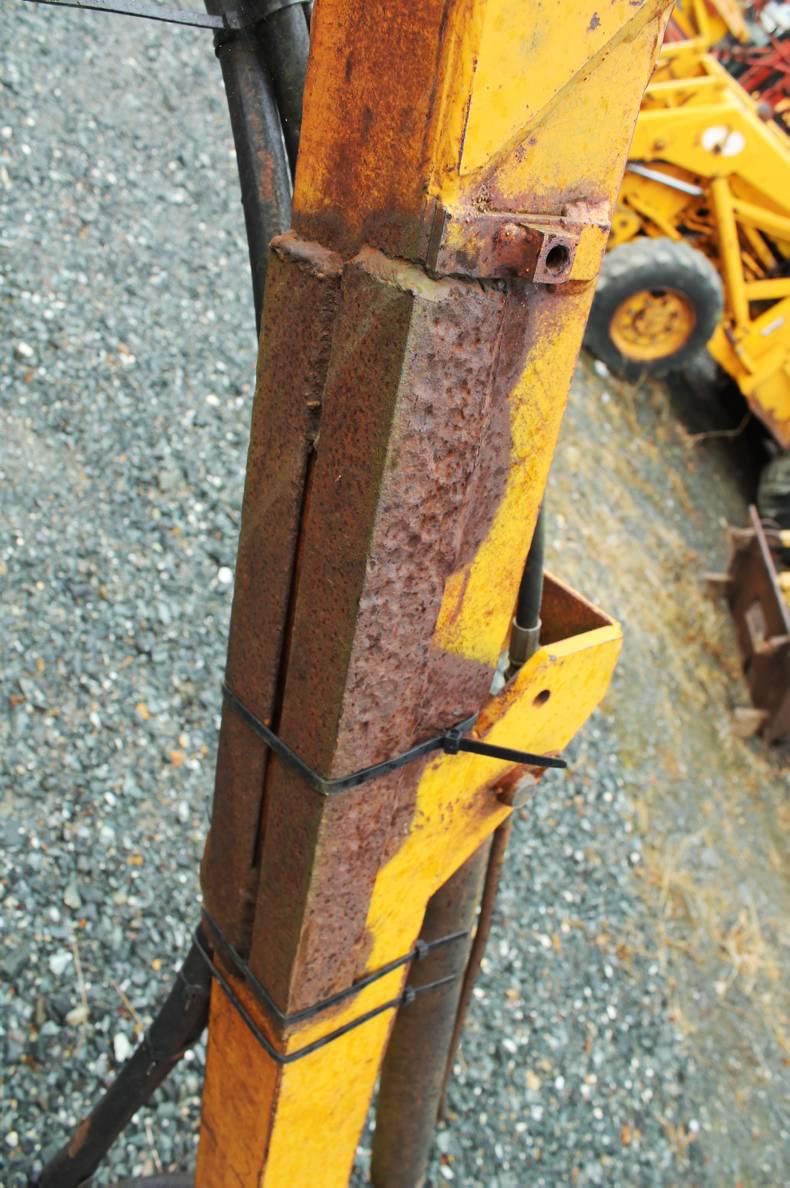
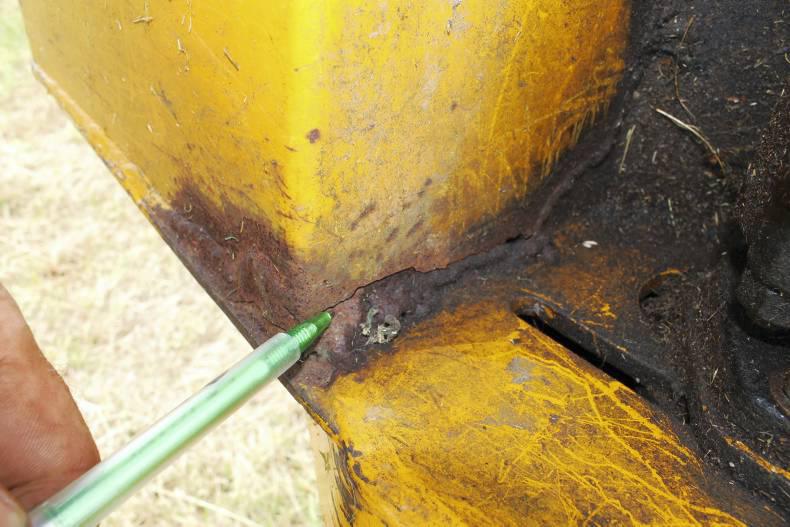
The life of a hedge cutter is a pretty tough one, so thoroughly check the mainframe, and the arm in particular, for signs of cracking or breaking. Cracks will need to be attended to before they develop into something more substantial.
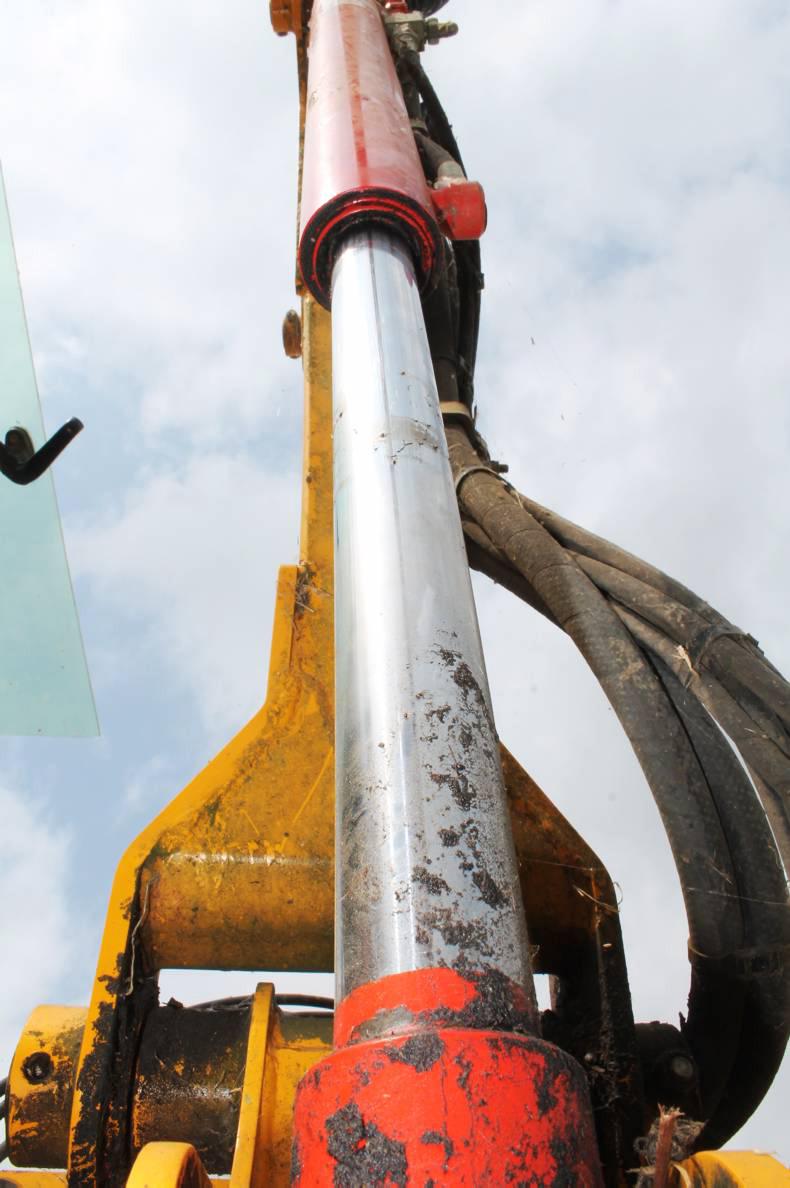
Hydraulic rams can leak externally and internally. External leaks will cause a visible loss of expensive hydraulic oil and reduce ram function effectiveness. An internal leak between the extend and retract sides of the cylinder’s piston will cause the ram to creep or move – not good with a flail rotor spinning at high speed. A hedge cutter really needs to maintain the position at which the operator sets it. With the oil hot, extend the hedge cutter’s arm to load all its rams and ensure they maintain their position with no creeping forwards or backwards.
Pictures 8 & 9
The busiest component of a hedge cutter is the rotor. Replace any broken or damaged flails with the same type used on the rotor. There are different replacement flail options that may be different in weight and cause an imbalance.
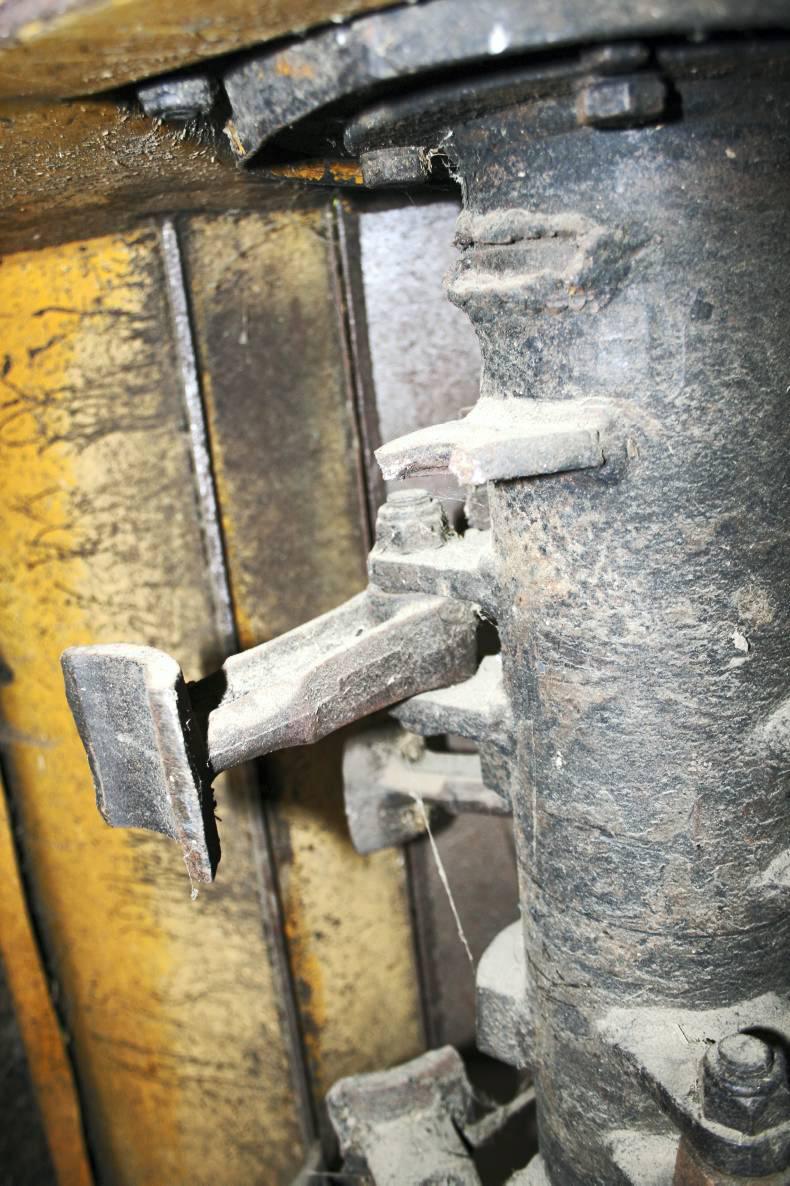
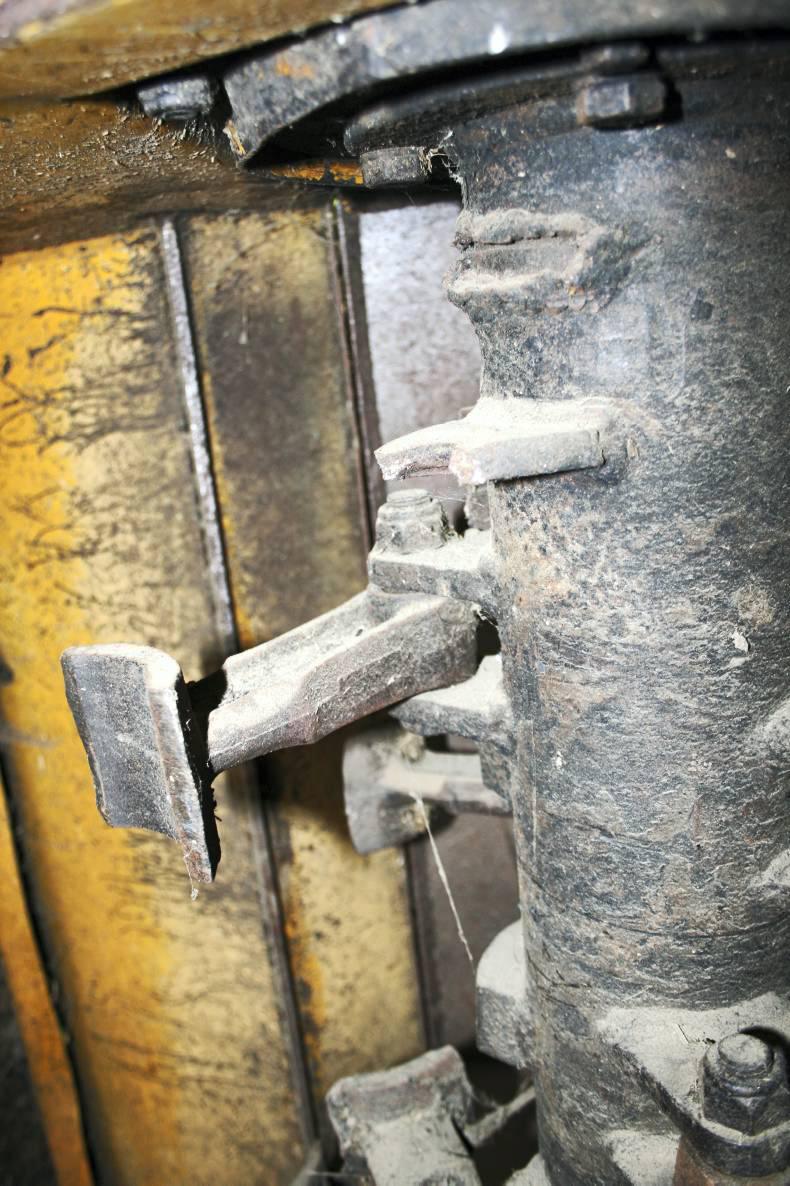
Examine flail mounting brackets for wear because bolt holes can often become dangerously elongated to the point of losing a flail. If that is the case, this will require immediate action to remedy and make the machine safe.
Cracking to the rotor hood is generally caused by rotor vibration resulting from it being out of balance. This crack is right next to the hydraulic motor mount for driving the rotor and needs to be repaired properly before any hedge cutting is done.
Picture 10
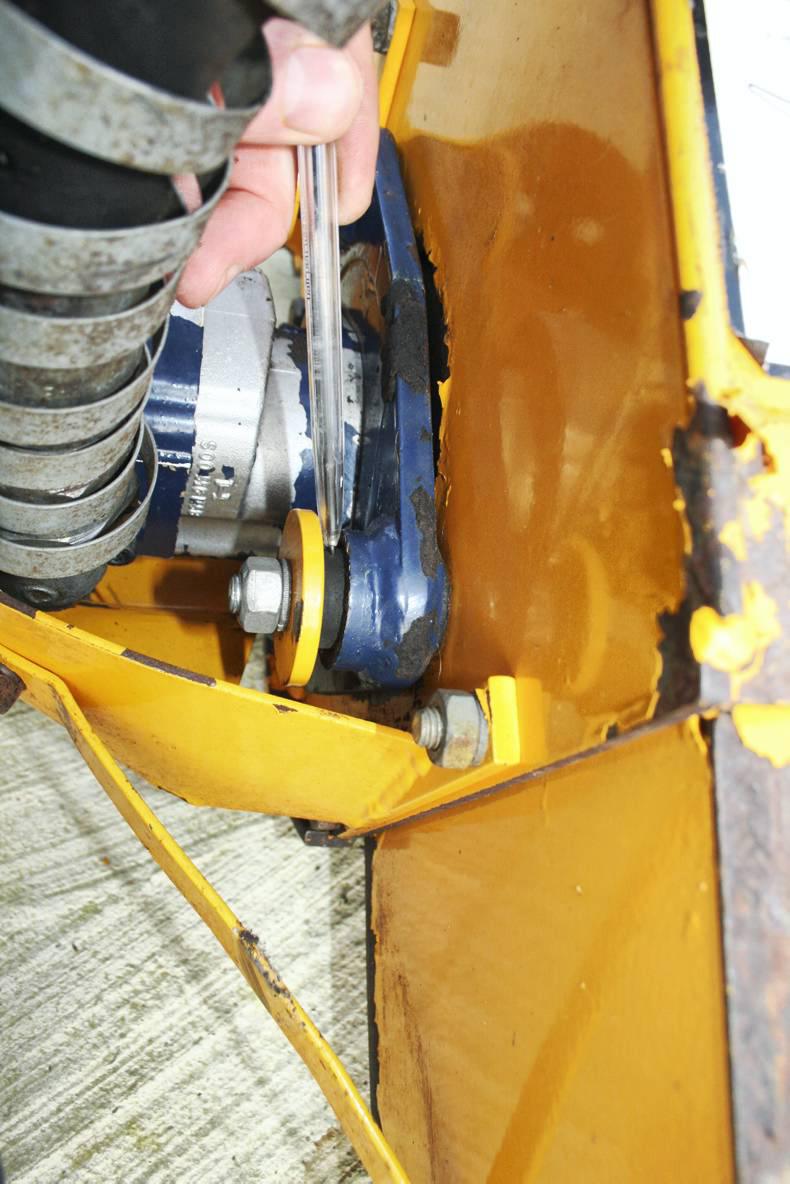
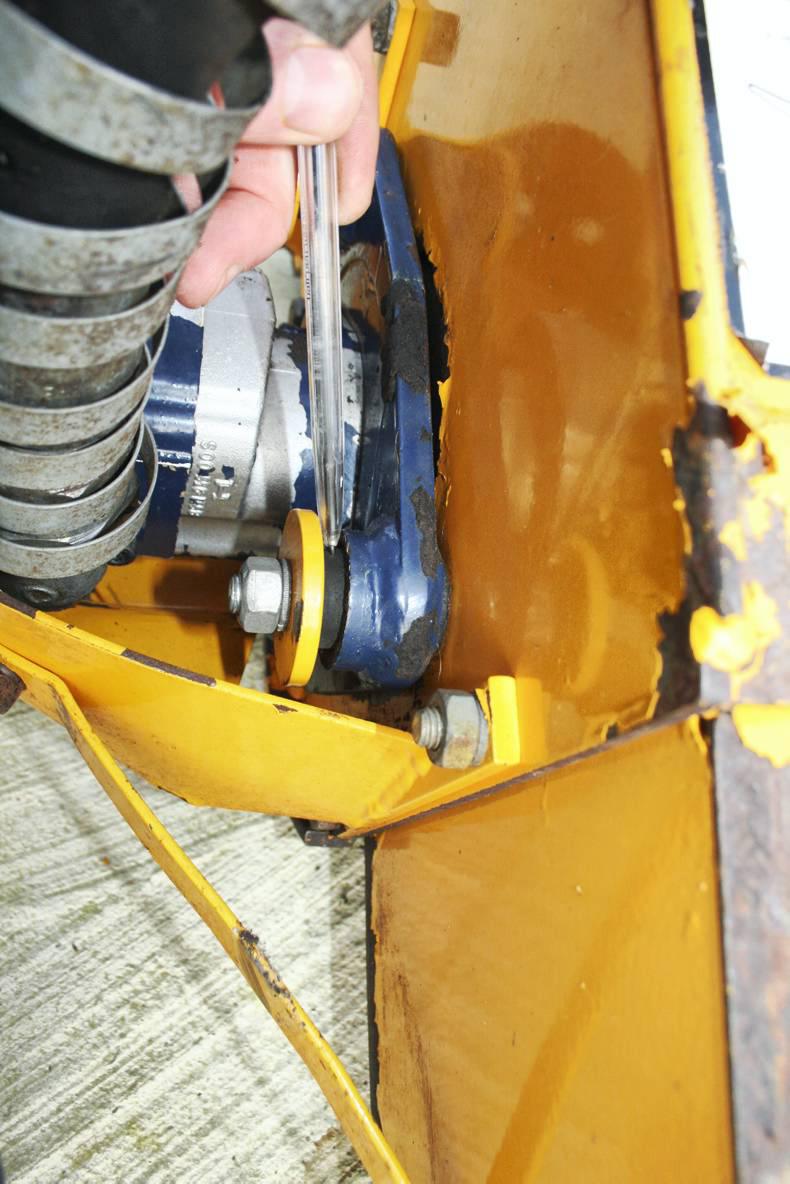
On hedge cutters with the rotor drive motor mounted on the end of the rotor shaft, make sure the motor is not loose. Check the condition of the motor’s rubber mountings and replace if necessary.
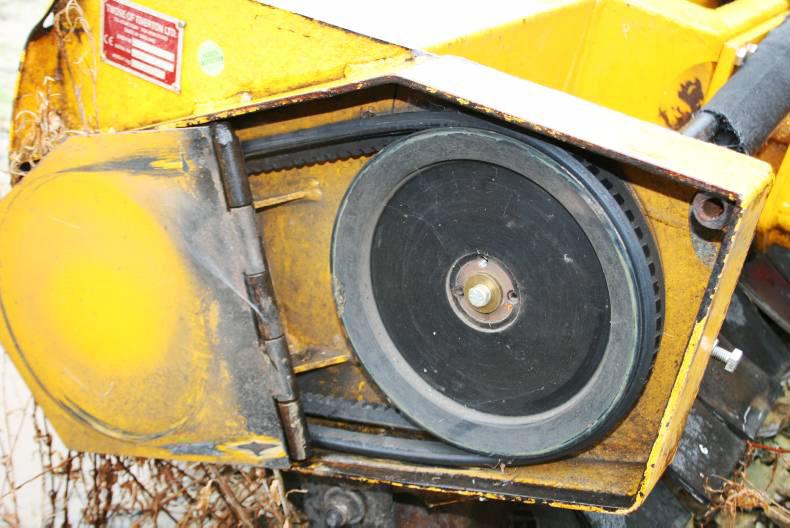
On versions with belt drive, check the condition and adjustment of the belt. Loose or worn belts will result in a loss of cutting performance where conditions are tough and ultimately may burn the belts out altogether.
Picture 11
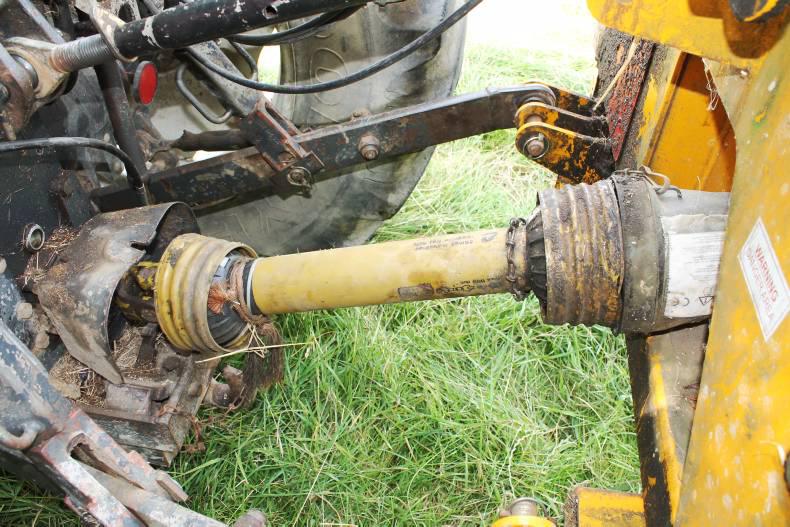
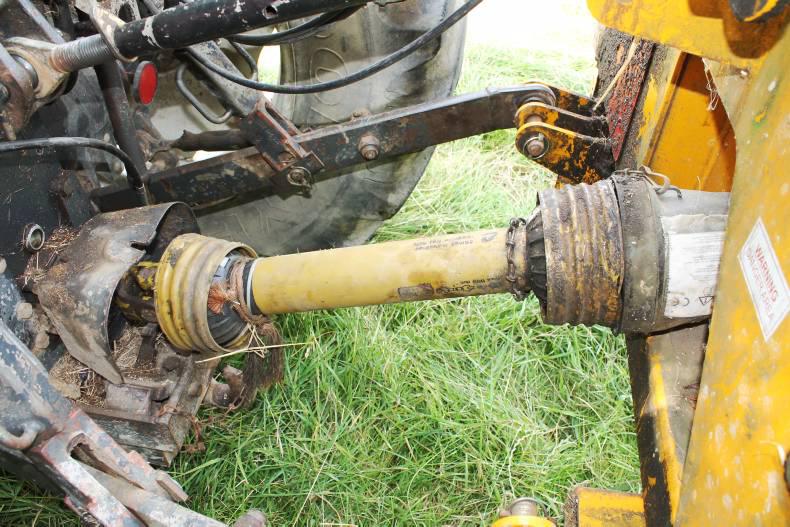
As with all PTO shafts, guarding needs to be in place and fully functional with check chains on both ends. Many garages and parts suppliers have universal PTO covers in stock and Bare-Co versions allow for easier servicing of the shaft’s grease points. And don’t forget to grease the shaft, which is easiest done before hooking up to the tractor.
Picture 12
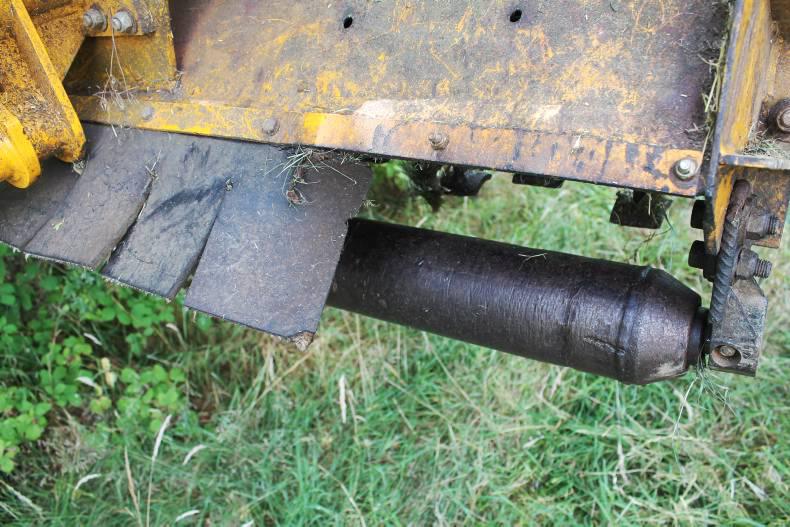
Safety is always important, especially with a machine such as a hedge cutter with a high-speed rotor. Heavy-duty rubber at the front and rear of the hood absorbs the impact from items launched outwards by the rotor and its flails. These provide a crucial line of defence to prevent human and machine damage. These thick rubber curtains are not expensive and really need to be maintained or replaced if damaged.
Picture 13
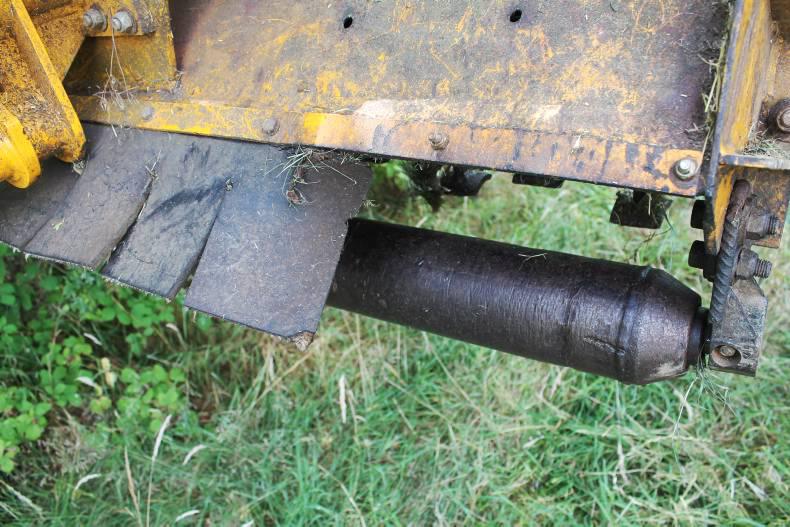
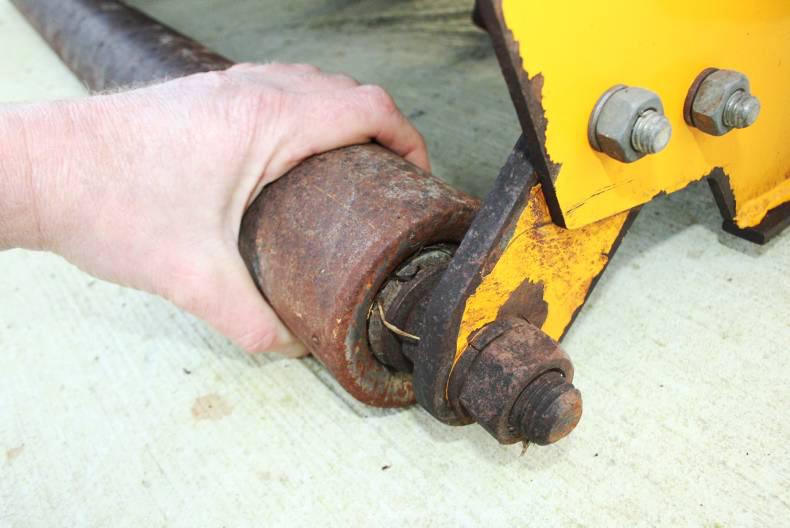
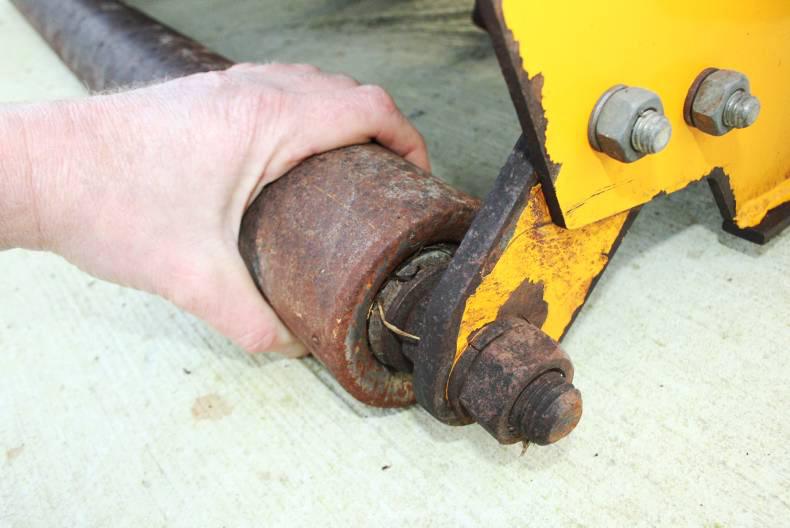
The rear roller provides a depth control function when mowing verges. It also protects the rotor from accidental lowering into rotator mode, and launching debris worldwide. With a central axle held in place with brackets either side of the head, it also helps to hold the head together while in use. The roller’s bearings need to be fully functional and the central shaft tight in its brackets. The brackets themselves need to be tightly bolted in place.
Picture 14
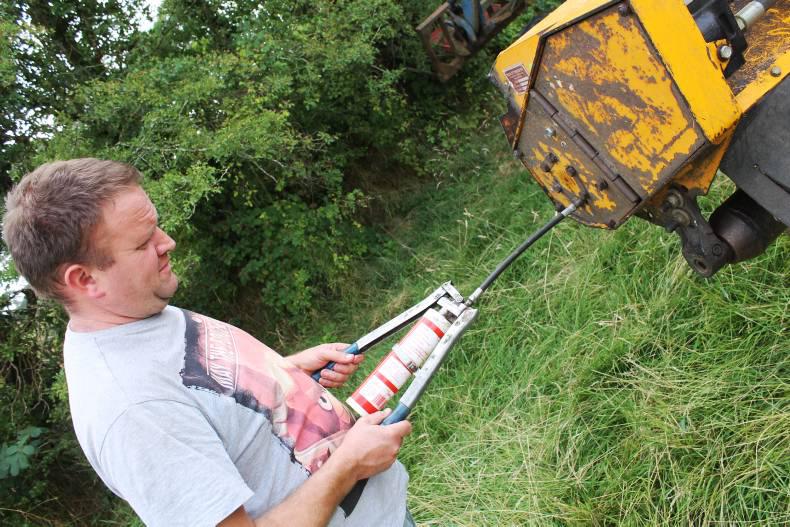
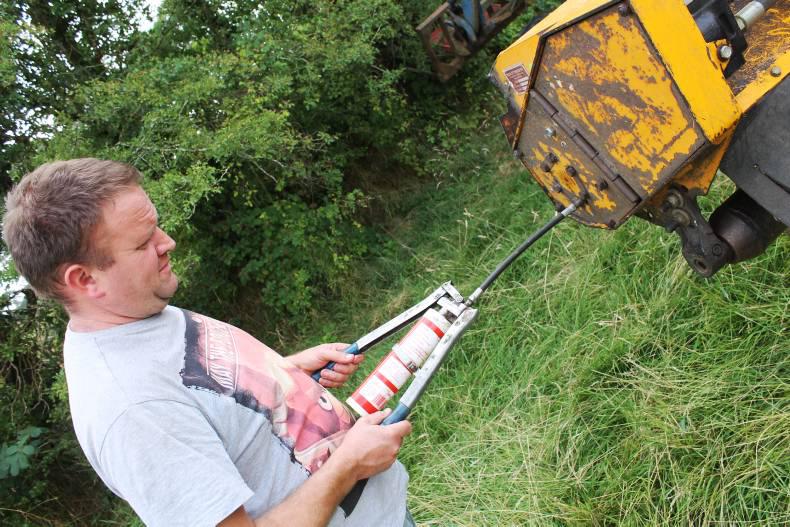
The rotor’s bearings are the hardest-working bearings on any hedge cutter. Greasing should be done little and often to keep them operating to their optimum. For general agricultural use, standard grease is sufficient. Many professional operators will use higher-specification grease but run their machines for many more hours than regular farmers will.
Picture 15
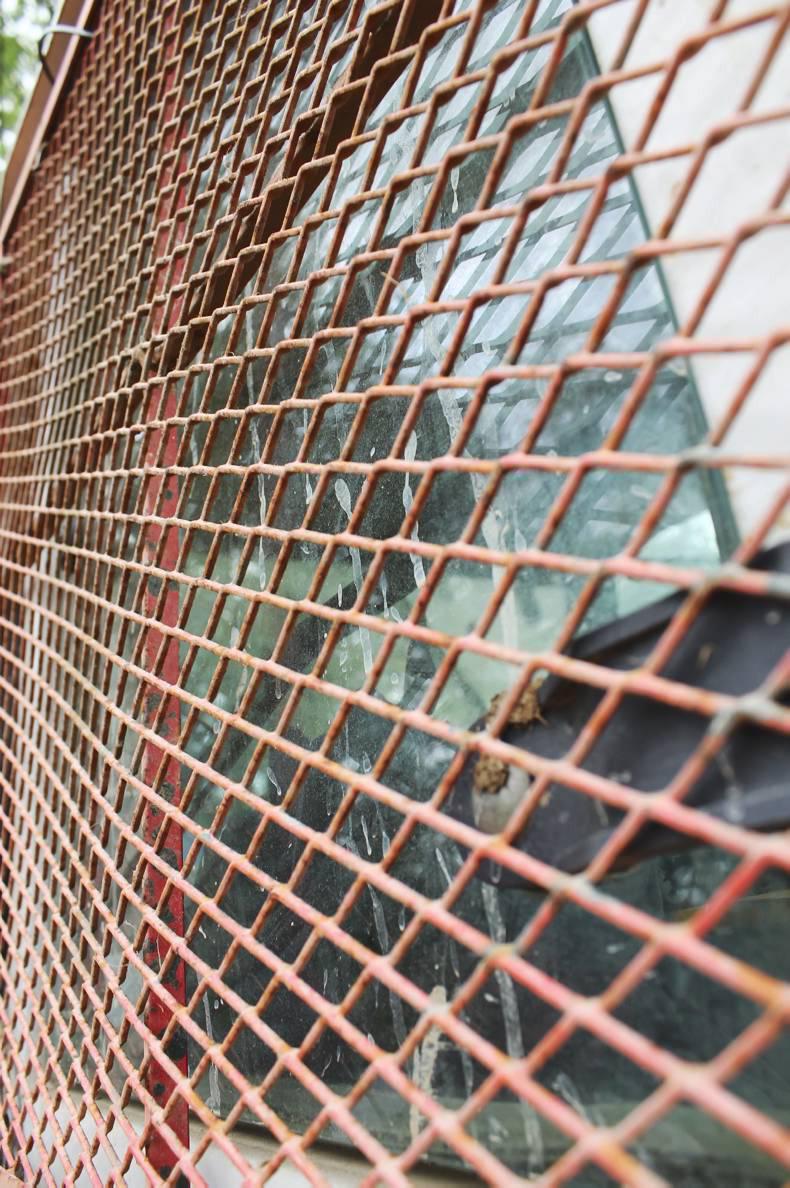
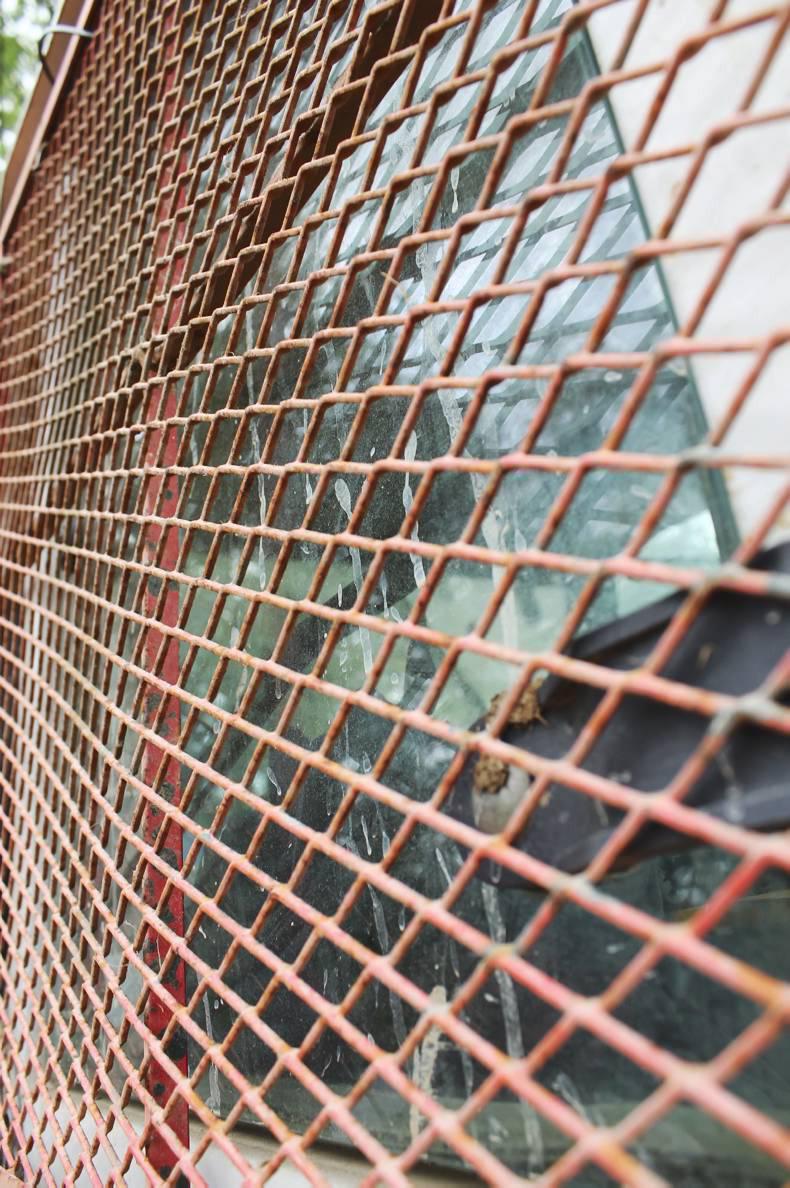
Many occasional users of hedge cutters will unfortunately often not bother with guarding for windows or doors – until they break their first piece of glass. It does not cost a lot and is extremely important to fit some form of guarding. Professional hedge-cutting contractors will often recount instances where foreign objects have hit side protection hard and even where the mesh has caught wire.
Picture 16
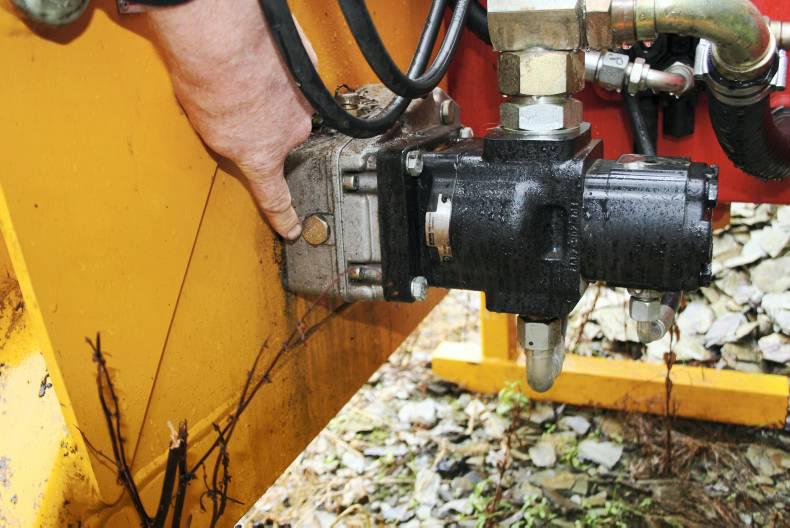
Both hydraulic pumps are driven by the PTO via a gearbox. Don’t forget to check the gearbox oil level. Low oil level or no oil indicates a leak and would need to be rectified before damage is done.
Read more from our focus on hedge cutting
Cork contractor takes to the fields with the McConnel PA7285T-VFR
Grants for cutting hedges, and importer changes at Spearhead


SHARING OPTIONS