



History: From International and Hesston to Case and Claas
The Troy contracting business was started by Mark’s father Eamon in 1971 in Bandon, Co Cork. Together they grew the business steadily over the years. A lot of the customers who started with Mark’s father are still with them and the second generation is following on, says Mark.
The core of the contracting operation has always been silage. The business is located in a fantastic area for grass growth, with good progressive farmers.
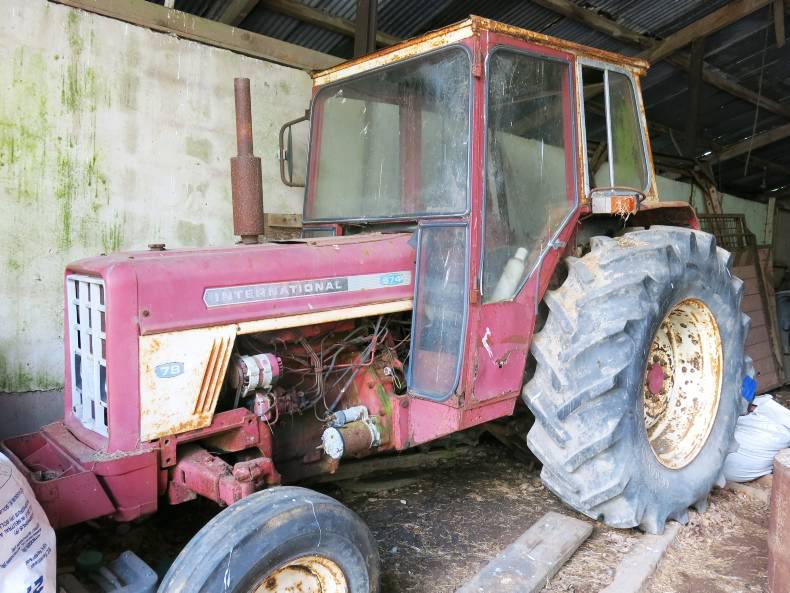
In the early days Eamon ran with International and Nuffield tractors. Mark himself learned the trade on a 1977 International 674 which he described as a great little tractor at 78hp. On the harvester front they ran with New Holland and Hesston machines in the early days.
The Hesston Field Queen ran during 1978-79 and Mark described it as an interesting machine and not without its problems. Hydraulics and bellyband issues were to the fore and Eamon had plenty of late nights keeping it running in the field. The Hesston era continued with the Troys running a Hesston 7680, 7720 and a 7725 until 2000. Mark said during that time there were up to 2,000 acres of silage to be harvested and the decision was made to buy a Case Mammut (Mengale).
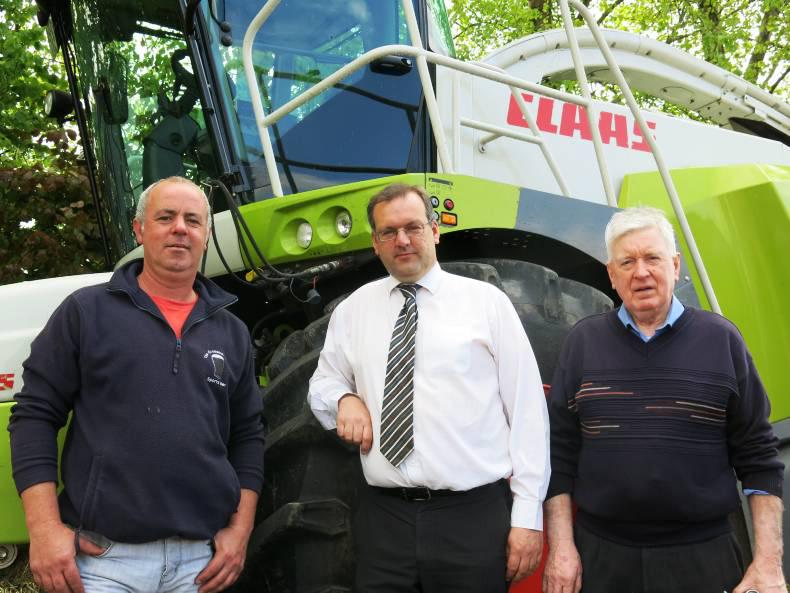
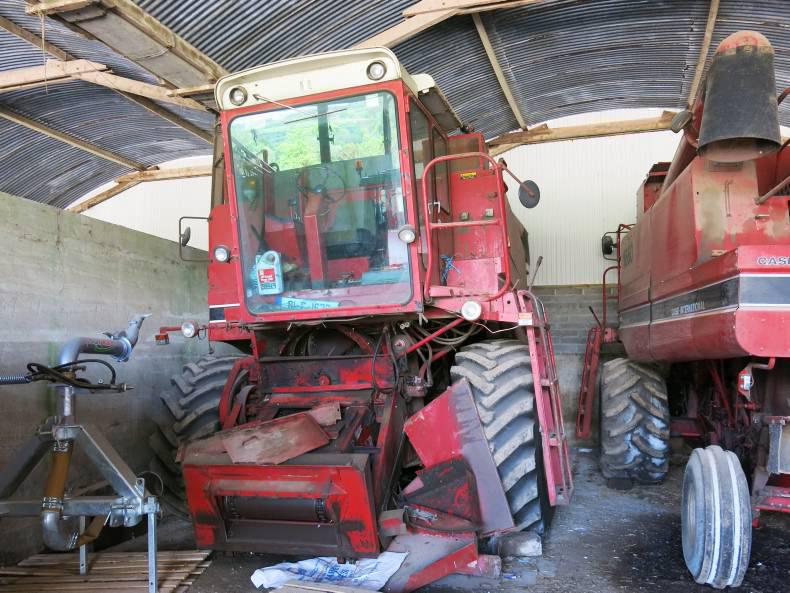
Mark described it as another interesting machine, saying its performance was excellent – when it was functioning. A combination of electrical and hydraulic problems dogged the Case for the two years they had it. In 2002 the Claas era arrived and it endures at the Troys to the present day.
Management: Running a business while holding down a full-time job
Eamon passed away in 2010 and Mark now runs the business with the help of his employees. It operates out of two yards, one of which is rented from a lifelong friend John Twohig. Mark has a full-time job as a Financial Controller with Kevin O’Leary motors in Bandon.
Mark said: “The decision was made by me and the family to keep the contracting business going and growing in 2010. The lads we have working with us are top class and very capable, and luckily we have excellent customers.”
He said a business that has been such a big part of his life is not easy to walk away from. Asked how he fits it all in, he said it is combination of having a good boss and a flexible job. Typically Mark works 70-80 hours per week with a bluetooth headset permanently attached, he jokes. Planning and organising the jobs is a huge part of getting through the work.
After the day job is over Mark takes to the phone to organise the day’s and week’s work. The lads will have a list of parts needed and the servicing of the machines is taken care of by them. One of the biggest challenges for a contractor is cashflow and Mark is no different even if he is an accountant. He said the problems are: “A short working season, cashflow management and the weather of course.”
Mark is also not happy with advice that Teagasc is reportedly giving farmers in the area to leave the contractor last on the list for payment. He said: “This is ridiculous advice as the farmer and the contractor have to work hand in hand to deliver quality silage and forage for animals and grow crops. How do they expect contractors to do this if they can’t get paid? And invest in machinery to deliver timely operations on farms? The gear has to be bigger and faster as the priority is now on quality and harvesting at the right time. In the past the silage season could carry on all summer; now the same amount of land has to be harvested in three weeks.”
Mark’s advice is to work with farmers and keep an eye on the bill amount for the sake of everybody. Sending out invoices and recording of work is crucial. It gives the farmer and the contractor a handle on the cashflow demands during the year. The big bill at the end of the year is the scenario best avoided, Mark said.
“Some customers are now on fixed-charge direct debit. The balance payment at the end of the season is made if it is required to settle the account.”
Mark said this is the only way contractors will have a future.
Machinery today: Focus on investing in the latest machines
Keeping up to date machines is a priority of Mark’s. The Claas Harvester was updated in 2015 to a 970 with the MAN single-engine from the twin-engine Claas 970 in 2014. The newer harvester is much better on fuel according to Mark, and he lifts as much of the grass as possible himself.
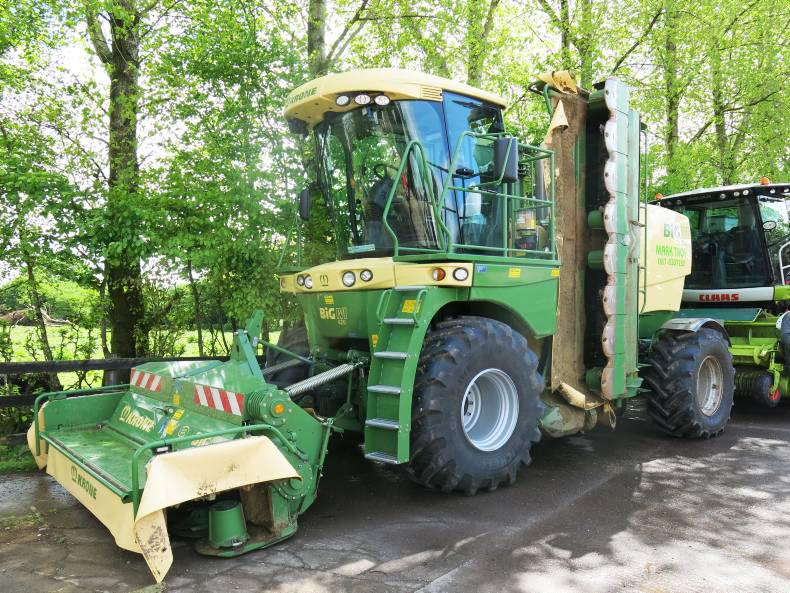
Mark has been running Claas harvesters for 13 years. Good main dealer backup and good machines are the backbone of the relationship, he said. To keep the grass mowed down, Mark has been running Krone Big M’s since 2000. Previously he used a Case Magnum 270 with a Claas butterfly combination. He has a new Krone Big M 420 for this season. The Big M allows them to reach three to four customers easily in the day, knocking down over 200 acres.
Ninery per cent of the customers are still providing the food for the men on the job, which is different from some parts of the country. Mark makes every driver take at least 30 minutes of a break for lunch.
Another new arrival at Troy’s this season is a JCB 435s. The new model is better on the pit and the cab is laid out a little better, according to Mark. They have been using JCBs for a number of years with good service for them. This machine replaces the JCB 435S which had been there for two years.
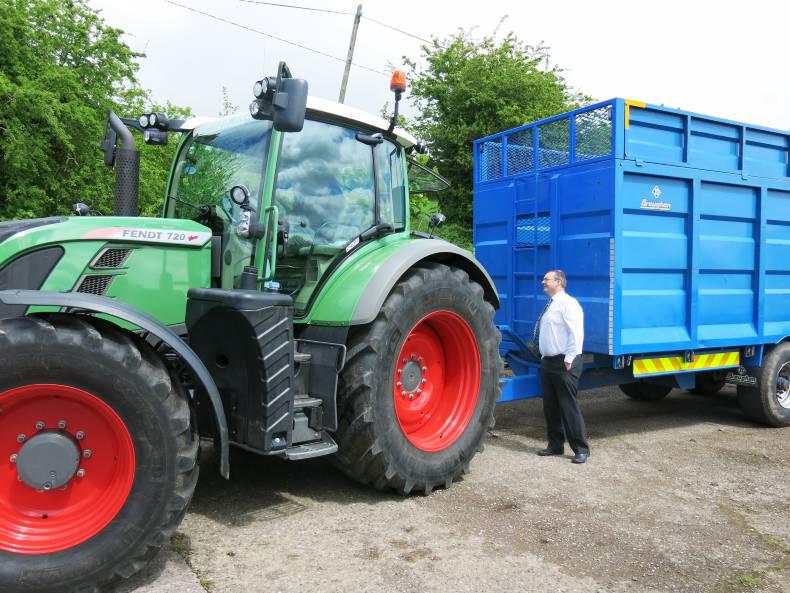
The silage is delivered with three 20ft Broughan trailers running on air, and two older 18ft DC trailers in very good condition. The trailers are all up to specification for the revised road regulations. Providing the power is Agco with a mixture of Massey and Fendt tractors. The newest arrival to the fleet is an 180hp MF 7620 this year; it joins a 2015 MF 7620 and Fendt 720 along with a 2012 MF 6480. Dealing with Cork Farm Machinery and Atkins Farm Machinery in Cork city, Mark is very happy with the MF and Fendt tractors ‘performance.
Expansion: Branching out to survive
Mark explained that he is branching out a little more to extend the working season and offer more services to customers. Keeping the staff on for longer and getting more work out of the tractors is the reason for the move. He now provides slurry agitation and spreading, with umbilical and traditional application methods. Mark has two tankers – a 3100 gallon Joskin with a 6m trailing shoe and a Hi-Spec 2500 gallon tanker also. He also has a SlurryKat umbilical system with a 9m dribble bar and 1200m reeler.
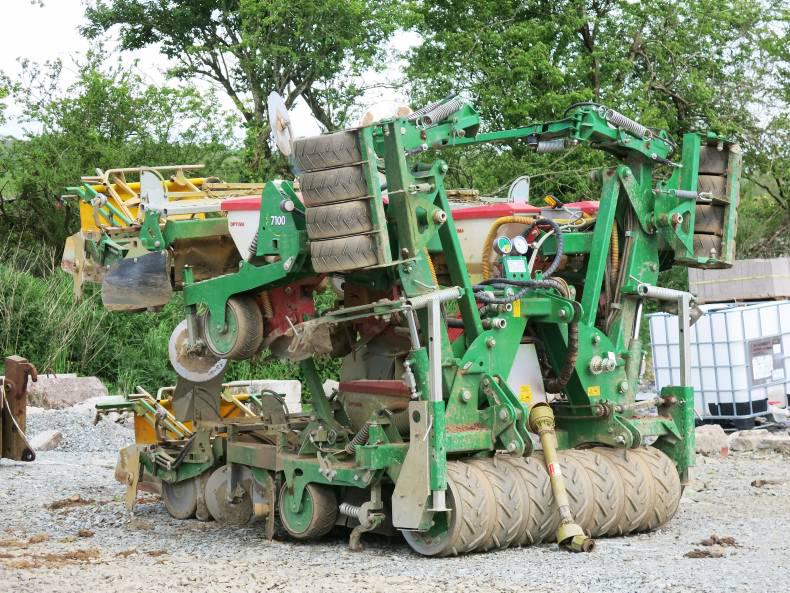
Along with this, Mark offers all reseeding and cultivation work for crops and grass. His cultivation fleet comprises a Kuhn four-sod reversible along with Kuhn 5m and 3m harrows with APV seeders. The company also has a six-row Samco maize drill and the Samco Field Lift subsoiler. Mark is impressed with his latest acquisition in this area – a Mandam disc, which he thinks was terrific value for money. Another machine leaving a very positive impression is the Rauch spreader with EMC controls.
Mark’s views on bad roads
The roads and ditches are a problem – no one seems to be trimming verges in dangerous areas. It damages machines and is dangerous for the road user.
The future
Mark’s view on the future is very simple – as long as there is a living to be made from contracting he will still juggle the books, the job and the machines. From his profession he can see the pitfalls happening, yet he believes there is something about fresh grass and the family business that will spur the contracting on for the future under his watchful eye.


SHARING OPTIONS