


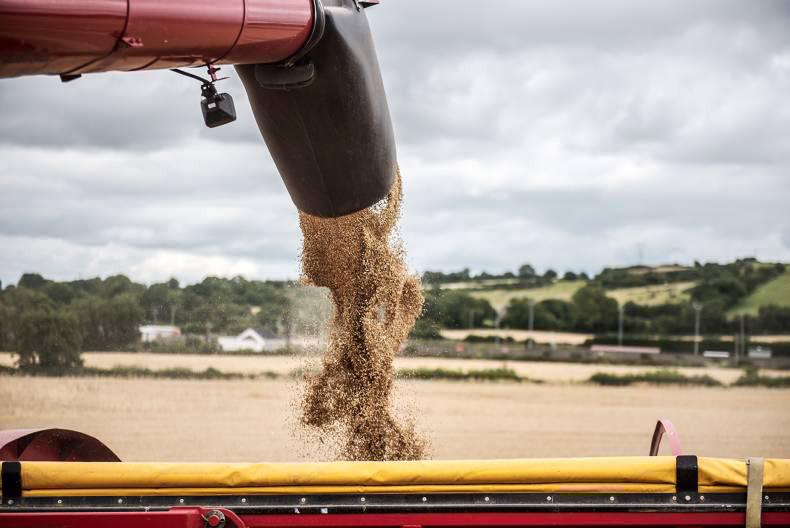
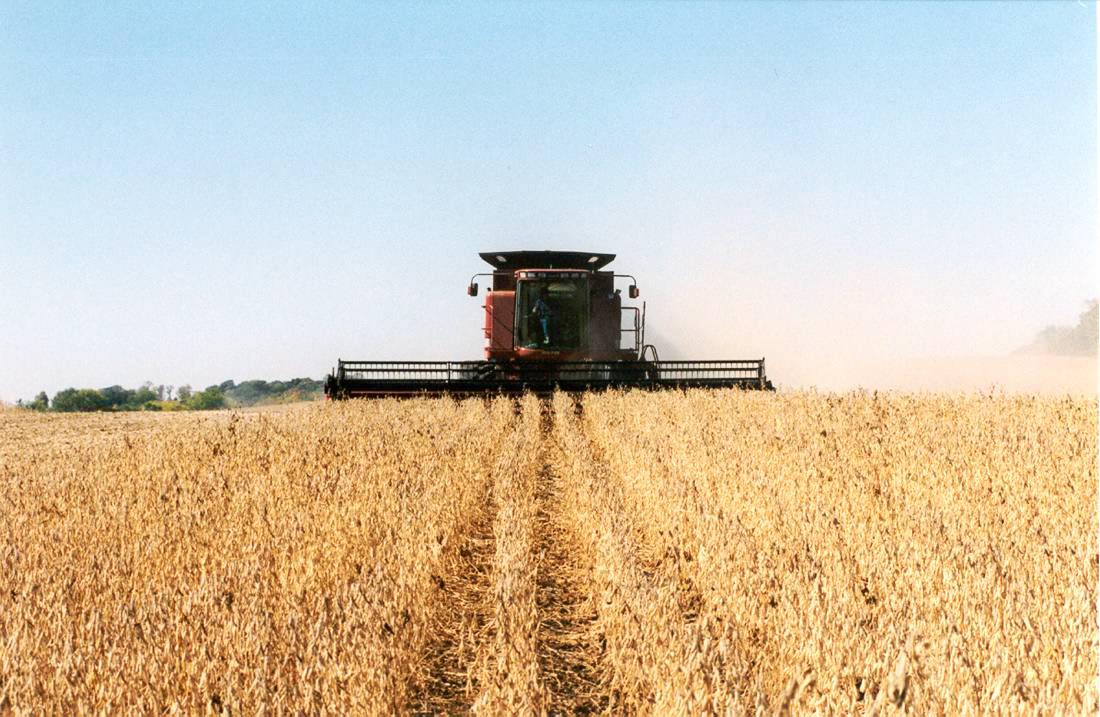
The harvest of 2016 is shaping up to be a defining year for tillage farming. Unfortunately, the prospects are unfolding very much along the lines predicted last spring. Market oversupply still looms strongly on the back of the big expected harvest output plus carryover stocks. The net consequence is incessant price pressure to put even more pressure on incomes. Sadly, no one in authority seems to care and disappointing yields exacerbate the problem.
The income challenge in the sector has been well documented in recent weeks. A fourth year of low prices is threatening the ability of growers to meet basic repayments for machines, inputs and land. Unlike the livestock sectors, it is not possible to expand production in tillage without an acre of ground and so land rental is a big cost element in the sector. This too has increased in recent years as the shackles were thrown off of dairying and a new demand centre was introduced through the new entrants’ scheme.
All of these factors must eventually stretch the elasticity of the sector to breaking point and this could be the year. Grain is the most global of commodities and those in the sector accept that. For this reason growers know that it is essential to be able to ride a year or two of low prices or yields but four in a row is too many. We see the EU take action on the possibility of an income crisis in dairying but not even recognition for the problems across the EU grain sector.
Higher then normal yields helped the situation for many in 2015. Still, whether we like it or not this situation cannot continue. It has been frequently stated that high grain prices are fundamentally good for Irish agriculture but that assumes you are a grass-based livestock producer.
Listen to Andy Doyle and Pat O'Toole's analysis in our podcast below:
Not all livestock farmers depend on grass and those in the intensive livestock sector are more vulnerable to higher grain/feed prices. However, the experiences of recent years have shown that lower feed prices generally result in pressure on product prices by retailers.
Many sectors are caught in this dilemma. Perhaps tillage farming is worst hit because the majority of output products are used directly by other farmers. And with all farming enterprises under financial pressure, much of the squeeze falls back onto the bottom rung of the ladder – the grain grower.
The cost base against which tillage farmers do their business has increased considerably in recent decades, as shown in Teagasc’s production costs for spring barley and winter wheat in Figure 1. These costs will differ between individuals, depending on their farming system, but the trend is still valid. The spike around 2008/9 resulted from the significant fertiliser price hike at that time.
It is important to remember that the costs graphed in figure 1 are input costs plus the cost of getting the work done. Fixed costs are not included and these are also likely to have doubled, or more, during the same period.
My guess is that they have increased from around €40/ac in the late 1970s to over €100/ac today. So this puts the cost of growing an acre of winter wheat at over €600/ac and spring barley at around €500/ac.
It will hardly have come as a surprise to most farmers that costs have escalated substantially in recent years, especially in the past decade. Fertiliser is a significant part of this increased cost. It became more expensive in an era when we needed more of it to secure reasonable yields. As our tillage ground becomes more worn, the requirement for applied nutrients increases and they all add to cost.
While all costs increased over the period, by far the biggest increase was encountered in fertiliser prices and this can be seen in Figure 2. Many of the individual cost items doubled, or slightly more than doubled, over the length of the period. The major exception was fertiliser, which increased almost sixfold . This was costed at €22/ac by Teagasc back in 1979 but this rose to €131/ac by 2015. The increase is partially due to increased usage on more worn land but it is mainly due to higher prices.
The other cost item that increased disproportionally was sprays, where the per acre cost increased over fourfold from €13/ac in 1979 to €56/ac in 2015. This is primarily due to increased dependence on chemical solutions to an increasing number of problems that arose from the system of farming. This cost too needs to be addressed by those who intend to remain in business.
Price is another factor in the income equation. This harvest we are initially looking north of €120/t as a potential green price for feed barley. In a cost income article in this paper on 9 January 2016 the average price used for feed barley in 1986 (30 years ago) was €120.63/t. That same year Teagasc put the production cost (excluding fixed costs) at €210/ac for spring barley as against €405/ac in 2015. And yields have not increased much in the intervening period as our soils became more worn.
Driver of scale
The ongoing process of increasing costs, flat yields and low price has led to an ongoing margin squeeze which has become acute with time. Falling margins rather than increased income have been the main driver for the increased scale which has taken place in recent decades. While scale can be a significant driver of efficiency in other countries, the cost of acquiring that scale has made additional income very difficult to secure in this country, except in the occasional high-price year.
Scale can bring efficiencies, especially with regard to machinery and buying and selling power, but it has also brought many inefficiencies. It is easy to become a slave to machinery bills and even more so to entitlement ownership. But farmers are now trapped by the use them or lose them obligation for entitlements and sale is unrealistic due to the 50% clawback. On top of this every tillage farmer will see entitlement and farm payment value shrink in the years ahead because of convergence.
Can scale be generated through a cooperative of like-minded individuals? The answer should be yes, but in the current environment the incentive to lease longer term offers many famers much more income potential. Leasing offers more income security in the medium term and that’s an indictment of the CAP, globalisation and food security policies.
Nail in the coffin
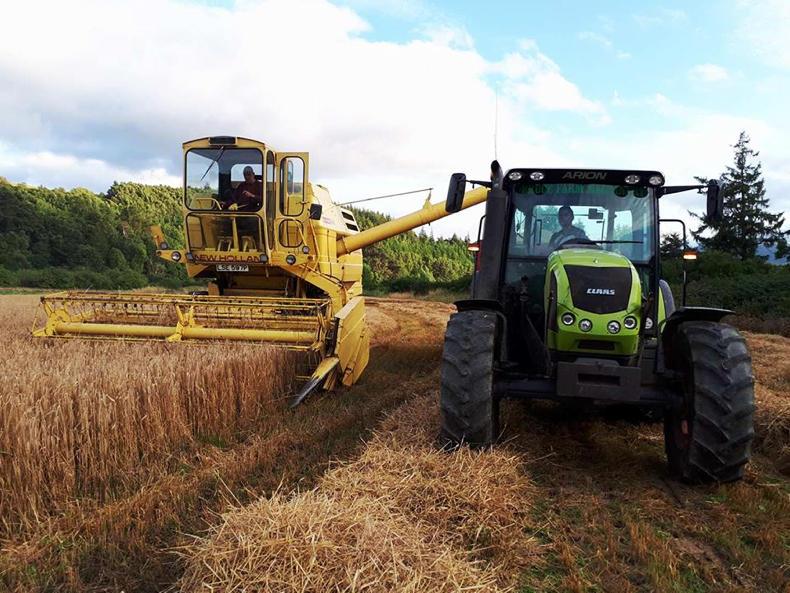
To add insult to injury, the weather has made harvest work disagreeable to say the least. Progress was frustratingly slow in many areas during the winter barley harvest, which is now probably in its last 10% nationally.
But for growers in the northern half of the country rain continues to disrupt progress. Many growers are hugely disappointed with winter barley and oat yields and grain quality is generally lower than last year.
But the further north you go, the bigger the problems that weather poses. Last weekend enabled much of the winter barley to be harvested towards the east but progress remains extremely frustrating in the north west, up around Donegal and Derry. Very broken weather is making cutting difficult with combines often only getting a few hours between showers. But that’s not the only problem.
Listen to Derry farmer Richard Kane's impressions of the harvest so far in our podcast below:
Heavy rain at the start of last week and again at the start of this week has left ground conditions very marginal and trafficability is now a problem. This same rain has also caused additional problems with both lodging and straw brackling. These both add to the difficulty and urgency of getting the job done but growers have no control over the weather. Harvest is very much a matter of smash and grab in that part of the world and gathering straw is an even bigger challenge.
Baling and removing straw has also been a problem in many areas but there was an amount of straw baled up over the weekend. But many fields still have a combination of bales and rows present as showers prevent baling even after straw has been rowed up.
Disappointing yields and poor prices are an inevitable part of the business, but no sector can sustain these indefinitely. Indeed, the majority of global producers are more than likely hurting in this price scenario with the few exceptions where currency is actually favouring production.
However, the hassle and frustration associated with having to battle against poor weather conditions, as well as poor yield and prices, adds massively to the challenge.
All these things combined are forcing many growers to reassess their future in tillage. Ultimately, no farmer can continue in an occupation where there is no return as bills have to be paid.
Unfortunately, there are many reports of growers in trouble with payments as cashflow problems predominate and income potential is challenged. For most, the option to engage in grant-aided investment is welcome, but it not seen as support where there is no capital available to drive such investment.
There is little doubt that 2016 will be a defining year for the sector.
Listen to Derry farmer Richard Kane's impressions of the harvest so far in our podcast below:



SHARING OPTIONS