


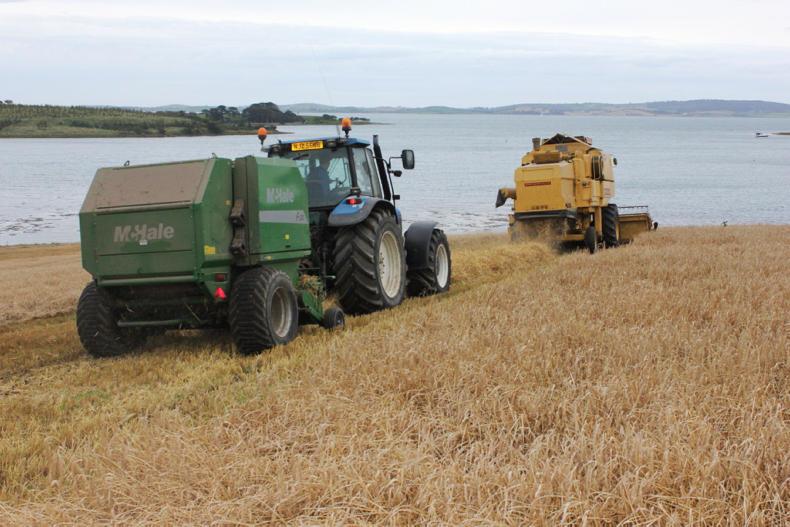
The most common response I get to my grumbling about this year’s harvest is, “at least it’s cut.”
I realise that some growers are staring catastrophe in the face due to poor weather conditions, but even getting the job finished brought none of the usual satisfaction.
Spring barley did not yield very well. The moisture content was too high, the bushel weight too low, straw had to be baled too soon and the combine operator summed it up perfectly when he described his task as ‘‘horrible’’.
Most crops in this locality were, at best, badly straw broken, and at worst, heavily lodged. Once again, it is a reminder that complacency has no part to play in the running of a farm.
Smug
After six or seven consecutive years when yields outmatched expectation, I was just a bit too smug about the prospects for my barley.
It got off to a good start, never had any setbacks, received two fungicides and, far more importantly, seemed to attract some favourable comments from neighbouring growers. All season, it looked like it was right on the upper limit without actually lodging, and I allowed myself to dream about casually dropping the old ‘‘3t to the acre’’ into every possible conversation.
Instead, the result of some revealing encounters with the weighbridge is 2.3t per acre.
In addition, the moisture content was just below 22%, so the true yield, at 15%, is probably 2.1t to the acre. This weight of spring barley is not disastrous in any way, but bitterly disappointing relative to the anticipated yield.
Queue
A bit of broken weather at the start of September meant that all the spring barley in this area was ready for harvesting at the same time. The small areas of winter wheat and oats had ripened a week or two sooner, and I was not aware of much of a queue for the combines.
By contrast, not only did barley ripen quickly at the last, it caused major panic for anyone forced to wait a few days.
As a study in human nature, dare I suggest that the combination of unsettled weather forecasts and the unavailability of a combine harvester at the exact minute it is required, brings out the very worst side of some people. Veiled threats, gentle intimidation and emotional blackmail are all on display, and if this seems a bit far-fetched, just ask any contractor with a combine. He’ll tell you.
Horror
I really felt for anyone driving a harvester, because they were under awful pressure when they arrived in the field, then discovered to their horror that it was going to be a slow crawl up and down (or, in some cases, one-way cutting) the swards.
A seven-acre field on this farm that borders Strangford Lough caused real headaches, and the first time around saw clammy, damp straw blocking the lifters and fingers every three or four yards.
The irony was that despite high moisture content, the dust was rising in clouds.
If you stood at the edge of the field and watched the combine’s progress, you could be forgiven for assuming that the barley was coming off at about 14%.
The straw is also something of a concern, because we decided to bale straight behind the combine.
With hindsight, there was little choice due to imminent rain, but I’m not over confident that straw will explode out of the bales when the netting is removed during winter bedding. The possibility of a few good dust masks strategically placed near hand seems fairly likely.
The financial consequences of growing barley haven’t been examined just yet. It seems that there is plenty of bad news surrounding the harvest this year, without piling up the misery any further.
If I did have to place my finger on a single piece of brightness, then there is a chance that straw will be very much in demand.
However, that bit of good fortune for growers might not generate much joy for anyone who is buying the bales.



SHARING OPTIONS