


The last year has shown us how reliant, and exposed, all farming systems are to weather. This time last year, farmers in Northern Ireland were dealing with the aftermath of one of the worst snow storms on record.
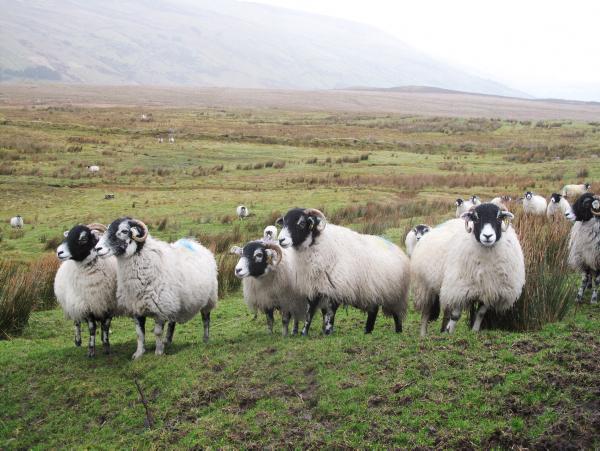
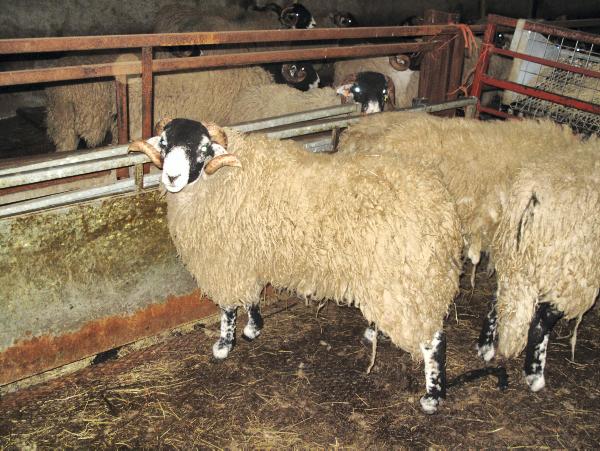
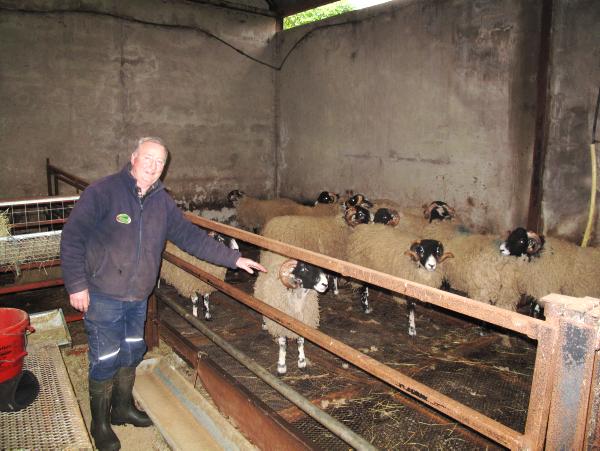
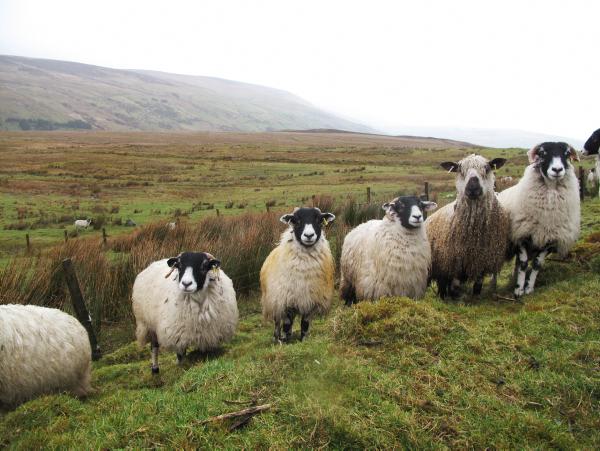
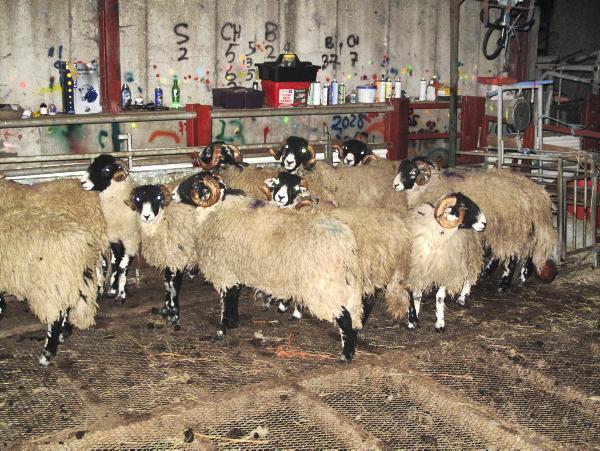
Last week, I visited John and Anne Blaney, Cushendun, Co Antrim, to see how their farm is performing a year on and, also, to gain an overview of their Swaledale flock, a breed growing in numbers in hill sheep enterprises.
Recalling last year’s snow storm, John Blaney says it is not unusual to experience heavy snowfalls in the area but says last year’s snow differed greatly from previous experiences.
“The lowland and farmyard is about a mile from the sea and, while it is relatively high, we would generally expect snow to last for a maximum of three days. Last year, the snow sat on the ground for at least three weeks and for up to and over five weeks on the hills. The snow was dense and far heavier than normal with a biting wind and strong drifts doing most of the damage,” he said.
Snow started falling on Friday morning and continued right up until lunchtime on Saturday, and stayed drifting until Sunday afternoon. John says that once the snow started, there was little anybody could do.
“The drifts and snow was that heavy, it was just too dangerous to try and get to the sheep. We got up to one section on Sunday afternoon after a few failed attempts on Saturday and Sunday morning. Experience tells you where sheep are likely to go for shelter when hard weather hits. But, as many farmers unfortunately found out, the direction of the drift must have changed on Sunday morning. This left sheep that we thought might have been at most risk safe and, unfortunately, left sheep that would normally be okay very exposed.
‘‘Compounding the problem was the fact that all phone signals were down so it was almost impossible for neighbours to warn each other about their flocks or where sheep were trapped.”
John says their farm was very lucky. “We lost 26 sheep when we could have just as easily lost 260. Luck had a lot to do with it. Sadly, some of our neighbours lost a few hundred with their livelihoods wiped out over the space of a few days.”
John says the sight that met them when they reached different parts of the hill was phenomenal. He says the replacement ewe lambs kept circulating and fighting against the snow and, apart from one, were all found standing on top of a few feet of snow.
The mature ewes were more scattered with small numbers separated from larger groups that remained together. About 40 mature ewes were dug out of a snow drift on another area of the hill with ewes still being found and dug out alive and dead over the next three days.
On some areas of neighbouring hills, there was no way of finding ewes until the snow had melted. John believes that his ewes benefitted from being supplemented heavily before the snow with ewes two weeks out from lambing and holding up well and experiencing lower than anticipated levels of stress-related abortions.
Feeding pays dividends
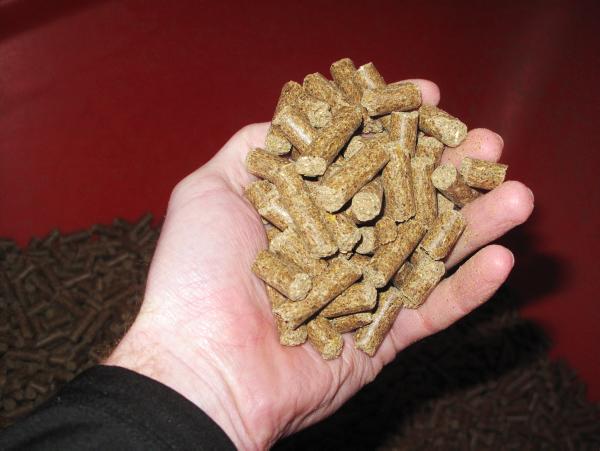
Supplementation of ewes before and after lambing is an area that has received increased focus in recent years. John’s emphasis is on maintaining ewes in good body condition rather than having to take considerable corrective action and introduce high levels of supplementation if ewes slip into poor body condition.
He feels that adopting this approach has helped reduce mortality levels to between 10% and 12%. Labour has also been reduced with lambs up to suckle quickly and ewes lambing with plenty of milk. Achieving a better balance with feeding throughout the year is also linked to increasing the litter size in the flock.
This year’s scanning results are impressive. There are 121 ewes carrying single lambs, 154 twin-bearing ewes, seven ewes carrying triplets and 21 barren ewes (an overall scanning rate of 1.49 lambs per ewe put to the ram).
Traditionally, ewes lamb from 5 April onwards. This was pulled forward to 26 March this year as it suited farm circumstances at breeding with favourable grass growth alleviating an earlier breeding season.
Scanning took place in late January, with ewes divided into single and twin/triplet-bearing ewes. Supplementation was introduced at a rate of half a pound (0.25kg) the week after scanning to twin-bearing ewes and a week later to single bearing ewes. Prior to this, ewes had access to feed buckets to increase the energy value of the diet with hill forage declining in supply and quality.
Supplementation rates were gradually built up to 0.75lb per day (0.35kg to 0.4kg) for single-bearing ewes in the week before lambing and 1lb (0.45kg to 0.5kg) to twin and triplet-bearing ewes in the final weeks of pregnancy.
John admits that supplementing ewes with concentrates for longer is a higher cost but explains that it cuts labour from feeding silage and hay on the hills and it also helps with flocking ewes (ewes are waiting every morning to be supplemented).
Achieving better lamb performance and carrying lambs through to heavier carcase and live weights also helps in justifying higher feed costs. John finds increased weight at lambing stays with lambs.
Lambing management
All ewes are removed from the hill in the final week of pregnancy and brought to grassland fields surrounding the farm. These fields provide a fresh run which boosts milk yield and allows for close supervision at lambing.
A shed is available to bring ewes indoors if weather conditions turn especially bad during lambing. However, John explains that the Swaledale ewes are much more content lambing outdoors and weather would need to be bad before a decision is made to bring ewes indoors.
Ewes are checked at 6am daily by walking through the groups to check for any overnight problems. Ewes are fed at 9am along the ground with a snacker and are then checked about 10 times during the day with the last check at nightfall.
John finds that there are no real problems with feeding ewes and mismothering as he says the Swaledale ewes will not leave the lambs or, else, temporarily leave them if they are hardy and return straight away post feeding. Last year, only five ewes required handling for lambing assistance.
The policy on the farm is to move any newborn animals from the lambing area that evening or the following day if lambs are born later in the day.
Every newborn lamb is checked to see that it has sucked before nightfall. On moving, each lamb is tagged with the tag number recorded and correlated to their mother and spray marked depending on their sire. This allows convenient visual monitoring of lamb performance from different sires.
Grazing management
Grazing management is based on utilising the best mix from the 30 acres of grassland around the farmyard and hill grazing. The hill grazing area is divided into six divisions of 50 to 120 acres in size. It extends from about 800ft above sea level at its lowest point to 1,800ft above sea level at the highest point.
The quality of grazing varies from in-by land to limestone grazing, rough grazing, moorland, blanket bog and an area of iron ore-based hill grazing. The higher altitude and more marginal areas are summer grazing with growth not starting until well into May.
Twin-suckling ewes are retained on the lowland until the end of June with ewes supplemented until grass supplies can sustain ewe and lamb performance at high levels. This is generally at a rate of 1lb to 1.5lb per head per day for three to four weeks after lambing, although the poor growth in 2013 meant a level of supplementation was required up until the start of June.
Ewes and lambs are then returned to hill grazing until weaning at the end of August. Single suckling lots are returned to the better grazing areas of the hill immediately post lambing.
Ewes and lambs are grazed rotationally on the hill with grass saved up as the season progresses to carry ewes during and after mating. The rest period that the lowland receives during the summer is used to build a supply of grass for male lambs after weaning with surplus grass saved as hay or haylage.
All ewe lambs are returned to the hill after weaning with the focus on keeping ewe lambs hardy and suitable for transferring onto hill grazing once sold from September.
Years of breeding and careful selection of genetics has seen John develop a strong market for his progeny, with all ewe lambs and a selection of breeding rams sold each year to repeat customers throughout the country.
Approximately 80 ewe lambs are retained as replacements with 80 to 85 ewe lambs sold off the farm at about 35kg liveweight. A selection of about 10 to 15 of the best quality ram lambs from the most desirable breed lines are sold as breeding shearling rams.
Records are maintained on the background breeding of all sheep sold to customers and John says this ensures repeat customers are not purchasing rams that may lead to a risk of inbreeding within a flock.
Maintaining such records is time consuming but John says it gives the flock a unique selling point and it also gives him invaluable information for the flock as to the breed lines that are performing best.
The level of recording taking place is facilitated and made easier by his wife, Anne, keeping detailed records and granddaughters Aoife, Niamh and Erin helping with recording scanning results and birth records.
A small percentage of male lambs are sold off grass with the majority of lambs allowed to develop a good frame at grass and housed and finished indoors from December to February.
John explains that the male Swaledale lambs are often slower to mature but says this is compensated for by the potential to kill into French market weights and achieve a percentage of R grade carcases. The average carcase weight of 2013 born lambs ranges from 20kg to 21kg with the average sale price at €87.
Preference
John prefers to maintain a young flock with the majority of ewes sold once they reach five years of age. The majority are sold as draft ewes for further breeding and, last year, commanded a sale price of €75 per head with this year’s ewes already sold forward.
John has experimented with crossing a Teeswater sire with Swaledale ewes but found the progeny of the cross called Masham were not hardy enough for grazing on the harder hills.
He also experimented with a Polled Dorset to breed lambs that could finish easier off grass.
He has found that there is better demand in recent years for the Swaledale crosses with positive recent research on pure breeding programmes and crossing with Scottish Blackface raising the breed’s profile.


SHARING OPTIONS