


In Paris last week there was unanimous agreement on a target of limiting global warming to a maximum of +2°C and pursuing efforts to limit the increase to 1.5°C. Food security and ending hunger were recognised as priorities.
A target of a 40% reduction in greenhouse gas emissions (GHG) by 2030 has been set as part of the European Union 2030 Energy Strategy. Each member state’s response will be determined by which industries and sectors are contributing emissions. Ireland is uniquely placed in Europe, having the largest percentage of GHG emissions attributed to agriculture.
In 2012, agriculture in Ireland represented 30.7% of national emissions whereas the average across the EU was 10.3%.
Dairy expansion
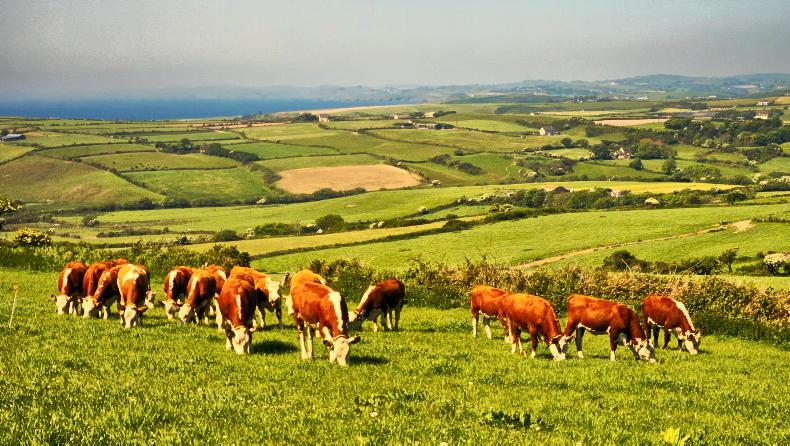
According to Food Harvest 2020, a 50% increase in Ireland’s milk production to 7.5bn litres by 2020 is a realistic target which will pave the way for further expansion. According to the Department of Agriculture, this expansion will come by way of a 15% increase in yield per cow by 2020 and by an increase of between 300,000 and 350,000 in the national dairy cow herd. Irish dairy production has increased by about 12% for the year to date in 2015.
The GHG emissions from a dairy cow are comparable to the GHG emissions from an average family car, giving an indication of the negative perception society may have as the sector continues to expand.
As a member state of the EU, Ireland has committed to reducing its Non-Emissions Trading Sector (Non ETS) GHG emissions by 20% by 2020, but Irish agriculture is currently off target, with the EPA projecting a reduction of just 5% in emissions by 2020. The COP21 agreement and the 2030 EU Energy Strategy places further obligations on Ireland up to 2030 and agriculture must strive to play its part. Failure to do so may result in GHG emissions targets acting as a de-facto production quota.
Efficient
According to the Joint Research Centre of the European Commission, Irish dairying is the most efficient (CO2/kg milk) in the EU. Many farmers have embraced practices which have led to greater efficiency such as improvements in herd EBI and milk solids output per cow in addition to improvements in nutrient and grassland utilisation. But it is not always recognised that such practices are a necessary element of any effective response to climate change. The dairy sector must do more to champion this message.
To ensure long-term sustainable intensification, the Irish dairy sector must respond actively to climate change. A demonstrable commitment to doing so will help maintain a good relationship with society and the consumers. By being proactive, Irish dairying can avoid the negative publicity endured by the New Zealand dairy sector with the “dirty dairy” campaign.
Recommendations
A key recommendation is the urgent need to appoint a credible, independent (non-commercial), science-based spokesperson to represent Irish dairying and the wider agricultural sector on climate change. This role is required to ensure that the media, relevant stakeholders and society generally are kept properly informed of challenges posed by climate change in Irish agriculture as well as the actions being taken to address it. In the ongoing absence of such an appointee, there is a risk that the resultant vacuum will be filled by anecdotal rather than evidence-based reporting by the media. Also required are:
1. An action plan for the Irish dairy sector with a structured framework to address the challenge posed by climate change.
2. Strong governance and support from sector leaders.
3. An effective communications plan.
4. Support for farmers through knowledge transfer and innovative environmental schemes. A proactive action plan may gain access to European Innovation Partnership funding.
5. Continuous investment in R&D and collaboration at an international level to find long-term solutions to the climate change challenge.
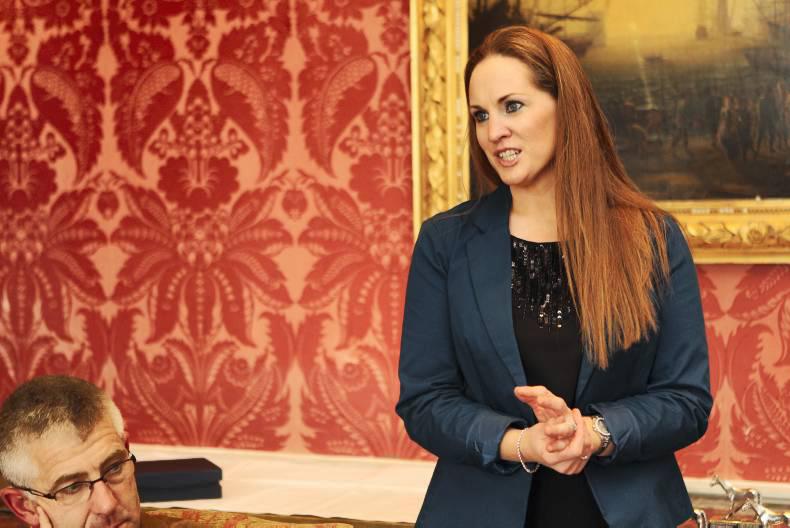
Mary Delaney completed a Nuffield Farming Scholarship on Sustainability – the Climate Change Challenge for Irish Dairying. (see: http://nuffieldinternational.org/rep_pdf/1444214717Mary-Delaney-2014-report.pdf) She lives on a dairy farm in Co Kilkenny and is an employee of Glanbia Agribusiness.



SHARING OPTIONS