



James and David Bryan set up their contracting business just outside the village of Kilbrittain, Co Cork back in 1990. From a dairy farming background, their contracting business is mostly based around harvesting forage. This is hardly surprising given the large number of dairy farms in the area.
The Bryans’ maize harvest is slightly different from the norm – all the maize harvested ends up in a clear plastic wrapped bale ready for delivery by the brothers.
James commented: “This is a tight-margin business and we have to keep control of our costs. Baling maize is not a new concept, and contractors have shied away from the service due to the expensive investment in machines required for a seasonal job.”
The Bryans seem to have cracked this problem, with a little thought and investigation into alternative machines.
Picture 1

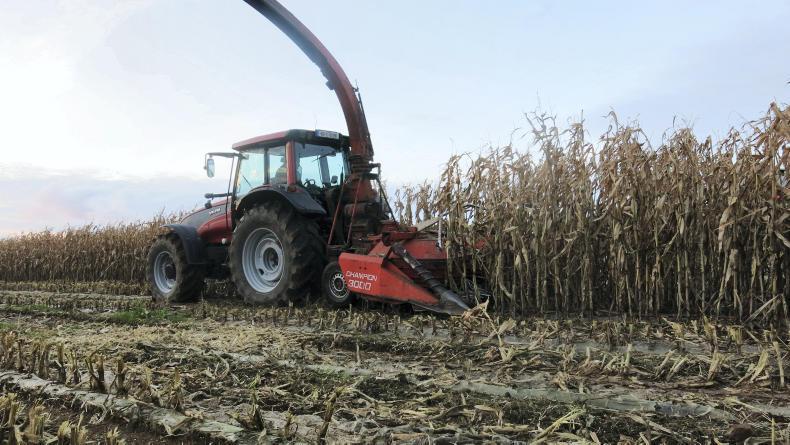
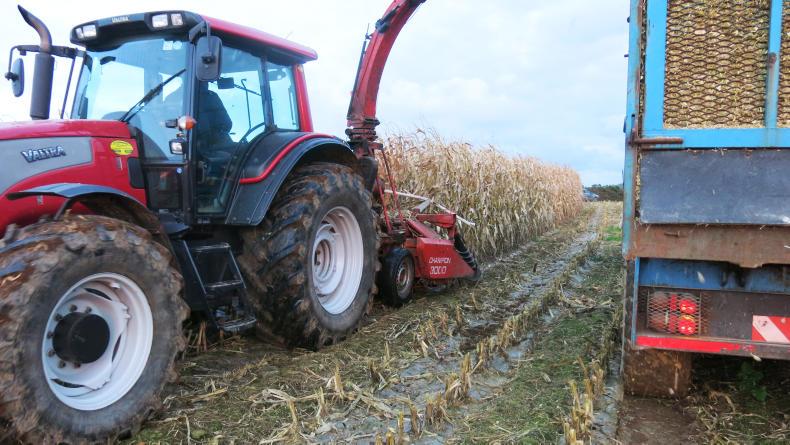
The Bryans’ harvester is a used rear-mounted Kemper Champion C3000. The machine came from a UK farm eight years ago. The farmer who owned the harvester emigrated to Canada to farm. James recalls the machine costing around £4,500.
It paid for itself in its first season, James adds, replacing a contractor who used to harvest the maize.
“It’s a really cost-effective solution for us. We could not justify the investment in a self-propelled harvester for six weeks work out of the year. The harvester suits our operation, it matches the output of the baler in the yard,” says James.
All the maize harvested by the Bryans is transported back to the base yard by a fleet of Deutz tractors and a selection of trailers. The maize crop is planted in rented ground around the local area, so the delivery time on trailers can limit the output of the machine. “On a good day, with no stops, the harvester can easily harvest 20 acres plus,” says James.
The Champion C3000 is the largest model in the range, harvesting four rows of maize with a 3m rotary-header. The cutting length is adjusted by a four-speed transmission, and the number of knives used. James commented that the header uses many of the same parts found on the larger Kemper headers. All the maintenance is carried out on-site, so keeping the machine is not a problem.
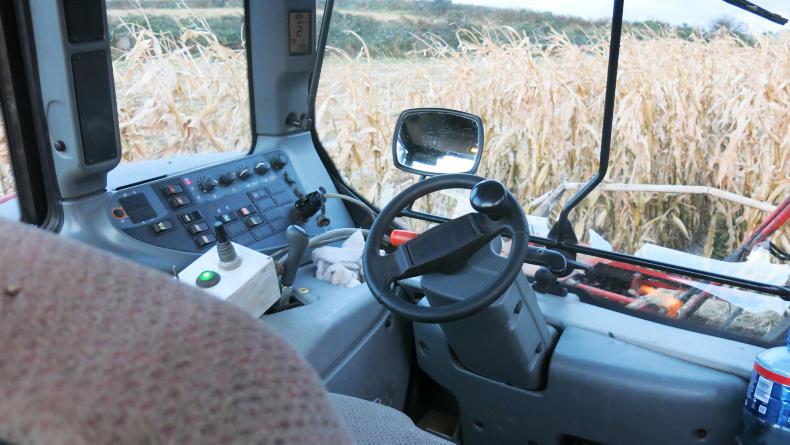
New to the operation this year is the Valtra T191, again bought in from the UK. The tractor is rated at 185hp, according to the specification, using a 7.4l Sisu engine. The tractor’s real benefit is the reverse-drive system from Valtra. It really suits the operation of the Kemper harvester.
In the past James used a Deutz 165, reversing around the field, so the change in driveability is huge for the effectiveness of the operation.
The tractor burns about 200 litres of fuel in a day, according to James. This keeps with the theme of low-cost harvesting seen across the business.
The 2008 tractor has just over 3,500 hours and was home in the yard for about €45,000. The plan for the big Valtra is to fit a set of triple mowers for the summer months, mowing down ahead of the high-specification Goweil baler-wrapper combination.
Picture 2

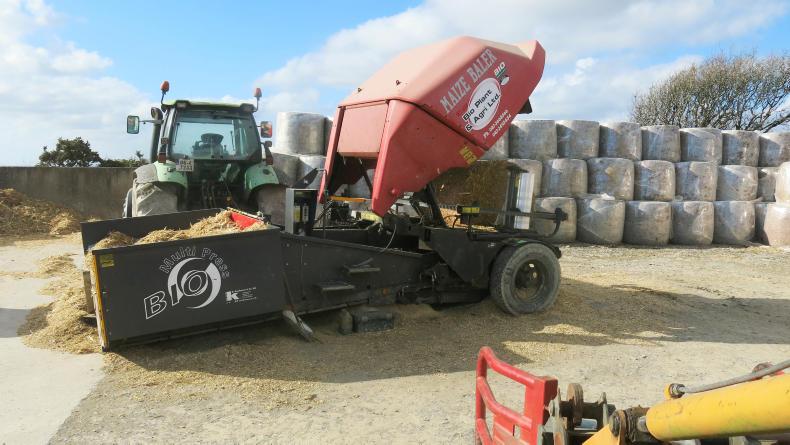
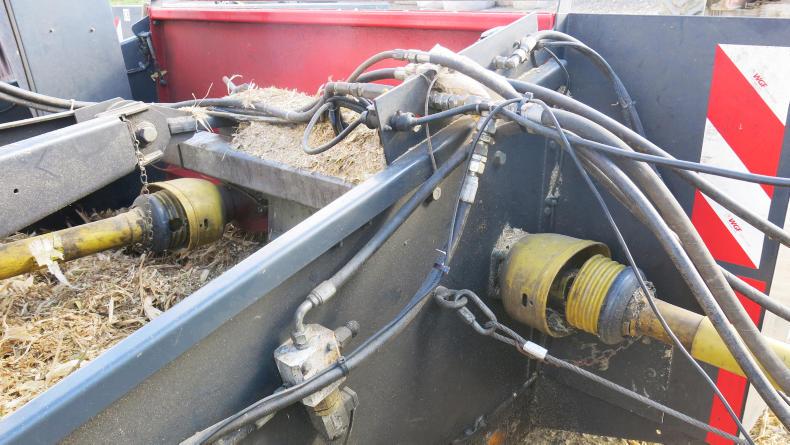
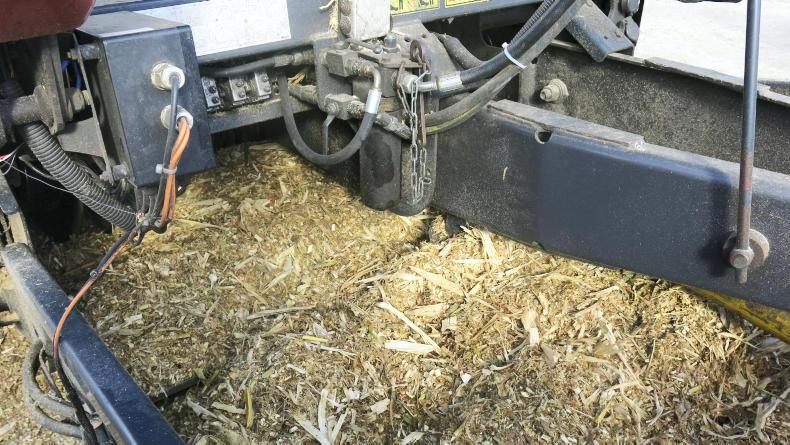
The German-made Kaufmann Bio Multi-Press is the only feed unit available for use on the Bio-baler. After seeing the unit work in Europe, the Bryans made the €20,000 investment to fully automate the baling process in the yard. The attachment upgrades a conventional baler into a multi-purpose one. The unit is driven off the tractor’s hydraulics and PTO unit to transfer power to drive the baler. The speed of the conveyor floor is matched to the baler output and is hydraulically driven by a motor mounted to the side of the conveyor floor, with the height mounted to meet the intake of the baler’s feed-rotor – eliminating the need for pickup as the maize will just fall through the tines.
The PTO drive is directed to the baler by a right-angle gearbox on the unit. Driving the baler for the Bryans is a Deutz 165. David says the unit can be assembled for work in less than 30 minutes.
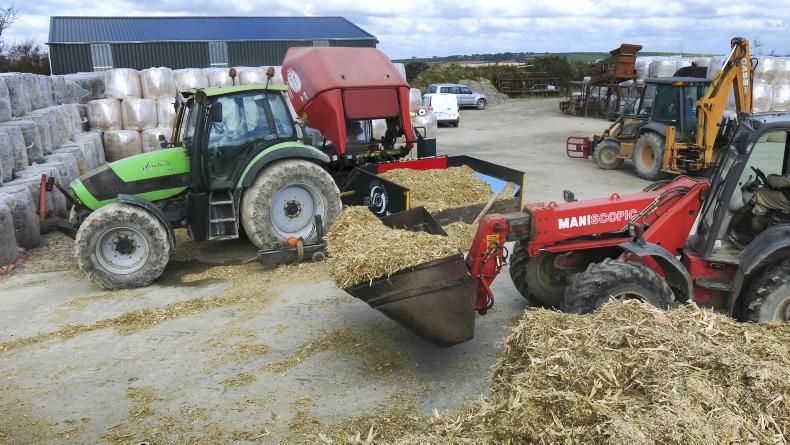
The Multi-Press has a bunker located in front of the conveyor which is loaded using the Manitou loader. The trailers arrive in the yard, tip and go, allowing the harvester to keep going in the field. The trailer could tip on to the bunker-hopper also, but it is more time-consuming. Underneath the baler, a conveyer belt makes sure that forage debris from the bale chamber are fed back into the bunker.
Picture 3

The baler used is a Kverneland Tarrup Bio-baler, which has been in operation for a number of years on the farm. David, who directs operations in the yard and organises delivery, says the baler has been very reliable, producing uniform bales.
Maize bales are quite heavy and the chamber in the baler is under a little more pressure than when baling conventional grass. Costing €12,000, it is a long way away from the €200,000 plus investment in a specialist maize baler, according to David.
All the maize is wrapped in clear plastic – David believes it looks better as a finished product and customers get a chance to see the quality.
From the baler all the bales are stacked using the Case IH digger and bale handler. The machine works conventionally, only it is fed material by the Kaufmann Multi-Press bunker and conveyor system. If a blockage occurs the slip-clutch will activate, just like a normal baling operation. The floor also stops feeding the baler when this happens, with a signal sent to the automated control panel.
Summary

James and David have a strong demand for maize bales. Dairy farmers who are looking to increase yield or supplement grass are regular customers, according to David.
Commenting on this year, James said the quality of the crop is very good, with at least two cobs on the plant.
The price of a bale of maize from the yard is €65-70 and delivery is available also. The Bryans run a truck and trailer for longer deliveries. The maize crop yields about 14-15 bales per acre so the attention to keeping the costs down is vital.


SHARING OPTIONS