Manufacturing industry usually involves collecting various raw materials, putting them together and making them into a finished product. It is the same in the food industry where ingredients are brought together and made into a finished product.
Meat processing, however, is the exact opposite of this process as it takes an animal, breaks it down into all its component parts and sells them off separately. The success of a meat processor depends on getting the value of these component part sales to add up to the amount paid to the farmer for the animal, cover the processing costs and leave a margin.
We are inclined to think that when cattle prices fall, factories get an extra margin with the opposite happening when farm gate prices are rising. This isn’t necessarily true as the value of some of the component parts could be falling faster than the market, or indeed rising faster on a rising trade.
It is also a rare occurrence for all of the components of a carcase to be moving in the same direction at the same time. By way of example, it is typical for steak cuts to increase in value in summer time while slower cook stewing and roasting cuts fall. The reverse process is typical in the autumn.
Value of hides
One of the single most valuable component parts of the animal isn’t used for the food chain at all yet is used by virtually everyone on a daily basis for a range of uses. The hide is removed from the carcase at the early stage of the processing system and is removed separately from the factory floor as it is considered a dirty product at the entrance point to what is effectively a sterile food manufacturing environment.
However, just because the hide is taken by a chute away from the slaughter hall to a skip in a yard doesn’t mean it's not valuable. While there are a multitude of sizes and grades of hides, in Ireland we essentially operate to two categories: steers/heifers, currently trading at around €60, and cow hides which are usually worth about €10 less in the market place.
Uses of hides
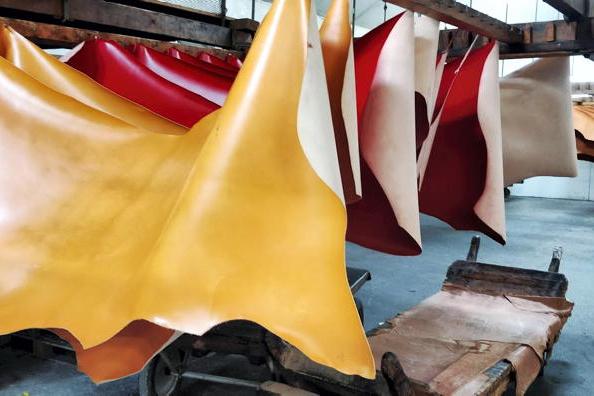
Once the batch of hides from a day’s kill is collected, usually by skip, they are collected by a hide merchant and sorted and the curing process can begin. Depending on the type of leather being produced, this process will take an absolute minimum of 10 weeks and involve a multitude of chemical processes, mechanical procedures and several spray point processes.
It is not uncommon for the processes to be carried out across several sites in different countries and the finished leather product then shipped to an end user. Producing a stronger and harder leather, typically used for shoe soles, involves a much longer process. Hides are dipped in tanks for up to 15 months followed by a month for further processing before they are ready. Maximising yield of leather from a hide is also a priority with typically the belly sold for industrial glove manufacture and the neck part used for top end designer belt manufacture.
A further option for hide use is in the luxury car market. For example hides tanned with an aluminium based tannage gives a white effect as opposed to the chrome based tannage which produces a blue hide prior to dying it with a finished colour. Ultimately, there is a multitude of uses for the leather that originates in the animals hide, involving different processes depending on the finished use for the leather and the quality of the original hide.
Issues with Irish hides
Irish hides tend not to make the top quality category, with some tear and cut damage in place on the vast majority of hides. This is typically caused by animals scratching or rubbing against hedges and barbed wire, the problem made greater by the historically small field pattern in Ireland.
This isn’t anywhere near as prevalent in Britain, where fields are of a larger structure, and not an issue on the extensive grazing systems of South America, where the highest quality hides are traditionally produced.
A further issue that comes against Irish hides securing top value particularly coming out of slatted houses is the amount of manure on the hide at the time of slaughter. Factory vets are always on the case of what they consider to be dirty cattle and not only is there a health risk, there is a loss of value issue with the hide as well if it is dirty.
Clipping can get around problems with the presentation of cattle, but again the risk of further cut damage of the hide is increased. Modern hide pullers in factories minimise the use of knives in removing the hide from the carcase, but the traditional butchery of cattle still practised by many independent butchers, involves the removal of the hide manually using exceptional knife skills which inevitably causes small cuts. In practice, dropping down from category 1 class hides to category 2 means a loss of about €5 value.
Tanning industry
Despite the island of Ireland killing almost two million cattle annually, and many towns and cities having place names of “Tannery lane or Tannery row”, there is no longer a tanning industry with all our hides being exported for tanning.
Historically Italy was the centre of the global leather industry. Within Italy the industry focused on two regions. One was around Venice, associated with the more commercial business processing everything while the other was concentrated around Pisa which is associated with using heavier hides for higher end premium leather products.
It should be emphasised that these are general trends and not regimental and there are other pockets of leather tanning across Europe in the Netherlands, France and Germany. We could almost draw parallels with the wine industry and just as there is a new world for wine production in Australia and New Zealand, the growing region for tanning and leather production is China and a quarter of UK and Irish hides finish up here each year.
As with wine, originally the new world offering was considered inferior but the standard of production and quality delivered by China continues to improve year-on-year, to the extent that its top end production now compares favourably with anywhere. However because of tradition, Italy will continue to be part of the prestigious end of the industry, just like Ferrari cars will always evoke a particular emotion.
Lamb skins
Lamb skins share many of the principles of hide production but there are important differences. Skins in Ireland rend to be little larger than in Britain and therefore worth slightly more. Similarly there isn’t an issue with scratches and cuts on lamb skins unlike hides and the trade is predominantly with Turkey in the early season up until around September, and China afterwards. Leather from cattle hides is a much more widely used product compared with lambs given its much greater volume of production.
Facts
Hides are the most valuable by product from the animal, worth over €60 for prime cattle.Irish hides are towards the top end of the market but prevented from being top because of small field structure causing scratch marks and manure attachment to hides, particularly during winter months.Tanning hides no longer happens in Ireland even thought it was a small local industry in many towns historically.Italy the centre of European industry but China’s importance is growing, now taking a quarter of Irish and UK production.Lambskins traded to Turkey and China.
Manufacturing industry usually involves collecting various raw materials, putting them together and making them into a finished product. It is the same in the food industry where ingredients are brought together and made into a finished product.
Meat processing, however, is the exact opposite of this process as it takes an animal, breaks it down into all its component parts and sells them off separately. The success of a meat processor depends on getting the value of these component part sales to add up to the amount paid to the farmer for the animal, cover the processing costs and leave a margin.
We are inclined to think that when cattle prices fall, factories get an extra margin with the opposite happening when farm gate prices are rising. This isn’t necessarily true as the value of some of the component parts could be falling faster than the market, or indeed rising faster on a rising trade.
It is also a rare occurrence for all of the components of a carcase to be moving in the same direction at the same time. By way of example, it is typical for steak cuts to increase in value in summer time while slower cook stewing and roasting cuts fall. The reverse process is typical in the autumn.
Value of hides
One of the single most valuable component parts of the animal isn’t used for the food chain at all yet is used by virtually everyone on a daily basis for a range of uses. The hide is removed from the carcase at the early stage of the processing system and is removed separately from the factory floor as it is considered a dirty product at the entrance point to what is effectively a sterile food manufacturing environment.
However, just because the hide is taken by a chute away from the slaughter hall to a skip in a yard doesn’t mean it's not valuable. While there are a multitude of sizes and grades of hides, in Ireland we essentially operate to two categories: steers/heifers, currently trading at around €60, and cow hides which are usually worth about €10 less in the market place.
Uses of hides
Once the batch of hides from a day’s kill is collected, usually by skip, they are collected by a hide merchant and sorted and the curing process can begin. Depending on the type of leather being produced, this process will take an absolute minimum of 10 weeks and involve a multitude of chemical processes, mechanical procedures and several spray point processes.
It is not uncommon for the processes to be carried out across several sites in different countries and the finished leather product then shipped to an end user. Producing a stronger and harder leather, typically used for shoe soles, involves a much longer process. Hides are dipped in tanks for up to 15 months followed by a month for further processing before they are ready. Maximising yield of leather from a hide is also a priority with typically the belly sold for industrial glove manufacture and the neck part used for top end designer belt manufacture.
A further option for hide use is in the luxury car market. For example hides tanned with an aluminium based tannage gives a white effect as opposed to the chrome based tannage which produces a blue hide prior to dying it with a finished colour. Ultimately, there is a multitude of uses for the leather that originates in the animals hide, involving different processes depending on the finished use for the leather and the quality of the original hide.
Issues with Irish hides
Irish hides tend not to make the top quality category, with some tear and cut damage in place on the vast majority of hides. This is typically caused by animals scratching or rubbing against hedges and barbed wire, the problem made greater by the historically small field pattern in Ireland.
This isn’t anywhere near as prevalent in Britain, where fields are of a larger structure, and not an issue on the extensive grazing systems of South America, where the highest quality hides are traditionally produced.
A further issue that comes against Irish hides securing top value particularly coming out of slatted houses is the amount of manure on the hide at the time of slaughter. Factory vets are always on the case of what they consider to be dirty cattle and not only is there a health risk, there is a loss of value issue with the hide as well if it is dirty.
Clipping can get around problems with the presentation of cattle, but again the risk of further cut damage of the hide is increased. Modern hide pullers in factories minimise the use of knives in removing the hide from the carcase, but the traditional butchery of cattle still practised by many independent butchers, involves the removal of the hide manually using exceptional knife skills which inevitably causes small cuts. In practice, dropping down from category 1 class hides to category 2 means a loss of about €5 value.
Tanning industry
Despite the island of Ireland killing almost two million cattle annually, and many towns and cities having place names of “Tannery lane or Tannery row”, there is no longer a tanning industry with all our hides being exported for tanning.
Historically Italy was the centre of the global leather industry. Within Italy the industry focused on two regions. One was around Venice, associated with the more commercial business processing everything while the other was concentrated around Pisa which is associated with using heavier hides for higher end premium leather products.
It should be emphasised that these are general trends and not regimental and there are other pockets of leather tanning across Europe in the Netherlands, France and Germany. We could almost draw parallels with the wine industry and just as there is a new world for wine production in Australia and New Zealand, the growing region for tanning and leather production is China and a quarter of UK and Irish hides finish up here each year.
As with wine, originally the new world offering was considered inferior but the standard of production and quality delivered by China continues to improve year-on-year, to the extent that its top end production now compares favourably with anywhere. However because of tradition, Italy will continue to be part of the prestigious end of the industry, just like Ferrari cars will always evoke a particular emotion.
Lamb skins
Lamb skins share many of the principles of hide production but there are important differences. Skins in Ireland rend to be little larger than in Britain and therefore worth slightly more. Similarly there isn’t an issue with scratches and cuts on lamb skins unlike hides and the trade is predominantly with Turkey in the early season up until around September, and China afterwards. Leather from cattle hides is a much more widely used product compared with lambs given its much greater volume of production.
Facts
Hides are the most valuable by product from the animal, worth over €60 for prime cattle.Irish hides are towards the top end of the market but prevented from being top because of small field structure causing scratch marks and manure attachment to hides, particularly during winter months.Tanning hides no longer happens in Ireland even thought it was a small local industry in many towns historically.Italy the centre of European industry but China’s importance is growing, now taking a quarter of Irish and UK production.Lambskins traded to Turkey and China.










SHARING OPTIONS