


Initial projections from DAERA indicate that there will be space for around 6,200 individual farmer agreements in the upcoming Environmental Farming Scheme (EFS).
The department aims to open the £100m scheme for applications at the end of February. However, this is still subject to the scheme receiving business case approval from the Department of Finance.
Speaking at a meeting in Greenmount last week, Brian Ervine from DAERA said that approval for the scheme will not be affected by the collapse of the Stormont Executive and is a process between the two departments.
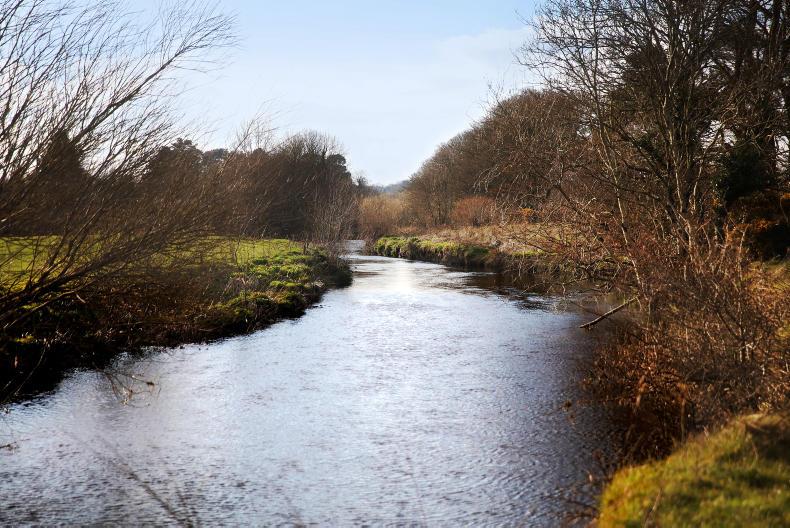
The wider level of the scheme will be available for all farmers and the higher level will be for farmers in environmentally designated areas. The third element of EFS is for groups where a facilitator will coordinate co-operative measures by farmers in areas such as a river catchment.
“The first year of the scheme will have only a few groups starting in pilot projects. We are mostly trying to get individuals on the scheme first,” Ervine said.
The plan is for applications to open for a month from the end of February with 2,000 wider-level agreements beginning in July 2017 and 300 higher-level agreements starting in January 2018.
Claims are then made in a single stage in the 2018 Single Application Form and the first payments under wider and higher levels will be issued from November 2018.
“There will be another opportunity to apply again. We anticipate another tranche opening next year,” Ervine said.
Overall, DAERA forecasts having 4,200 farmers in wider-level and 2,000 in higher-level agreements. The scheme runs for five years and, although 60% EU co-funded, it falls under the commitment made by the British Treasury in October 2016 for continued funding after the UK leaves the EU.
“Farmers are paid for the measures undertaken as part of the scheme – it is not a whole farm scheme. Payments are for establishing measures and then maintenance-based on income foregone,” Ervine said.
In 2012, approximately 12,000 farmers were participating in agri-environment schemes, covering around 40% of the land area in NI. However, with around 6,200 participants in the higher and wider levels and only specific areas of farms covered in the scheme, there will be significantly fewer farmers and land area in agri-environment schemes than before.
Difference
DAERA is keen to point out that this scheme is different to previous agri-environment schemes as applications are prioritised for actions that deliver the most environmental benefit in specific parts of a farm.
Providing an example last week, Ervine said that a woody strip planted along a waterway will receive more priority selection points if it is in a region of intensive grassland or poor water quality.
Applicants to the wider level can choose up to four measures from a list of 20 potential options. All applications for EFS are online and each field number has a drop-down bar in the application process which lists specific measures that are available for each field.
Higher
For the higher level, applicants in Natura designated areas receive priority, followed by ASSI and then other priority habitats.
Successful applicants then have to get an environmental planner to design a specific management plan for the scheme with applicants reimbursed for planners’ fees after agreements begin.
This process has meant that higher-level agreements will begin six months later and appears to be something that has not gone down well with the Ulster Farmers’ Union (UFU).
“It has got to the ridiculous stage where we need a consultant to fill in forms to show us how to apply for the new scheme. That is something that is very disappointing and we have made that clear to DAERA,” deputy president Ivor Ferguson said at a UFU group meeting on Monday.
Applicants accepted on to the scheme will also have to take part in some level of environmental training, either through attending events or online programmes. Ervine said that the aim is to have the first training events beginning in July 2017.




SHARING OPTIONS