




The job is best done in dry weather. Expect to pay €3 to €5 per square metre for cleaning and one coat of oxide paint, depending on the condition of shed, size, paint used, etc. Here, we look at a round roofed hayshed being cleaned, repaired and painted.
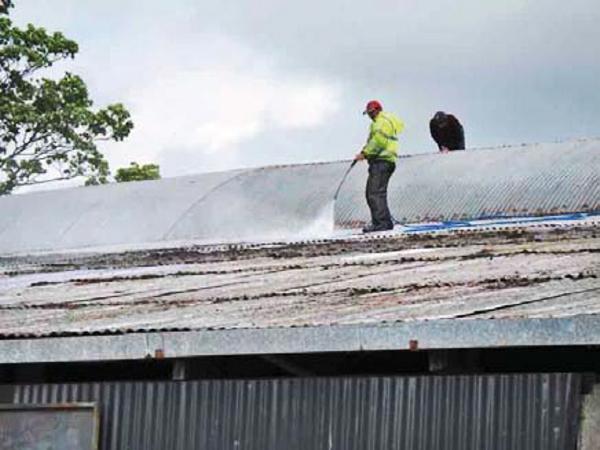
PICTURE 1
The quality of this overall job depends on the cleaning of the roof. Here, the roof is powerwashed to remove grime, dirt and flakes of loose paint. This shed is about 60 years old. It was last painted about 15 years ago. The paint has begun to flake on the roof. However, the roof cladding itself is still sound.
Working on a roof is a dangerous job. One hazard is not present here — there are no clear roof light sheets in this roof. They become brittle and weak with age and are then a great safety risk.
This job is being carried out by Denis Harrington who operates as Harrington Gutters.
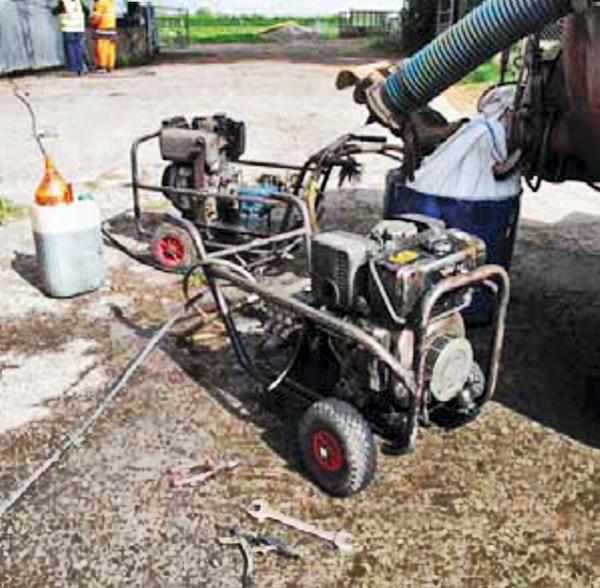
PICTURE 2
Cleaning requires power and reach. These two pumps operate at 3,000 lbs of pressure. At this kind of pressure, the water jet will remove all dirt and most loose paint. The hoses are 150ft long.
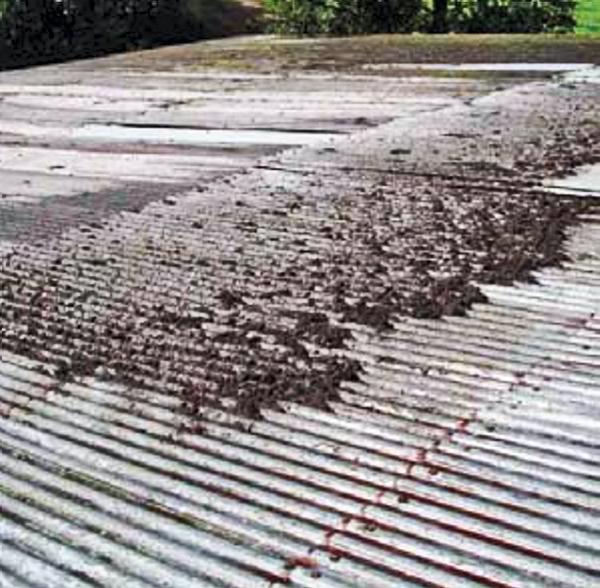
PICTURE 3
Here, we can see what the washing is removing — lichen,moss, dust and debris that has been stuck to theroof surface for years. Loose paint has been taken off. All that remains now is sound paint and bare metal. We can see that there was plenty of dirt on this roof.
Without this thorough cleaning, any new coat of paint would have had a short life before starting to peel off.
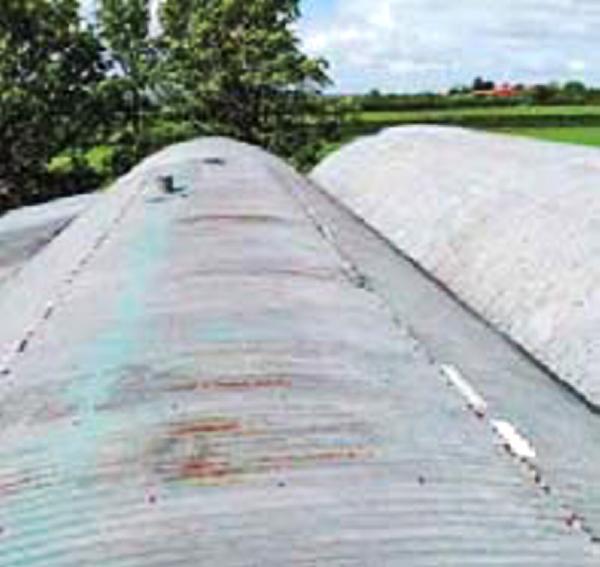
PICTURE 4
The roofs are cleaned and ready for painting. Note that some repair work has been done to the round roof on the left. While the sheeting on these sheds is generally sound, there is some rusting at the overlaps. This happens because damp gets trapped between the two sheets of metal.
PICTURES 5, 6 & 7
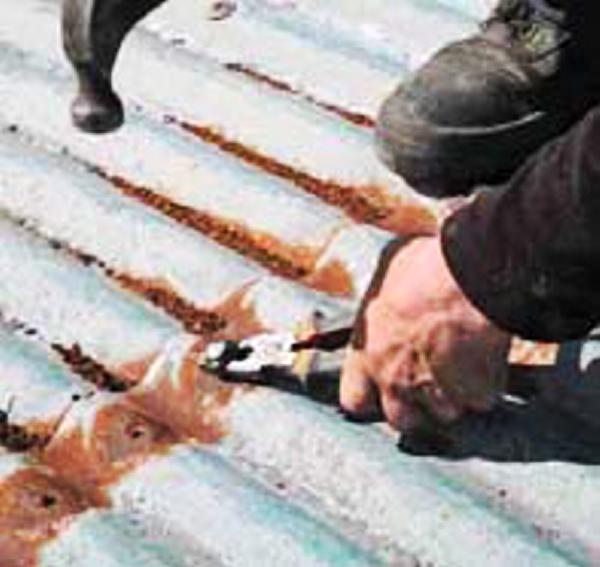
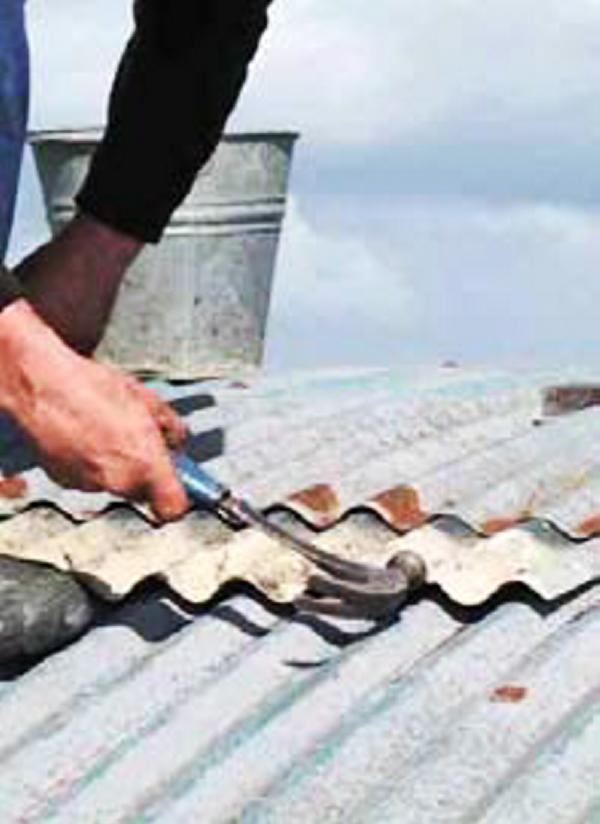
This is a good time to carry out repairs to a shed. Procedures include putting flexible foil patches on rust holes and then painting over. That isn’t really an option at a corroded overlap. Instead, Denis Harrington inserts a piece of new corrugated sheeting under a rusted sheet end.
First, the nails must be removed. Then (picture six) a new section of corrugated cladding, with the same profile, can be slid into place. New nails can then be hammered in (picture seven).
PICTURE 8
The shed is half painted using a good oxide product. Sound, well-aged sheeting like this does not require any primer under oxide paint. Experienced painters will apply paint in one coat, taking care not to leave any misses or light patches.
Rubber lining stops gutter leaks
A Laois company is offering a way of fixing leaking gutters which will be of interest to farmers: a strong, permanent rubber lining inserted into the gutter. The original gutter is left intact — leaks and all — so there is no need for any structural work.
The lining, marketed under the name Gutterline by Shanderry Construction Ltd, based in Coolrain, Portlaoise, is pliable and can be moulded to any gutter profile. It will tolerate changes in temperature and it can be fitted in damp conditions. It comes in one continuous roll up to 200m (600ft) long. This means that it can be fitted into a shed gutter in one full length, with no joints or seams.
To sit square in the gutter ends, the material is heated until pliable and then shaped into the gutter end and fixed permanently in place with a PVC/plastic mould. Outlets for downpipes are formed by cutting a small hole, approximately 10mm, in the liner. It is heated, moulded into the outlet and secured in place with a ‘thimble’, which is like a male insert.
For preparation, the gutter needs to be cleaned of all debris and any protruding screws, fixings, etc, snipped to ensure they don’t puncture the lining. The liner is secured at each gutter end, at water outlets and at intervals along the gutter. No adhesives are used in fitting the lining. The lining sells for €12.41/ m, plus VAT. Fitting will add €8 to €14/m, depending on the shed.
Shanderry say they have been using this product for eight years and it has performed well. It comes with a 25-year guarantee. Enquiries to Roy on 087 9874340.
*This article was originally published in the Irish Farmers Journal on 9 July 2011.


SHARING OPTIONS