


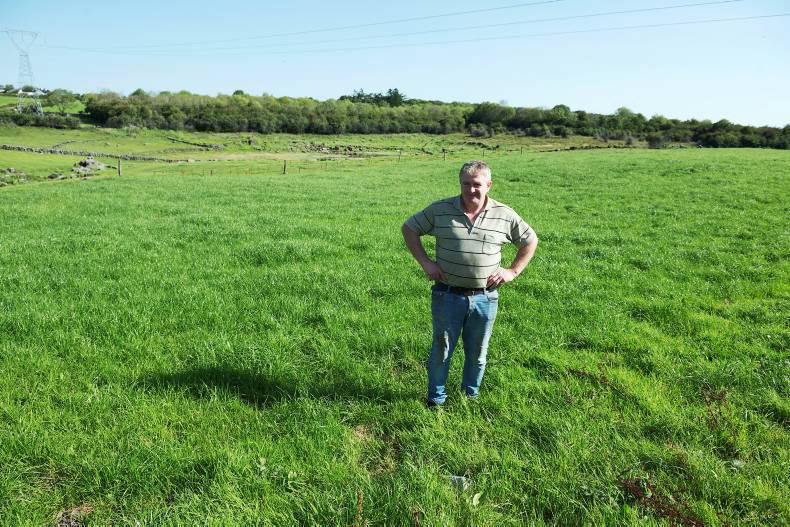
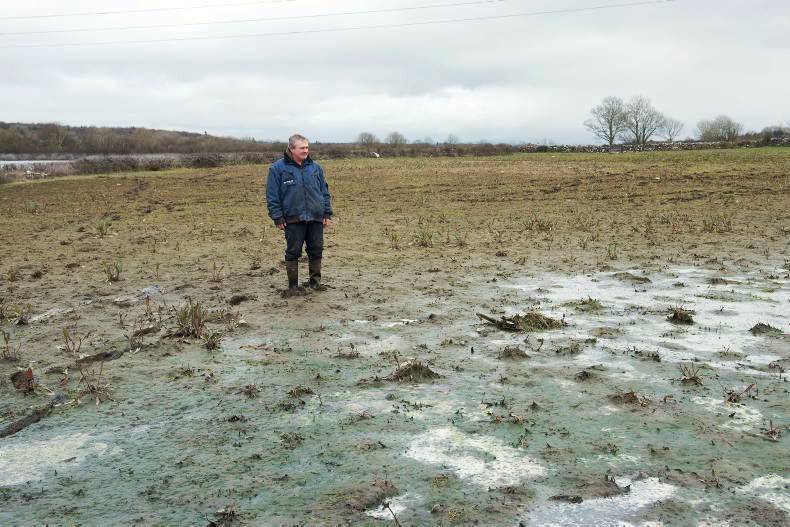
Farmers along the Shannon want to see action taken to alleviate flooding. The recent publication of the draft Flood Risk Management Plan (FRMP) bears little relevance to those who are possibly facing another long winter of flooding.
“I want to assure people that everything that can be done will be done,” said Minster for State at Office of Public Works OPW and Flood Relief, Sean Canney.
“I’m working with Bord na Mona to see if we can move their stocks in order to flood some of the lower-lying bogs during the winter. We’re also looking at other issues with Waterways Ireland such as finding a way to automate all sluices. Other options such as restricting boating on the Shannon over the winter doesn’t cost anything and can alleviate water levels.”
The draft FRMP for the Upper and Lower Shannon, which is currently open for public consultation, deems dredging to be technically viable but too costly. The report prepared by Jacobs engineering, published by the OPW, suggests that other less-expensive options can deliver the same results.
Widening the River Shannon by 50m on each bank between Banagher and Meelick and by 25m on each bank of the New Cut has been deemed technically and economically viable. Diverting the flow of water to bypass Meelick Weir is also included as an option.
The public consultation process for the Shannon plan will be open until 23 September and changes may be made to it based on the outcome of that. This is just one of 29 FRMPs in the country and the protection measures from all of them will be brought together when they are finalised to form a national priority list.
“The Shannon needs to be restored to the way it was so evidently that means dredging can’t be avoided,” said Tom Turley, who has land on the Shannon Callows in Offaly.
“It is essential that the five pinch points are removed on the Shannon. It’s wilful neglect on behalf of the Government and until the diggers move on to the land these reports are just meaningless."
Listen to Tom Turley in our podcast below:
“It takes a disaster to get a response from the Government and we can’t wait for a catastrophe to strike again. People didn’t build their houses on flood plains, the flood plain have gotten higher.”
Tommy Carney farms near Lough Funshinagh, which is a turlough in Co Roscommon near one of the Shannon’s three major lakes, Lough Ree.
“The turlough is currently 10ft to 11ft higher than normal for this time of the year, and has receded by about 39 inches to date,” Carney said.
“The turlough affects 1,000 to 1,100 acres and an additional 200 acres of agricultural land is rendered as useless. The excess water usually exists underground. Consequently the drainage system must be blocked somewhere by collapsed rocks, or an accumulation of silt.
“Remedial work is required sooner rather than later. We want to restore it to previous levels so when the levels do rise above unprecedented heights that it will return it to a safe level. If there is no relief pipe put in in the next two months quite a number of families will have to leave their homes for winter.”
“My aim is to get a new scheme fully funded by National Parks and Wildlife for the Shannon Callows SAC,” said Charlie Kileen from Meelick weir in Galway.
“Our Government is saving millions by having our land designated, yet they are not prepared to compensate in anyway. At the end of the day we’re not rural development, we’re rural restriction. Personally I’m not 100% happy with the way the IFA has handled our affairs with regards to SACs. There is a lot to be desired.”



SHARING OPTIONS