


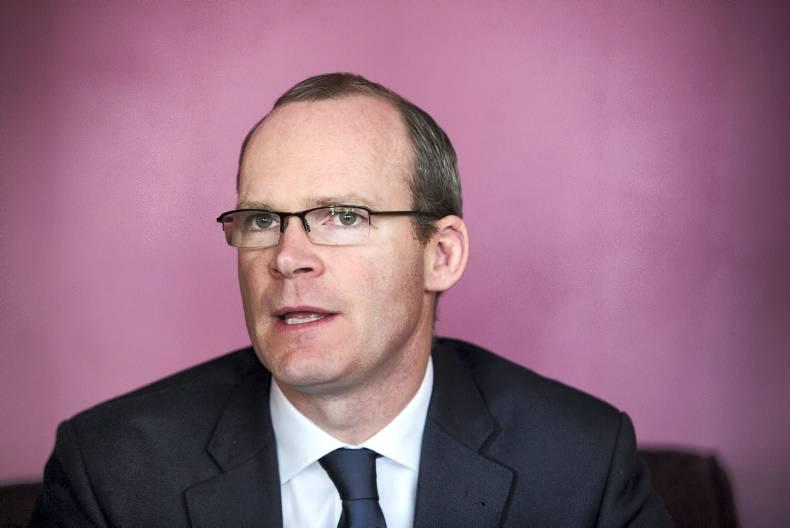
In March 2011, Cork South Central TD Simon Coveney stepped into Agriculture House to take on the role of Minister for Agriculture, Food and the Marine.
As part of the Fine Gael-Labour Government, Fine Gael was always going to get the farming portfolio, but Coveney came from an urban constituency.
While he did have an ag degree and the family had a sizeable farm in Cork, he was not an immediate choice for many.
Five years on and with the country likely to go the polls in late February, does Minister Coveney believe he has done a good job?
“I’ll let other people judge that,” the minister said. “My focus has been to try and really raise the profile of agriculture,” he added.
It has not been a straightforward tenure for the minister. There was a renegotiation of the Common Agricultural Policy (CAP), a horsemeat scandal, an isolated case of BSE, a fodder crisis, flooding issues in recent times, a beef crisis, a dairy crisis and income struggles in the tillage and pigmeat sectors.
Coveney said agriculture is the portfolio he wanted. He said outsiders’ views of agriculture of being backward irritated him, so “as soon as I was asked to be Minister for Agriculture, I was determined to change that view”.
Listen to extracts from agriculture minister Simon Coveney's interview with Patrick Donohoe in our podcast below:
Minister Coveney’s legacy – good or bad – is likely be his presiding over the reform of CAP.
“I’m very proud of the CAP,” Coveney said.
“I think we got everything we looked for. We got a fair redistribution of the Single Farm Payment. People who are losing money say they shouldn’t be losing money and people who gained said they should be gaining more. I think we got the balance right,” he said.
Despite the minister’s confidence in the deal he struck, many farmers, particularly in the west, remain unhappy with the deal. It is also the west which has seen the most vocal campaigns against the minister. Why is this?
“I think farmers in the west warmed to me, but they’re just more vocal about what they want. In terms of redistribution, the west is the big winner. I don’t buy into this narrative that I come from Cork and I only like the big farmer.”
Despite what Minister Coveney says, his stock is lower west of the Shannon, and Fianna Fáil agriculture spokesman Éamon Ó Cuív has made hay, winning support at Coveney’s expense. Ó Cuív’s role is a sore subject for Coveney and Fine Gael. Ó Cuív essentially accused the Government and Minister Coveney of cynicism with his assertion that the Rural Development Programme (RDP) was €300m light and was tailored away from western farmers.
“Éamon Ó Cuív, in my view, has no credibility in terms of the RDP or CAP. He wasn’t even part of it – we got nothing from him during the negotiations.
“After the deal was done, he was trying to rewrite it or reframe it from a point of view to suit some farmers in the west of Ireland,” Coveney said.
Beef Forum
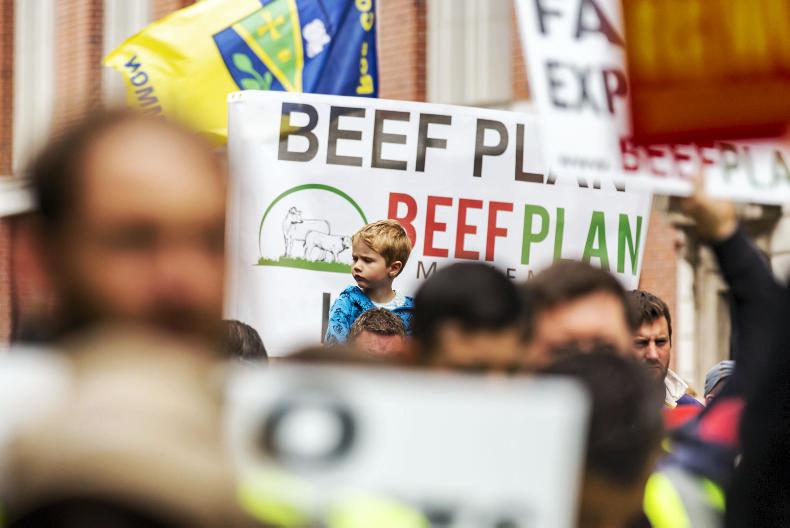
The Beef Forum has been lauded by the minister as the first and only attempt to get farmers and factories together. Critics say it is just a talking shop.
The minister defended the track record of the forum.
“The Beef Forum isn’t just about lobbying – it is about putting strategic thinking into the industry,” Coveney said.
Coveney also said that the forum helped solve some of the problems from the 2014 beef price crisis.
On beef markets, the minister expects the manufacturing trade to the US to open in quarter two of 2016, and he is very hopeful that Irish beef will be in China this year.
Dairy
The minister recognises that 2016 is going to be a tough year for milk prices. He said that the “milk price drop [of 2015] was disguised somewhat in the autumn by very good grass growth and very good quality milk”.
However, he said that farmers are not going to have that luxury at the start of this year and he said it is a concern.
Coveney said that European Commission market tools are required to support milk price but said he does not think it will raise intervention prices.
“[The European Commission] has tried to make aid to private storage more attractive,” the minister said, but accepted that many Irish processors have been slow to take this option.
With regard to consolidation, the minister said the “industry will move in its own time, but I think we will see more consolidation among co-ops”.
However, he cited a sharing arrangement between Glanbia and Dairygold as being a “very pragmatic relationship – they use each other’s infrastructure. When one is building, the other is providing cover.” He said this is as an example of work currently between co-ops happening with “no fuss”.
Payments
Ireland has a near-flawless track record of delivering direct payments to farmers. Despite over 121,000, or 98%, of farmers being paid in 2015/2016, it comes as little solace to those who are awaiting payments.
“Can I put this into context? Ireland was one of seven member states in the European Union to deliver advance payments before December,” he said, before adding that there are a raft of new schemes with which his staff has to contend.
Coveney said there will be two payment runs each week to farmers from next week, instead of one, and he hopes to get all payments, barring complicated ones, out within “two to three weeks”.
On farmers trying to make contact with Department staff on late payments, Coveney said: “I would accept there have been issues with regard to making contact with people to give you accurate information,” but he added this has been down to the “sheer volume” of calls.
General election
With a general election in the offing and Coveney fighting a tough constituency, does he want to return to Ag House, or would he prefer the Jobs portfolio with which he has long been linked?
“I would love to be [still in the agriculture role] … This [agriculture] is a jobs portfolio. There are 200,000 people employed in the broader food sector, and I view this ministry as a big economic ministry … I would love to stay here,” Minister Coveney concluded.


SHARING OPTIONS