We look at the key issues when Assessing fat covers on finished cattle, administering scour vaccines and the opportunities to take soil samples.
ADVERTISEMENT
Assessing fat cover on finished animals: With cattle housed in better conditions, those housed early for finishing are becoming covered with fat earlier this year. Once an animal starts laying down fat, the cost of each kilo of gain increases rapidly. The target here should be to draft for slaughter as soon as the animal is adequately covered. Taking a typical ration cost of €250/tonne and silage at €30/tonne, a typical steer finishing on 68DMD silage and concentrates will have a feed cost of over €2.50/head/day. In the case of steers and heifers, cattle should be examined over the loins, ribs and around the tail head to assess fat cover. Fat cover on bulls is more difficult to determine. The areas to look at are:
1. The cod area: The area between the back legs should be adequately fleshed, the scrotum will be filled and smooth.
2. The brisket: Between the animal’s front legs should fill up as the bull fleshes.
3. The topline: This should be well covered with flesh, with a softness behind the animal’s shoulder.
4. The flank: This should be full, rounded with a good covering of flesh over the ribs. Diet will affect the fat cover on animals. The energy content of the feed and the level of supplementation is critical.
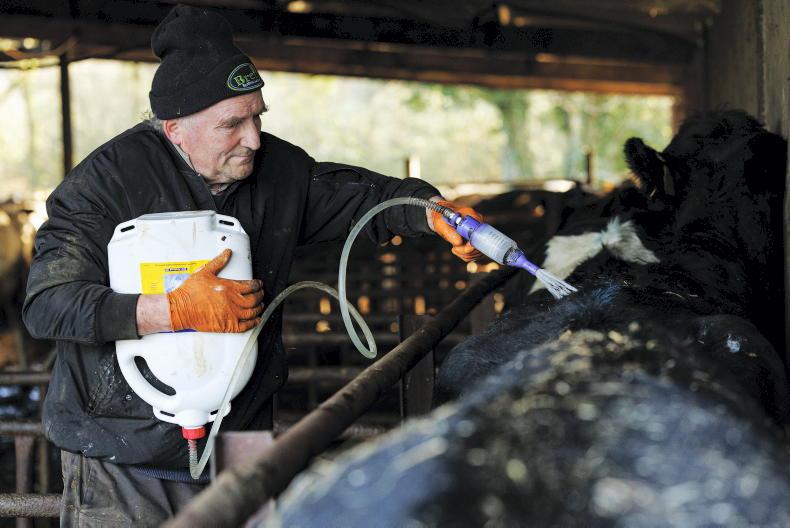
Scour vaccination: Scour can be a big issue on some farms, particularly later in the spring. Scour vaccines can have a positive effect on reducing outbreaks, but only where a vaccination programme is implemented properly. But first, before implementing a vaccination programme, look at simple issues like hygiene, bedding and management. Scour vaccines are expensive and need to be given to the cow or heifer from 12 weeks to three weeks prior to calving. Vaccinating the cow prior to calving will allow her to produce antibodies against the main scour-causing bacteria and viruses. As these antibodies do not pass from the cow to the calf prior to birth, the vaccine will be wasted if the calf does not acquire colostrum from its mother after birth. Ideally, the calf should get about three litres of colostrum within the first two hours of life. As the effectiveness of the vaccine will depend on the transfer of antibodies from the mother, the calf should remain on the mother’s milk for at least 10-21 days for full effectiveness of the vaccine. Where calves are bought in, management and cleanliness may be more effective at reducing the prevalence of scour.
Soil sampling: If soil sampling wasn’t carried out, and is due, now is the time to take samples when there has been no slurry or artificial fertiliser spread in over six weeks. The recommendation is to sample fields every five years. However, farmers with high stocking rates often see the merit in taking soil samples every three years to ensure their fertiliser plan is accurate and targets optimum soil fertility.
ADVERTISEMENT
Register for free to read this story and our free stories.
This content is available to digital subscribers and loyalty code users only. Sign in to your account, use the code or subscribe to get unlimited access.
The reader loyalty code gives you full access to the site from when you enter it until the following Wednesday at 9pm. Find your unique code on the back page of Irish Country Living every week.
CODE ACCEPTED
You have full access to the site until next Wednesday at 9pm.
CODE NOT VALID
Please try again or contact support.
Assessing fat cover on finished animals: With cattle housed in better conditions, those housed early for finishing are becoming covered with fat earlier this year. Once an animal starts laying down fat, the cost of each kilo of gain increases rapidly. The target here should be to draft for slaughter as soon as the animal is adequately covered. Taking a typical ration cost of €250/tonne and silage at €30/tonne, a typical steer finishing on 68DMD silage and concentrates will have a feed cost of over €2.50/head/day. In the case of steers and heifers, cattle should be examined over the loins, ribs and around the tail head to assess fat cover. Fat cover on bulls is more difficult to determine. The areas to look at are:
1. The cod area: The area between the back legs should be adequately fleshed, the scrotum will be filled and smooth.
2. The brisket: Between the animal’s front legs should fill up as the bull fleshes.
3. The topline: This should be well covered with flesh, with a softness behind the animal’s shoulder.
4. The flank: This should be full, rounded with a good covering of flesh over the ribs. Diet will affect the fat cover on animals. The energy content of the feed and the level of supplementation is critical.
Scour vaccination: Scour can be a big issue on some farms, particularly later in the spring. Scour vaccines can have a positive effect on reducing outbreaks, but only where a vaccination programme is implemented properly. But first, before implementing a vaccination programme, look at simple issues like hygiene, bedding and management. Scour vaccines are expensive and need to be given to the cow or heifer from 12 weeks to three weeks prior to calving. Vaccinating the cow prior to calving will allow her to produce antibodies against the main scour-causing bacteria and viruses. As these antibodies do not pass from the cow to the calf prior to birth, the vaccine will be wasted if the calf does not acquire colostrum from its mother after birth. Ideally, the calf should get about three litres of colostrum within the first two hours of life. As the effectiveness of the vaccine will depend on the transfer of antibodies from the mother, the calf should remain on the mother’s milk for at least 10-21 days for full effectiveness of the vaccine. Where calves are bought in, management and cleanliness may be more effective at reducing the prevalence of scour.
Soil sampling: If soil sampling wasn’t carried out, and is due, now is the time to take samples when there has been no slurry or artificial fertiliser spread in over six weeks. The recommendation is to sample fields every five years. However, farmers with high stocking rates often see the merit in taking soil samples every three years to ensure their fertiliser plan is accurate and targets optimum soil fertility.
If you would like to speak to a member of our team, please call us on 01-4199525.
Link sent to your email address
We have sent an email to your address. Please click on the link in this email to reset your password. If you can't find it in your inbox, please check your spam folder. If you can't find the email, please call us on 01-4199525.
ENTER YOUR LOYALTY CODE:
The reader loyalty code gives you full access to the site from when you enter it until the following Wednesday at 9pm. Find your unique code on the back page of Irish Country Living every week.







SHARING OPTIONS