


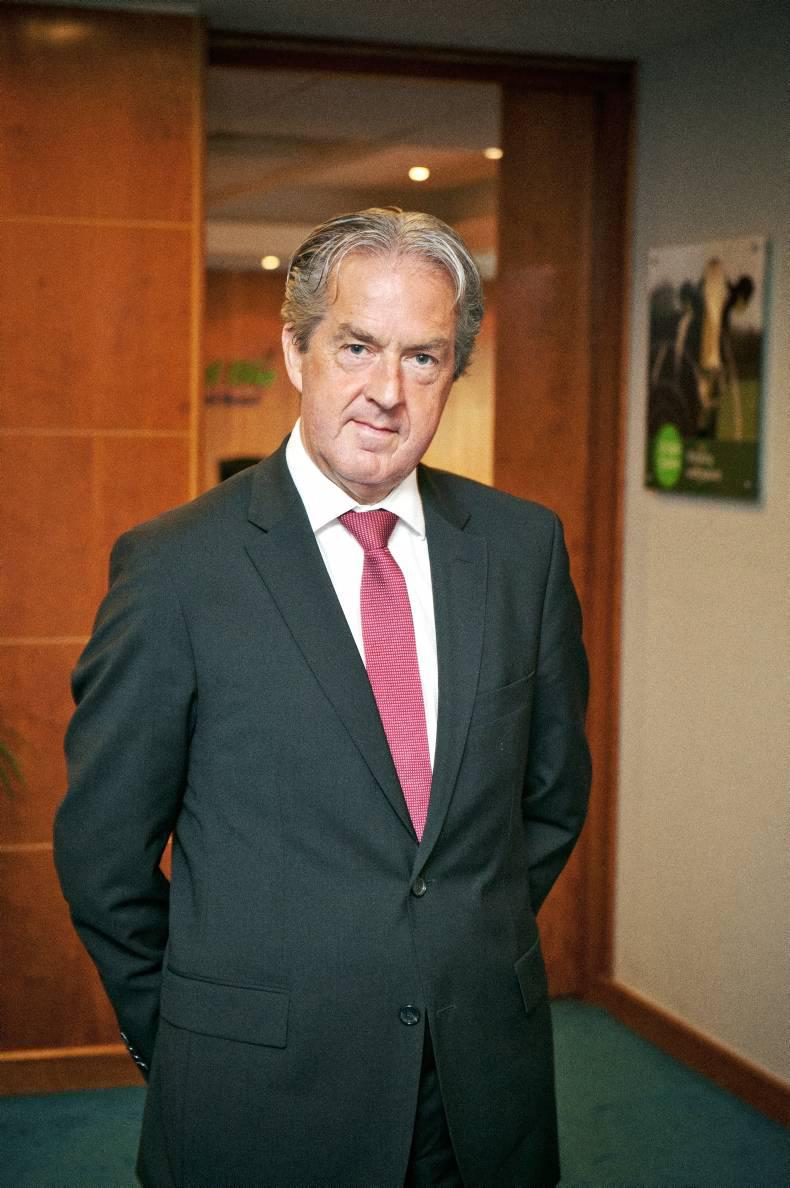
Having spoken with farmer and factory representatives, this week we speak with Bord Bia, the business responsible for market information. We met chief executive Aidan Cotter to get his views on the Beef Forum.
From the outset it is clear that Aidan is mindful of the industry sensitivities from last autumn. He chooses his words carefully to avoid antagonising any of the parties or appearing anything other than impartial. Bord Bia has a clearly defined brief from the Forum on the provision of market information. Aidan maintains this task is 70% complete.
Industry information
Bord Bia is one of a range of organisations charged with addressing issues that are intended to build confidence in the industry. To obtain information on beef products sold in various destinations, cooperation by the meat factories is required. Bord Bia confirmed that so far this has been delivered by the factories. It hopes to bring this phase of its work to a conclusion and report back to the Forum within the next couple of months.
As for the benefit of the Forum itself, Aidan is of the view that it was a very important initiative at a very difficult time in the industry where there was a serious breakdown in trust between farmers and factories. He said: “Farmers were on the receiving end of falling prices and watched a serious gap develop between Irish processors and those of our main market in Britain. There was a lack of understanding on why prices were falling and this is where Bord Bia have undertaken to pull market information together in so far as we can.”
While they are very different products, Aidan contrasted the market information available on milk and milk products with the information available for beef.
From the global milk auction prices to the availability of wholesale prices for traded products, there is a general understanding or at least transparency with the movement of world milk prices.
Beef has a multitude of component parts making up the carcase price. While there are standard EU price reporting mechanisms within the EU for carcase prices and similar mechanisms in major beef-producing countries worldwide, there is little published information on the component parts of the carcase. A notable exception is the US, where there is a price reporting mechanism in place for a range of beef cuts.
The current piece of work Bord Bia is doing for the Forum is a first step along the road of more information and transparency. The ambition is to put retrospective data in place for the previous two years. This will concentrate first on volumes and destination of product.
One area of discussion in the Forum where the farmer view won out in the autumn was around specifications. Bord Bia accepts that this suspension of specification rules was necessary in the context of the period that farmers had been through in 2014. In terms of the future, its view is that the discussion perhaps needs to start again but the bottom line is that we must supply what top-paying markets want.
Aidan believes that this is where the Forum can play a useful role in the longer term. He said: “We need to put in place arrangements over a time period that allows the industry plan ahead, thinking in terms of a 10-year view rather than a season-by-season approach. Ireland produces premium-quality beef and if customers are demanding smaller packs and grass-fed steer beef, we need to put ourselves in a position to supply that.”
On the subject of fitting measurement of the carbon footprint into accepting older beef, Aidan believes strongly that sustainability and efficiency are two sides of the same coin. He said: “No industry is sustainable without driving efficiency and the great benefit of increasing productivity in beef production and reducing the age of slaughter is that a reduced carbon footprint simply happens as part of this process. Reducing the carbon footprint of beef is a real win-win situation – there are no losers in improving it.”
As for the Quality Assurance payment by factories of €3/head, Aidan wouldn’t be drawn on what he considers is a commercial matter between farmer and factory. He did, however, refer again to the communication deficit and the misunderstandings that arose last year over the confusion between Quality Assurance payments and bonuses that were dependent on other factors as well as being Quality Assured.
It is clear that Bord Bia sees its role as helping to fill the information gap and try and get better data on beef markets back to farmers. While that in itself won’t help prices, it can help understanding of why farm gate prices are moving in a particular direction. Aidan said it remains Bord Bia’s ambition to extend the range of markets available to Irish beef (and lamb), with China the next target.
The recent announcement on the lifting of the BSE ban for Ireland is good news, but the work that remains in getting the veterinary approval and specifications sorted out will take several months. It seems that we will be lucky to see any action this year, though a successful visit by the Chinese veterinarians could see momentum develop. Bord Bia remains in close contact with the China Meat Association, which will have representatives in Ireland later this month as part of the food industry marketplace event in the Convention Centre in Dublin.
So, for Bord Bia, the Forum served a short-term purpose last autumn but its potential lies in what it can put in place for the longer term. Getting the product shaped to meet customer requirements in the most efficient and sustainable way and reducing carbon footprint in the process is the objective. Noble ambitions that need good markets and strong farmgate prices to nurture farmer enthusiasm, which was at such a low point in the later part of last year.
Next week the IFJ will give its view on the forum and as our politicians head off to various countries across the world for St Patricks day, the IFJ will takea look at where our beef and lamb go every week



SHARING OPTIONS