


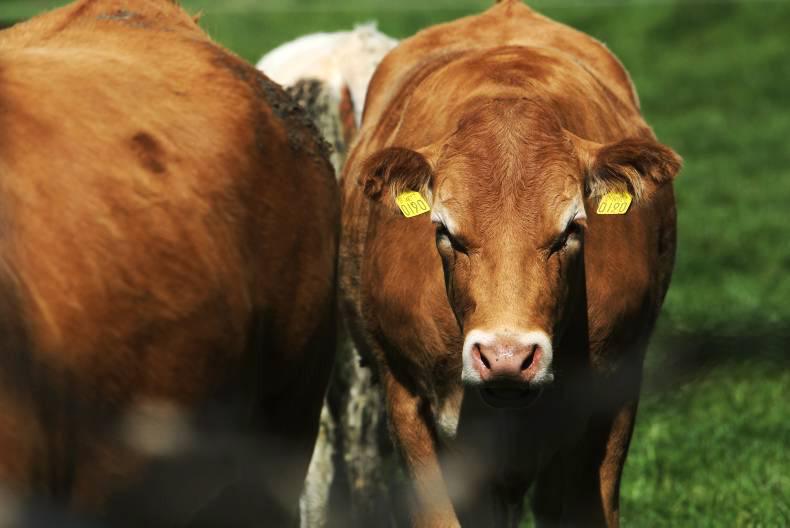
Another attempt to cut the base price by 5c/kg over the last week has left many finishers dismayed. The move sees some factories now quoting a base for steers of €4.05/kg, with heifers at €4.15/kg. However, the reality is that the latest move is an attempt to create a level of panic selling and flush cattle out on to the system. Another motive behind the move also appears to be an attempt to cool the live mart trade.
A buffer of high volumes of contract cattle is giving factories increased confidence in the market. Nevertheless, farmers with stock to sell should continue to ignore the lower quotes. At the lower end of the market, steers continue to sell for a base of €4.10/kg, with heifers freely moving at €4.20/kg. Meanwhile, a 5c to 6c/kg premium has been secured by farmers who have been prepared to shop around. It is likely that the price differential between the top and bottom of the market will continue, with agents reporting supplies of cattle starting to tighten. This will allow the tougher sellers command more from the market.
Some factories are also using the recent lull in the trade to put pressure on prices paid for plainer type stock. Dairy-bred stock is harder to shift in the south of the country where supplies are strongest. A flat price of €3.90/kg to €4.00/kg is being offered for dairy-bred steers under 30 months and grading O=/O+. Prices are 5c/kg higher as you head up the country, with demand still strongest in the northwest.
There is strong demand for Angus and Hereford-bred stock. Despite the top-up premiums, some factories are offering a higher base price for these animals than continental steers and heifers. This is a reflection of the fact that there are more factories entering the market, with an increasing number offering bonus payments. ABP and Kepak continue to work closely with the Irish Angus Producer Group, but there are more plants, including wholesalers, competing for this market. Hereford stock is now capable of commanding comparable bonuses to AA. These range anywhere from 15c/kg to 25c/kg, with flat-priced deals of €4.15/kg to €4.20/kg for O grade steers and €4.20/kg to €4.30/kg for heifers.
Tighter bull limits: Bull finishers also report a similar situation of agents becoming more selective on carcase weight in particular. Some plants are drawing the line at 430kg to 450kg, while others that were handling very heavy bulls have reduced desired weights back to a maximum of 480kg. There are still exceptions to this, but this is the general trend, with some producers starting to ask long-term questions and looking for some clarity on bull specification later in the year. Given the dip in the market, it is likely to be a focal point at the proposed next beef forum in June.
Many specialised finishers have seen bull quotes held, while those with small numbers of continental bulls saw U grades ease back to €4.10/kg to €4.15/kg, with R grades selling back to €4.05/kg. Friesian bulls are a harder trade, with prices ranging from €3.80/kg to €3.95/kg for O=/+, 2+ grading bulls. Bulls falling out of spec on fat cover and age are being heavily penalised anywhere from 20c/kg to 50c/kg. Bulls trading on the grid less than six months of age are moving at a base of €4.00/kg.
Steady cow trade: The cow trade is relatively steady, although some plants are trying to ease prices 5c/kg. P+3 and O grading cows are selling from €3.25/kg to €3.50/kg, with O grade continental cows to €3.60/kg. R grades are making €3.65/kg to €3.75/kg, with Us to €3.85/kg and higher in specialised plants.
Recovering numbers: AIM data suggests numbers are likely to tighten significantly, with 150,000 less cattle in the 18 month+ age category. While still early to estimate, with calf birth registrations running 130,000 above last year’s levels and live exports running 20,000 head lower year-on-year, there is likely to be a recovery in throughput in 2016 onwards.



SHARING OPTIONS