


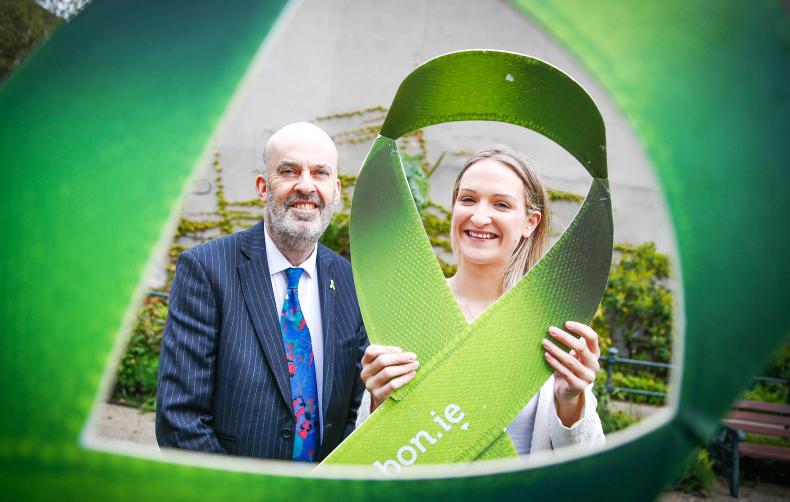
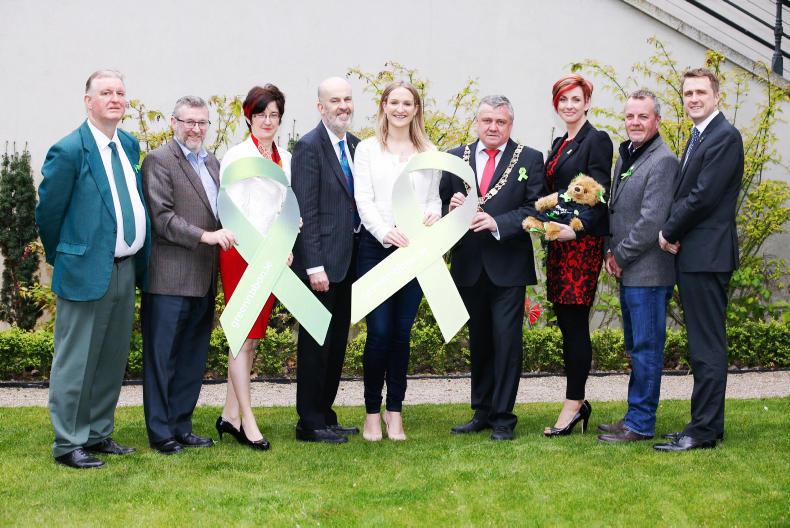
Stigma surrounding mental health remains one of the main reasons why people experiencing difficulties do not seek help, according to new research released by See Change as part of the Green Ribbon campaign for May.
Indeed, 46% of people in Ireland under 35 years of age say they would conceal a mental health difficulty from family, friends or colleagues. This is 12% higher than the average for those aged over 35 years, where 34% of respondents said they wouldn’t want to share if they were experiencing a mental health difficulty. On average, 38% of people in Ireland say they would conceal a mental health problem from family, friends or colleagues.
However, up to 500,000 green ribbons will be distributed free of charge this month throughout Ireland in an effort to start an open and honest conversation about mental health.
The campaign is run by See Change – Ireland’s national stigma reduction programme – and will include 60 ambassadors sharing their stories, as well as a series of events, such as the IFA’s “Let’s Walk & Talk” forest walk series. CL
To show your support, simply pick up a green ribbon or to find out more, visit www.greenribbon.ie
Mary’s story
Mary* (55) is originally from Dublin, but now lives on a farm with her husband. While she has faced a number of mental-health challenges – including panic disorder, post-traumatic stress and depression – she believes in being proactive in her own self-care and encourages other people who are struggling to reach out for support.
Throughout May, Mary* will be wearing the See Change green ribbon as a sign that she is ready and willing to help break the silence that still surrounds mental health.
“My vision for the future for Irish people is that we will get so educated and aware and fluent at talking about emotional health, mental health and well-being,” she says. “We’re a great country for taking on change – like the smoking ban and the plastic bags and putting on seatbelts – so we can do it.”
Mary has spent much of her life working in mental health, yet can also draw on personal experience, having been diagnosed with conditions including PTSD, panic disorder, grief and depression.
Growing up in a large family, she recalls never feeling a sense of ease or unconditional love at home and suffered from low self-esteem.
“I was afraid of growing up because I was convinced I wouldn’t manage in the world,” she says, explaining that even when she got her first job, she would bring two tops to work because she would sweat so profusely due to her anxiety. “I started work at 9.30am, but by the break at 11am I’d be down in the bathroom patting under my arms and changing the tops.”
Indeed, she even developed an ulcer and had to leave work after struggling to function. A new relationship provided a sense of stability for a period, but unfortunately, her partner had a drinking problem and one night became violent, which led to another setback. “I knew that I was living my life in complete fear,” she recalls, “but at this stage I was questioning my sanity.”
A move to America provided a fresh start, but unfortunately, Mary began to experience seizure-like blackouts, which would later be diagnosed as panic attacks. “When I’d come round I wouldn’t be sure who I was or where I was,” she says, explaining that this was one of the reasons she ended up staying in another relationship that was not right for her.
However, having started to explore the world of therapy and self-help, Mary began working in mental health and “got on this real path of getting to know myself”. But it was only when she met a psychiatrist who specialised in severe panic disorder that she finally began to understand her own condition.
“And also realising for the first time in my life that I’m not the only one who is not functioning well in the world, because that had never occurred to me,” she says.
“I was so consumed with my own difficulties and frights and fears that I had this notion that other people were ‘managing’.”
Another turning point came after the death of her partner, when Mary sought therapy for unresolved grief and trauma and was also prescribed a new anti-depressant that she says had a profound effect on her. “I could function, I could get joy from things; I had better concentration; I was sleeping better,” she lists.
And since returning to Ireland, Mary has continued to take a proactive approach to her own self-care: for example, finding a GP she trusts, studying personal development and completing recovery-based wellness programmes, such as STEPS, a three-day practical programme where she learned to challenge negative self-talk, and WRAP, which helps participants put together a “toolkit” to help themselves through challenging times.
“It might be a really pretty box with affirmations in it; bath salts to remind you to have a bath; reminders to have fresh air and exercise and eat three times a day: very practical things that can go really quickly when mental health starts to deteriorate,” she explains. “What it’s really encouraging service users to do is be in charge of their care.”
While Mary still faces challenges – for example, “a low-grade nagging depression” – she wants to encourage other people, especially in rural Ireland, who might be suffering in silence to seek help.
“You need to talk to somebody you can trust. It might be someone you know well. It might be that you’re going to call the Samaritans and speak anonymously. It might be that you’re going to go to your GP, or talk to a neighbour.
“It might be that you’re not even able to talk about it straight away, but you will take up walking with a friend or start going to a local card game or bingo – but you would find a way to reduce your isolation and start trying to develop a sense of trust,” she says.
“After spending so much of my life not living it to the fullest, I wouldn’t ever want to block myself from getting help in the future. I wouldn’t want anyone to. I think everyone deserves not just to feel OK about themselves, but to feel good about themselves and to have compassion for themselves.”
*Name changed
Paul’s story
After a build-up of anxiety and stress that left him physically and mentally exhausted, Paul* (35) finally sought help from his GP last year. He is now in a much better place and would encourage other young men who are struggling to seek help.
When Paul* eventually plucked up the courage to see a counsellor last year for anxiety and depression, he was willing to drive 100 miles away from home in case anybody would find out.
“Ireland is an island and everybody knows each other in some form or another along the way – and that was basically the problem with me,” he explains.
After seeking help, however, the 35-year-old is now in a much better place and looking forward to the future.
Raised on a farm, Paul explains that growing up, he was “very outgoing” and always “up for the craic”. “The first man in the car, ready to go,” he says.
However, after a build-up of stress in work, he began to experience chest pains and sleepless nights, which left him physically and mentally exhausted. “Only getting a half an hour, an hour, 40 minutes’ sleep,” he explains, “and you’d lie awake in bed for the rest of the night.”
Scans and blood tests from his local GP came back clear – though, privately Paul suspected that he was suffering from depression, particularly as he began to withdraw from friends and family.
“There was a first cousin of mine got married there last year and I came up with the excuse that we couldn’t find a relief milker,” he recalls. “You were just hoping you wouldn’t find someone, because you didn’t want to go to the wedding.”
However, he continued to “bottle” his feelings, to the point where he began to experience suicidal thoughts. “It was like a GPS pulling you to a location every night, when your body was so tired and so drained,” he explains.
After several attempts to work up the courage to tell doctors how he was feeling, however, Paul eventually found somebody he could confide in, which has brought him to a much more positive place today.
As well as starting anti-depressant medication, he also began counselling and has made a number of lifestyle changes; for example, stepping away from negative people in his life who he identified as a cause of stress.
He also linked in with the Real Talks organisation set up by Cavan GAA player Alan O’Mara to promote meaningful conversations around mental health.
As a result, he feels he has been given “a new lease on life” and would encourage anybody else who is experiencing stress, anxiety or depression to seek help like he did.
“I always believe this depression can hold you back for as long as you allow it to happen, without going to get the help,” he says, explaining that he feels that many men try to hide their feelings behind work and being “busy”, but that it will ultimately catch up with you.
“You can work all the hours that you get: the problems don’t go away unless you address them at some stage.”
*Name changed




SHARING OPTIONS