


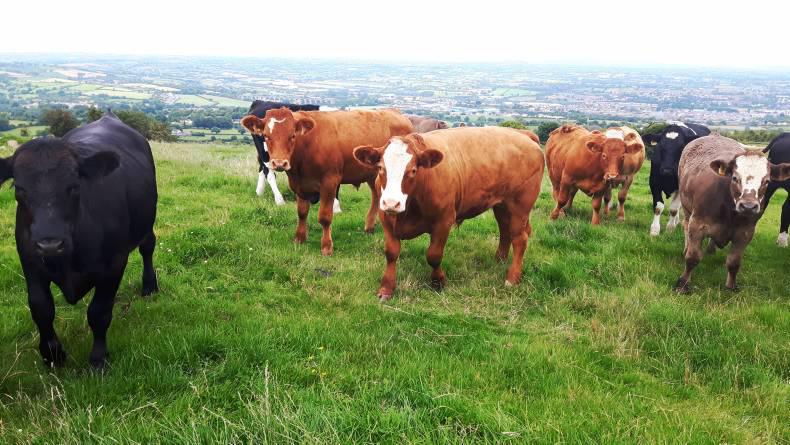
It was surprising last week at the meeting between the Ulster Farmers’ Union (UFU) and MLAs on the Stormont agriculture committee that no one mentioned the delay in new agri-environment schemes or the ending of payments in areas of natural constraint (ANC).
Given that both schemes represent a significant proportion of income, especially to farmers in marginal and hill areas, it was surely worthy of some debate. Instead, most of the discussion centred on Brexit, no doubt a massive issue, but one that must not be allowed to overshadow everything else that is going on.
It is now a number of months since a DAERA consultation closed on options for future ANC support. The scheme, which puts £20m per year into severely disadvantaged areas (SDA), makes a final payment in 2017.
After that, it is widely expected that no more money will be forthcoming. While some point out that farmers in the SDA will benefit from a move to flat-rate subsidy payments, this is not the case for everyone. There are plenty of examples of well-run livestock farms where payments are at or above the average that will not see payments rise. The loss of ANC money will be significant.
It is the same with the lack of agri-environment schemes, with many farmers getting their last payment this year. At best, a new scheme won’t open until February 2017, which means no payments until 2018 at the earliest. It is not that long ago a DARD minister claimed that 50% of the land in NI would soon be covered by agri-environment agreements. Now, there are only around 1,000 farmers left in a scheme.
These schemes have contributed to income on farms and had a positive impact on the environment.
It is difficult to understand why something that was once a key priority has been allowed to drift for so long.




SHARING OPTIONS