


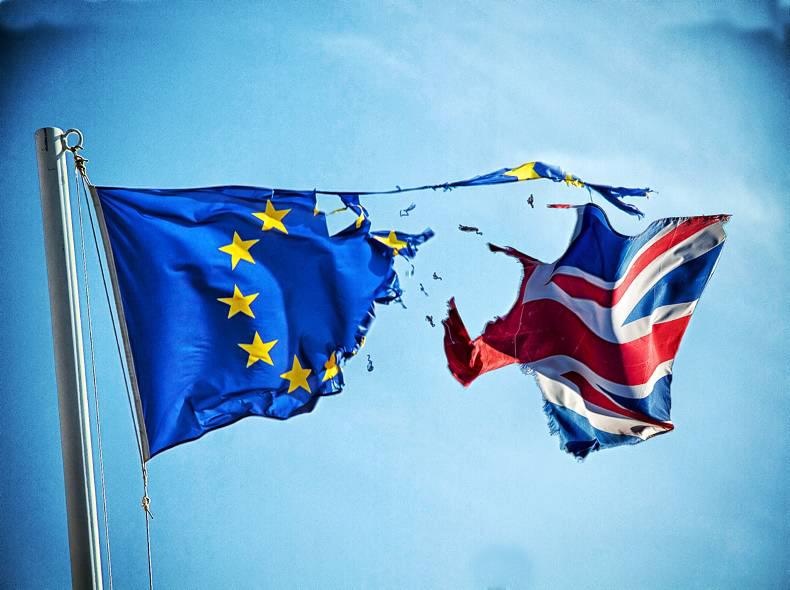
Looking back now, it’s incredible to think of the relative calm, even optimism, in global financial markets as trading closed on Thursday evening last week. As it became clear overnight the UK had voted to leave the EU, the turmoil that followed on Friday morning, and which continued right through to close of business on Monday, was to be expected given how wrong markets, analysts and commentators alike had got the result.
Indeed, such was the confidence in a remain vote that the FTSE 100 in London had risen steadily by more than 6% in the days leading up to the EU referendum vote and closed at its highest level in two months on Thursday evening. The destruction of wealth that followed the next morning was devastating to behold, with more than £120bn wiped off the value of the FTSE within minutes of the opening trade.
Given our close trading ties with the UK, it was no surprise to see the Irish stock market also suffer serious losses. Over the course of trade on Friday and Monday, the ISEQ plummeted a cumulative 17% as investors took a negative view of the consequences of Brexit for Irish businesses. Many of the hardest-hit companies were Irish agri-food businesses, with shares in Origin Enterprises (-13%), Aryzta (-11%) and Glanbia (-10%) all taking big losses over the two days.
But volatility in the short-term was always to be expected in the event of the UK voting to leave the EU. Of greater concern to Ireland is the longer-term impact of the referendum result on the UK economy, which could manifest itself in two ways.
Currency weakness
Firstly, a sustained period of weakness in sterling is now likely. The UK currency has lost close to 10% against the euro since last week and is at its lowest level in more than 30 years against the US dollar. The uncertainty created by Brexit means sterling is likely to remain volatile as investors and companies rein back investment in the UK, particularly given the leadership vacuum in the UK political landscape right now.
From an Irish perspective, the fall in value of the UK currency is a difficult headwind for trade.
The UK is Ireland’s most important trading partner and it accounted for €4.4bn or 41% of our total food and drink exports in 2015. To put this in context, last Thursday night, before the vote for Brexit became a reality and sterling was sitting at £0.76 relative to the euro, the value of these exports in sterling terms was £3.38bn.
By the following morning, when the pound plunged to almost £0.82 against the euro, the value of these exports had risen to £3.63bn. And by Monday afternoon, when the pound was trading over the £0.83 mark against the euro, the value of Irish exports to the UK had risen to £3.72bn.
Between Thursday and Monday, the cost of Ireland’s food exports to UK consumers had increased almost £340m or 10%. The reverse of this is that a weakened sterling makes UK food coming into Ireland more competitive, which could lead to displacement of domestic products on Irish shelves.
Companies operating in the prepared consumer foods (PCF) sector are most at risk, with Ireland importing €1.6bn in PCF goods from the UK last year. The drop in sterling also makes it more expensive for any UK companies sourcing raw materials such as meat, milk or wool here in Ireland. While Irish companies sourcing raw materials in the UK will now be at an advantage.
Predicting the movement of currency with any certainty is an impossible task, but the medium-term economic outlook for the UK is rather downbeat. A period of recession in the UK in the second half of this year seems likely, and coupled with the uncertainty of the UK beginning a protracted journey into the unknown of exiting the EU, means that volatility is likely to remain a feature of sterling.
Economic impact
The second, and arguably most pressing concern following the Brexit vote, is the impact it will have on the UK economy. Those in favour of Brexit acknowledged the UK would face short-term negative consequences from the decision to leave the EU, but others are starting to warn the damage could be far more serious.
By Monday, a number of ratings agencies had cut the UK’s credit rating, warning of the economic, fiscal and constitutional uncertainty now hanging over the country. The ratings agency Fitch even went on to say that Ireland’s credit rating could be downgraded as the country is “highly exposed” to the UK economy.
Speaking the week before the Brexit vote took place, Greencore chief executive Patrick Coveney warned that a vote by the UK to leave the EU would result in a rapid flow of money and resources “on a massive scale” out of the country.
Already we are seeing signs of this, with Sir Richard Branson claiming that Chinese investors have started pulling planned investments from the UK. Branson added that thousands of jobs were likely to be lost in the coming months as a result of the referendum.
Branson’s predictions were echoed by a number of financial consultants based in London. Former OECD chief economist John Llewellyn has said the situation now facing the UK is “far more serious than is being recognised”.
Llewellyn added that the UK is heading for recession as private sector spending will inevitably stall and layoffs in the financial services sector will “start in weeks.” The combination of stalled private sector investment and job losses will have the greatest impact on consumer demand, according to Coveney, with every British household likely to be £4,300 worse off by 2030.
A drop in consumer demand in the UK will have a negative impact all across our agri-food sector. Our beef sector exports 54% or 272,000t of production into the UK market every year, while 84% of poultry and 61% of pigmeat exports depend on the UK market.
Our dairy industry is less dependent on the market overall, with less than a third of exports shipped to the UK. But some dairy products are more exposed than others. The UK takes almost 60% of Irish cheese export volumes and more than a quarter of our butter.
Other sectors are particularly exposed to the UK market, with 70% of our PCF exports and 90% of our mushroom exports shipped to our nearest market.
Comment
While currency volatility can be managed to an extent, a sustained period of sterling weakness coupled with a significant drop-off in UK consumer demand could have serious consequences for the Irish food and drink industry. Although the agri-food industry and Bord Bia have done remarkable work diversifying into new and growing export markets over recent years, our reliance on the UK cannot be overstated and it’s still fundamental to the success of the export trade.
With a population of almost 65m, it is an enormous market for Irish food. More than €200m worth of goods is traded between our two islands every week, which is a staggering level of economic activity.
It’s impossible to predict what the longer-term outcomes will be from Brexit but, as our largest trading partner, it is critical market for many Irish businesses.
The UK will remain a member of the EU for at least two more years but beyond that companies will have to start planning for potential trade challenges we have not seen between our two nations since before the single EU market. A special trade deal will have to be found for Ireland and Britain given our special trading relationship.



SHARING OPTIONS