


New Zealand ambassador Sir Lockwood Smith is unlike many in similar roles. He is a former politician, holds a doctorate in animal science, was marketing manager with the New Zealand marketing board and farms a herd of beef cattle. This experience has given him a great understanding of New Zealand and its place in global agriculture.
He is strong in his views. He believes that free trade is critical to New Zealand’s economic well-being and growth prospects. He says the number one priority will be the completion of new trade agreements in the future. And he says that while the EU remains an important trading partner for New Zealand, the country’s trade focus is increasingly on the countries of the Asia-Pacific rim.
But the ambassador sees European joint venture arrangements with New Zealand as being the EU’s entry point to real market access into China.
He has confidence in the country’s farmers, saying that they are resilient to volatility and he understands that it is in volatile times that we get the greatest innovation.
A dairy country
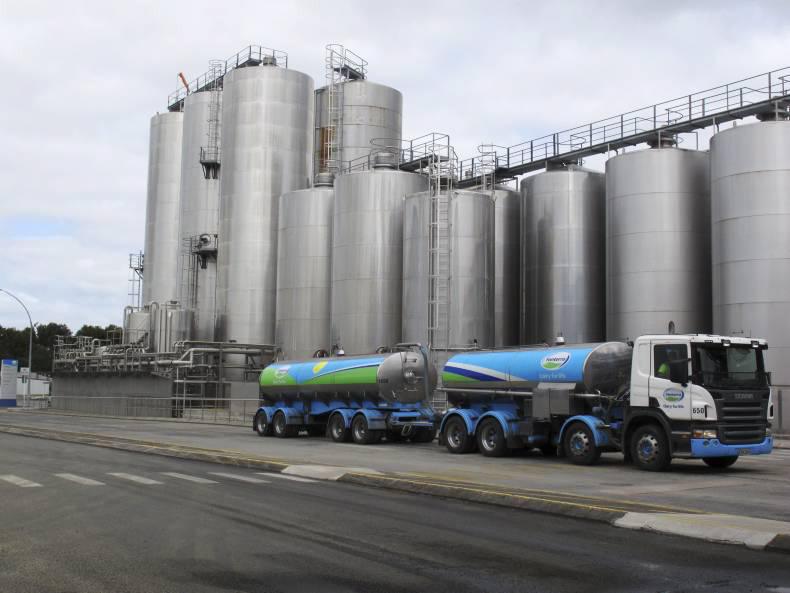
There is no escaping the fact that New Zealand, as an agriculture-based economy, placed a large bet on the global appetite for milk, reducing traditional sheep farming in favour of cows. New Zealand is unique – farming makes up 5% of its GDP and it exports 95% of the 20bn litres of milk produced.
Agriculture is the largest sector of New Zealand’s tradable economy, contributing about two-thirds of exported goods. Dairy represents about a quarter of all exports. New Zealand accounts for about a third of all international dairy trade. This makes the country’s agricultural sector highly exposed to international markets since subsidies, tax concessions and price supports were removed in the 1980s.
A slowing China
China has become very important to New Zealand. It is New Zealand’s largest export market for every agricultural commodity except beef (the US is number one). It also purchases a third of New Zealand’s dairy exports, according to the ambassador.
This comes as no surprise considering that Chinese demand for imported dairy products has risen seven-fold since 2008, and it now accounts for 13% of world dairy imports. Volumes from New Zealand to China have risen by a similar percentage since 2008 thanks to the effective elimination of tariffs on a number of dairy products to the region. Infant formula, for example, has no tariff.
It is no wonder that New Zealand has become more sensitive to any slowdown in Chinese economic growth. Coupled to this, the sharp fall in dairy prices has the world’s largest dairy exporter prompting the central bank to cut interest rates.
But despite the recent challenges in China, the ambassador says that they remain committed to Asia and see this as key growth area.
Low-cost system
New Zealand farmers receive no subsidies, which has encouraged a focus on low-cost, high-productivity farming systems. Dairy there has been three times more profitable per hectare than other grassland use, encouraging conversions from other farming systems, such as sheep and beef – especially in the South Island.
But dairy exports fell 21% in the year to May amid waning Chinese demand and this has affected the on-farm dairy price.
The ambassador says that one of the biggest problems in the sector is that so little product is traded. Fonterra estimates that only about 9% of total milk production was traded in 2014.
Earlier this year, Fonterra slashed its forecast for payouts to farmers to the lowest in 13 years. The downgraded figure takes milk prices well below the cost of production for New Zealand farmers, which he estimates to be about NZ$5.40 per kg of milk solids. The biggest impact of the falling dairy prices will be that farmers will rein in spending.
Ambassador Smith said dairy farmers will cut their herd for the first time in more than a decade in response to the low milk price. This would lower the expense on supplementary feed and off-farm grazing of replacement stock and dry cows.
He believes that this will see New Zealand farmers reduce their production costs and the variable inputs (palm kernel and maize) at the expense of extra milk volume.
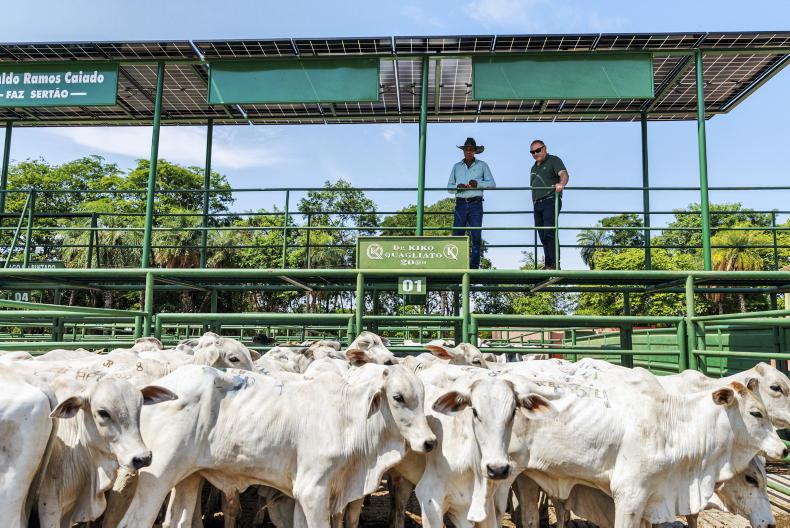
But the ambassador says meat exports are holding up: “Beef is currently at all-time highs of $6/kg thanks to tight supplies in the US and the currency. While the high price has helped the beef man, it has been a huge help to dairy cull cows and offspring.”
He says that sheepmeat is holding well, despite the recent dip in the Chinese market. China continues to pay a good price for what other markets see as lower-value products. He adds that the EU will remain an important high-value market, but that even if they wanted to fill the quota, they wouldn’t have the sheep to do it.
He says that in the future it will be better to manage the supply of late-season lamb into the EU, but added that we don’t have any power over what supermarkets do with the lamb once they buy it.
He says land prices so far have held up but this could be that the volume of sales has declined.
He also believes that those investing in farming see it as a long-term investment.
Despite the current dairy glut, he expects the supply and demand situation to improve in the medium term and that the long-term prospects for the sector are very positive.
He believes that New Zealand will continue to diversify its export markets and position itself for the longer-term opportunities that are expected to emerge in the Indian market.
Comment
Whether the dynamics will prompt some farmers who formerly provided support to the dairy industry, for example through grazing stock, to switch back to beef remains to be seen. It is expected that the total New Zealand beef herd is poised to show rare expansion in 2016.
In the long term, future dairy trade with China seems assured, but there will be risks of temporary disruption along the way. Two particular issues are firstly, whether NZ has diversified its dairy export markets sufficiently, and secondly, could it find that its market leadership in respect of exports of whole milk powder is challenged?





SHARING OPTIONS