Clarity is emerging around the positive clenbuterol “angel dust” case. A Department of Agriculture spokesman confirmed that on 27 May, a routine test on a blood sample taken on 5 May during a routine farm inspection in county Monaghan tested positive.
The 150 animals on the farm were immediately restricted. Significant testing took place. Twenty-five animals tested positive and were destroyed.
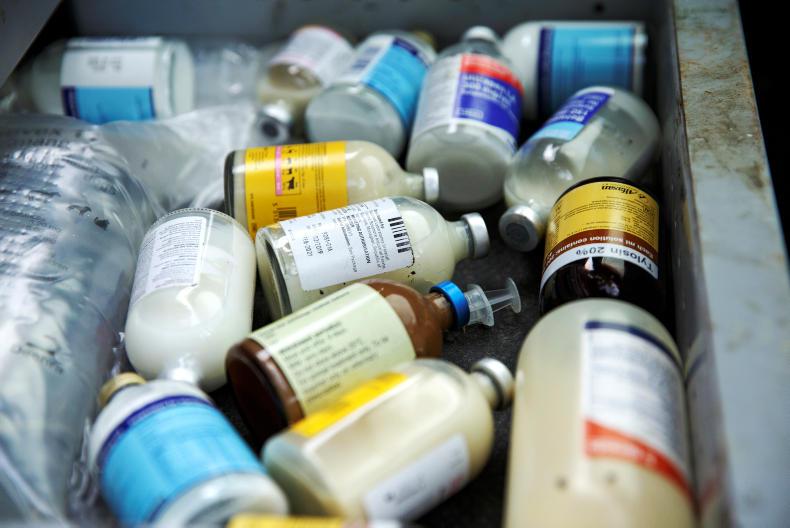
A quantity of clenbuterol in liquid form was found when the farm was searched.
Listen to a discussion of the case in our podcast below:
The original postive case had been slaughtered by the time the test result became known. The Food Safety Authority of Ireland (FSAI) have carried out an assessment of any potential threat to human health.
They concluded that “there is no risk to public health from meat that is on the market” due to the tiny quantity involved.
Testing
In all, about 20,000 residue tests are carried out by the Department of Agriculture annually across all types of farm animals, of which about 4,000 are of cattle.
Last year 1,136 were carried out specifically for clenbuterol. This is only the second positive test for clenbuterol since 1999.
The Department can feel that this proves the robustness of their testing regime. Both positive tests were in county Monaghan, the first occuring in 2011.
Increased testing, both on farms and in slaughter plants, is taking place at present, with a particular focus on the region involved in the recent case.
A criminal conviction can carry a penalty of up to €500,000 and up to six months imprisonment.
In addition, cross compliance penalties will occur, animals who test positive will be destroyed, and full costs of the investigation can be imposed on the offending farmer.
Banned
Clenbuterol has been banned across the EU as a growth enhancer since 1996.
It is approved as a human and a veterinary medicine, for use in relation to respiratory and heart problems. In the late 1990s, clenbuterol powder, popularly known as angel dust, was reputed to be used by beef farmers as cattle prices were devastated by BSE.
It was linked to farmer deaths – it is very dangerous to handle, and paramilitary involvement in it’s manufacture and supply was alleged.
Read more
Full coverage: angel dust
Clarity is emerging around the positive clenbuterol “angel dust” case. A Department of Agriculture spokesman confirmed that on 27 May, a routine test on a blood sample taken on 5 May during a routine farm inspection in county Monaghan tested positive.
The 150 animals on the farm were immediately restricted. Significant testing took place. Twenty-five animals tested positive and were destroyed.
A quantity of clenbuterol in liquid form was found when the farm was searched.
Listen to a discussion of the case in our podcast below:
The original postive case had been slaughtered by the time the test result became known. The Food Safety Authority of Ireland (FSAI) have carried out an assessment of any potential threat to human health.
They concluded that “there is no risk to public health from meat that is on the market” due to the tiny quantity involved.
Testing
In all, about 20,000 residue tests are carried out by the Department of Agriculture annually across all types of farm animals, of which about 4,000 are of cattle.
Last year 1,136 were carried out specifically for clenbuterol. This is only the second positive test for clenbuterol since 1999.
The Department can feel that this proves the robustness of their testing regime. Both positive tests were in county Monaghan, the first occuring in 2011.
Increased testing, both on farms and in slaughter plants, is taking place at present, with a particular focus on the region involved in the recent case.
A criminal conviction can carry a penalty of up to €500,000 and up to six months imprisonment.
In addition, cross compliance penalties will occur, animals who test positive will be destroyed, and full costs of the investigation can be imposed on the offending farmer.
Banned
Clenbuterol has been banned across the EU as a growth enhancer since 1996.
It is approved as a human and a veterinary medicine, for use in relation to respiratory and heart problems. In the late 1990s, clenbuterol powder, popularly known as angel dust, was reputed to be used by beef farmers as cattle prices were devastated by BSE.
It was linked to farmer deaths – it is very dangerous to handle, and paramilitary involvement in it’s manufacture and supply was alleged.
Read more
Full coverage: angel dust








SHARING OPTIONS