


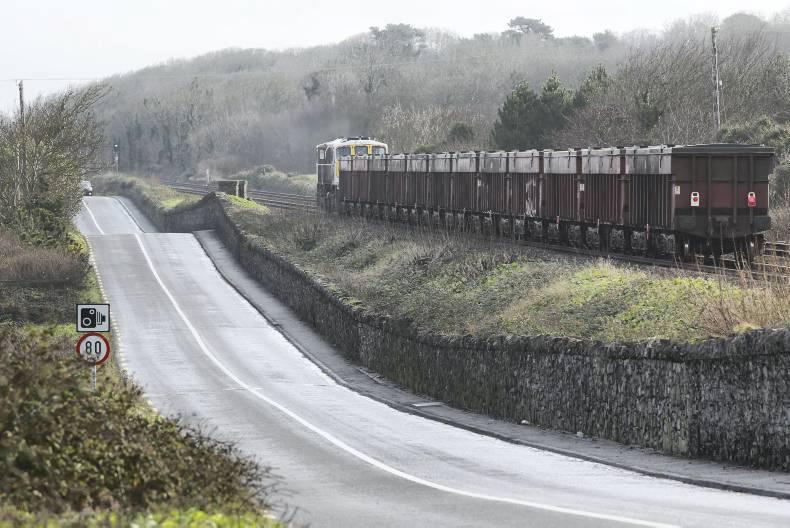
Irish Rail made a submission last week to the Labour Court, which is hearing a pay claim, outlining four possible line closures which it may have to implement.
The lines proposed for closure are Gorey to Wexford and Rosslare, Ballybrophy through Roscrea and Nenagh to Limerick, Ennis to Athenry and Waterford through Clonmel and Tipperary to Limerick.
State funding
Irish Rail receives State subsidy of around €300m per annum since revenue cannot meet operating costs despite substantial investment in recent years.
Losses have been rising and rail is not competitive with unsubsidised bus services on the main provincial routes.
Local representatives in the areas affected have been quick to protest and there has been a storm of objections on social media.
Numbers using the service
The numbers of people objecting to the proposed closures may well exceed the numbers who actually use the rail services available on the four lines at risk, which is the heart of the problem.
Irish Rail is bearing the cost of running infrequent and often empty trains on these lines which clearly do not meet any great public need. Each of the four cases is different.
Gorey to Wexford: This is a single-track line serving Enniscorthy, Wexford town and the ferry-port at Rosslare. The main line south from Dublin serves various suburbs to Bray, Greystones and Wicklow, and then takes an inland detour through the garden of Ireland before re-joining the coast at Arklow. It then proceeds inland again to Gorey and Enniscorthy before a final rendezvous with the Irish Sea at Wexford.
Services to Dublin
Not surprisingly, the bus services to Dublin are much faster, more frequent and popular with the travelling public. The line is twin-track only at the Dublin end.
The section to Bray was electrified as part of the original DART project in the early 1980s and a further section along the cliff-tops to Greystones similarly upgraded, at enormous cost, on the occasion of a subsequent by-election.
The intention was to encourage support for the Fine Gael candidate, who duly lost. Traffic on the Rosslare ferries is almost all trucks and cars nowadays – there is only a small market bringing foot passengers to the ferries, easily catered for with buses.
Ballybrophy to Limerick: This line cannot take through-trains from Dublin, since the lines do not connect at Ballybrophy.
The direct Dublin to Limerick trains take an alternative route through Limerick Junction. There are currently two twin-carriage trains per day which start at Ballybrophy, a station on the main Dublin-Cork line, serving Roscrea, Nenagh and some other points on to Limerick. Travellers to Dublin from these points patronise the frequent bus services in large numbers.
Empty trains
Roscrea station welcomes an average of seven passengers per day. I have observed completely empty trains at level-crossings on this route.
Ennis to Athenry: This line was constructed from scratch during the bubble at a cost of over €100m. It made possible rail service from Limerick to Galway but the trip is slower than the available, and more frequent, bus services. Passenger numbers, not surprisingly, are dismal.
Limerick to Waterford: Infrequent services, slower than the bus, are also available on this route. Twenty years ago, a former chairman of CIE remarked that he could save money by providing door-to-door limousine service to the small number of passengers who use the service.
The opportunity to check out his proposal was provided by chance when the rail bridge at Cahir collapsed.
Instead it was re-built at a cost of €6m and services restored. One of the stations on this route has the honour of being the least busy in Ireland, possibly in the world. Carrick-on-Suir welcomes, on average, one passenger per day.
Savings
If Irish Rail closes these lines it will make some savings. The public will not care, since adequate bus service is already available on all four. But the savings will be minor in the overall context and the trouble for the company is that the same logic could be applied to all of the other inter-urban routes.
Every single mainline route in Ireland loses money and every single one has frequent unsubsidised bus services.
The problem has become really acute since the development of the motorway network.
There is no conceivable action by management which can avoid enormous operating losses.
Suburban rail services, which are important in both Dublin and Cork, also absorb large wads of taxpayer cash.
Justification
The justification which can be offered, namely that they are busy and keep traffic off congested roads, is not available in the case of Irish Rail’s inter-urban and branch-line services. They keep no appreciable traffic off roads, since they carry hardly any passengers. Rail freight has a national market share of 1%.
Colm McCarthy: scramble to promote carbon-reducing policies
Colm McCarthy: UK entering the realm of aspiration and delusion





SHARING OPTIONS