


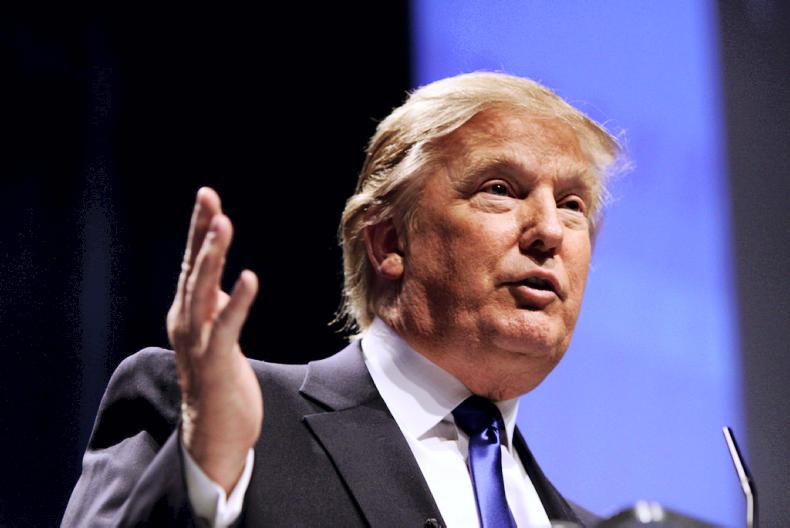
Donald Trump’s first fortnight in office has yielded a daily fusillade of incendiary executive orders, notably the restrictions on immigration from an arbitrary list of Muslim-majority countries. The press routinely describe the US president as the most powerful of the world’s leaders but this is a misunderstanding. The US constitution provides for a clinical separation of powers, partly because its drafters were keen to protect against the restoration of a monarchical style of government.
The federal courts have already reminded the president that there are legal and constitutional constraints. Many of Trump’s signature policies will require legislation and that means the consent of the two houses of Congress. Both the House of Representatives and the Senate matter in the US system – the upper house is not ornamental, as in most European countries that have two parliamentary chambers.
Trump has yet to seek, much less secure, agreement from Congress on anything at all. There is no binding party whip system in either house – Republicans do not have to vote as their president advises, so the Republican majority means less than it would in a European party system. Presidents with apparent majorities regularly fail to get the legislation they seek.
The apparent Republican majority in both House and Senate includes political moderates with scores to settle. Trump defeated not just the Democratic Party but also the mainstream of the Republicans in his march to the White House. One of these is the veteran Senator John McCain, captured and imprisoned with the US army in Vietnam and insulted by Trump during the campaign – people who get captured are losers, according to Trump. McCain lost the presidential election of 2008 to Barack Obama but remains an important national leader of the Republican Party. He announced publicly that he would not vote for Trump.
McCain is not keen on Vladimir Putin. Trump has repeatedly expressed admiration for the Russian leader and phoned him on Saturday last, when the pair agreed that they would arrange an early summit. Prior to the call, Senator McCain advised that Trump ‘‘should remember that the man on the other end of the line is a murderer and thug who seeks to undermine American national security interests at every turn. For our commander-in-chief to think otherwise would be naïve and dangerous’’.
Sanctions on Russia
Trump plans to relax the sanctions on Russia imposed by Congress during the Obama administration after the invasion of the Ukraine. Russia retaliated with a travel ban on prominent Americans, including McCain who has a nice turn of phrase. ‘‘There goes my beach holiday in Siberia,’’ McCain lamented. The Russians also suspended financial transactions with American companies and individuals, including McCain. ‘‘My wife will be upset: I got her a rouble credit card for her birthday,’’ responded the Arizona senator. He will oppose any snuggling up to Putin, or any weakening of NATO.
McCain is not impressed with the anti-Muslim immigration and refugee restrictions either and he expressed reservations on network TV on Sunday morning, on the all-too-plausible grounds that they will boost terrorist recruitment. So did several other Republican lawmakers. Government-by-tweet, or by executive order, will be meeting its limits and not just from Trump’s Democratic opponents.
President Trump has taken a different tack with Mexican immigration (which has in any event been negligible in recent years). The solution here is a wall and he promised during the campaign that Mexico would pay for it. The president of Mexico has understandably declined, so the project is to be funded through a 20% import tariff on Mexican produce. Next time you find yourself in New York, order a Tequila Sunrise and you too can help with the costs.
Some of this stuff is best treated as pure entertainment. More worrying is the possibility of a hasty trade deal with the United Kingdom, anxious for something to bolster its weak Brexit negotiating position. It is just about possible that the UK will concede easy access to the British market for US agricultural exports, which would have serious consequences for Irish (and British) farming. Trump will concede little in return – he is a protectionist after all, and tariffs on UK exports to the US are already quite low. I doubt a meaningful deal will actually happen: the European reaction would be punitive but desperate politicians do foolish things.
Republican candidates nationally won more votes on 8 November last than did Donald Trump. All members of Congress and one third of senators are up for re-election two years hence. The Republicans among them will be well aware that first-term presidents can get unpopular and can lose them their seats in Congress. Expect evasive action, motivated by electoral considerations as well as political conviction, and led by people like John McCain, to tone down the Trump rhetoric fairly soon.



SHARING OPTIONS