


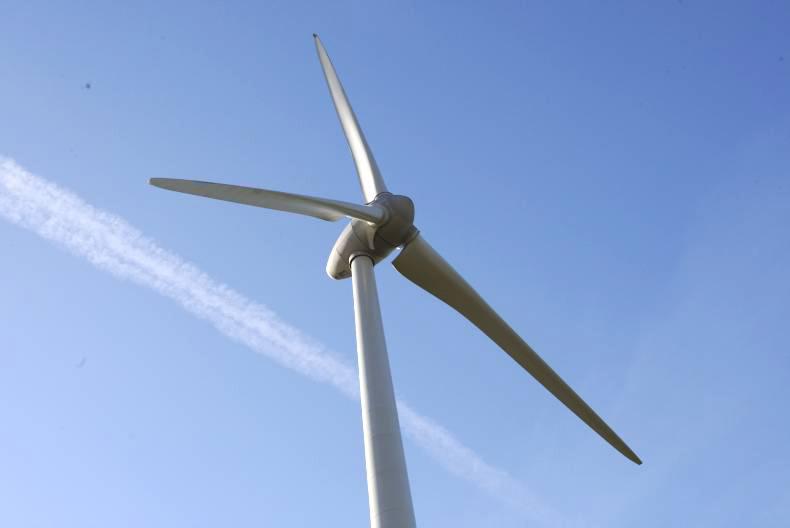
The Northern Ireland Renewable Obligation (NIRO) for onshore wind projects of all sizes will close on 1 April 2016, the Department of Enterprise Trade and Investment (DETI) has announced.
In order to avail of a 12-month grace period, single wind turbine projects need to be able show that, from yesterday (30 September), the operator has planning permission, a grid connection and owns or leases the land.
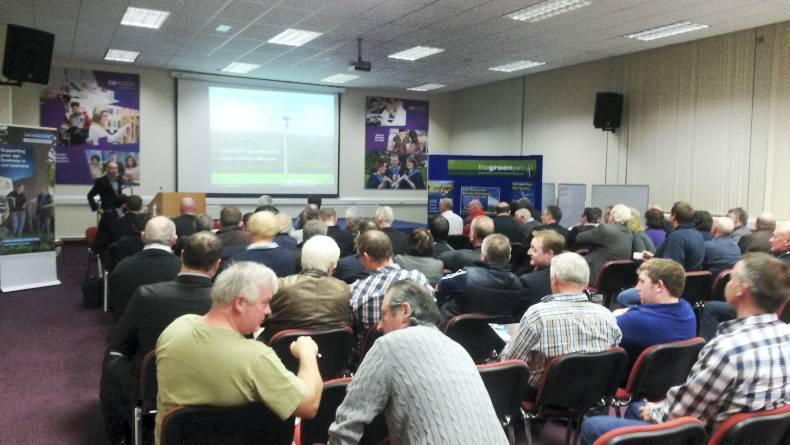
At CAFRE Loughry Campus on Tuesday evening, Séan Convery of The Green Yard NI urged anyone who is not at this stage to respond to a two-week consultation on grace period criteria for onshore wind projects that was opened by DETI last Wednesday.
He said that no responses would allow the Department of Energy and Climate Change (DECC) in Britain to close NIRO to those not at this stage, something that they seem keen to do.
Convery urged those further back in the process to look for pre-accreditation of renewable obligation certificates (ROCs), organise finance and work with Northern Ireland Electricity surveyors to secure a grid connection. For non-wind renewable technologies, NIRO will end a year later on 31 March 2017 with a grace period of 12 months from the closure date also.
On Monday, the Stormont Assembly approved a motion to close NIRO as part of a UK-wide electricity market reform.
DECC in Britain had stated that to continue with NIRO for onshore wind, costs can no longer be spread UK-wide and NI consumers would have to cover them. That would cost an estimated £40m annually.
NI looks set to follow Britain in having a Feed-in Tariff (FIT) incentive for small-scale renewable energy production. FIT rates vary across different sizes of installations, but rates have steadily reduced in recent years and for many installations are three to four times less than tariffs paid under NIRO.




SHARING OPTIONS