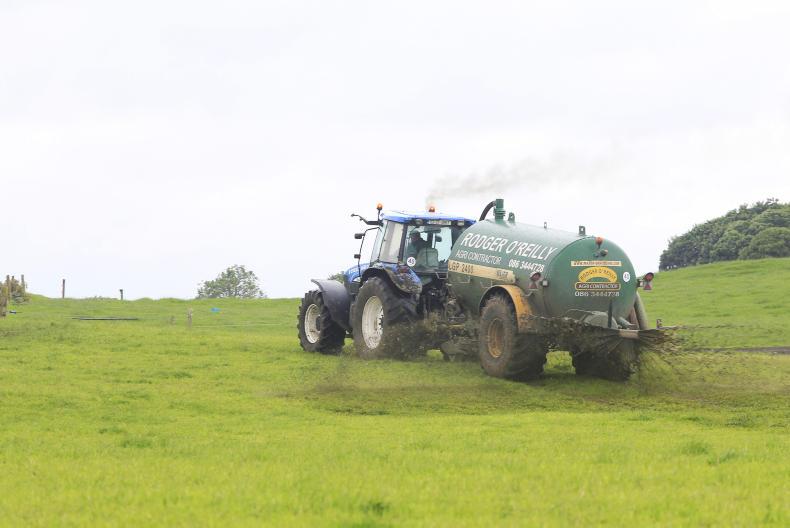
The closed period for spreading slurry and chemical fertiliser ends for most of the country on either 13 or 16 January (Friday or Monday).
For counties Cavan, Donegal, Leitrim and Monaghan, spreading is not permitted until 1 February. There is excellent value in spreading slurry in early spring; worth about eight units of nitrogen for every 1,000 gallons spread per acre, along with adding phosphorus and potassium.
After a mild winter, there is more grass around than normal.
ADVERTISEMENT
You do no’t want to be spreading slurry on paddocks that you intend grazing in the next six weeks, especially if there is a cover of any more than 500kg or 600kg/ha on it. Some people will go with the trailing shoe on some of the higher covers, but in terms of improving nitrogen efficiency, there isn’t much more of an advantage of the trailing shoe or injector at this time of year.
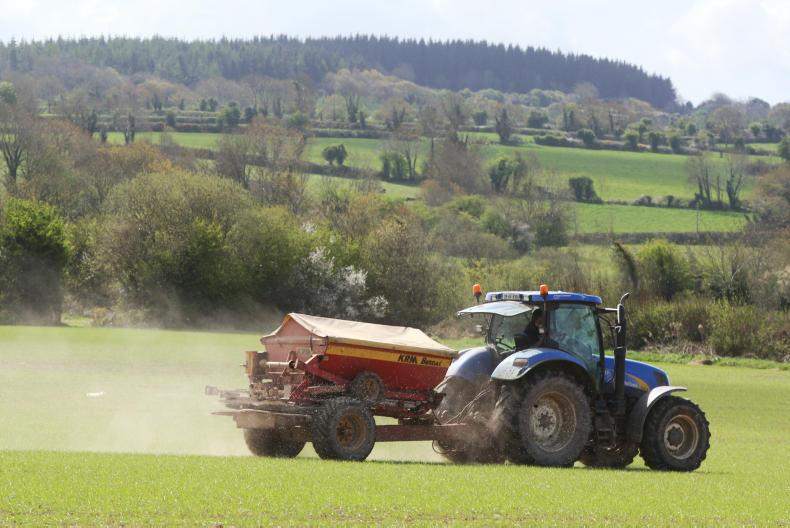
The general recommendation is to spread one third of the farm with slurry and spread 23 units (half-bag) of urea on the remainder.
The earlier this is applied, the more grass you will grow. Of course, it depends on weather.
Do not spread when any more than 5mm or 6mm of rain is forecast within the next 24 to 48 hours. Ground conditions are generally good for the time of year, with less rainfall than normal in December and January in most places, so you should be able to get out with tankers on most farms.
This content is available to digital subscribers and loyalty code users only. Sign in to your account, use the code or subscribe to get unlimited access.
The reader loyalty code gives you full access to the site from when you enter it until the following Wednesday at 9pm. Find your unique code on the back page of Irish Country Living every week.
CODE ACCEPTED
You have full access to the site until next Wednesday at 9pm.
CODE NOT VALID
Please try again or contact support.
The closed period for spreading slurry and chemical fertiliser ends for most of the country on either 13 or 16 January (Friday or Monday).
For counties Cavan, Donegal, Leitrim and Monaghan, spreading is not permitted until 1 February. There is excellent value in spreading slurry in early spring; worth about eight units of nitrogen for every 1,000 gallons spread per acre, along with adding phosphorus and potassium.
After a mild winter, there is more grass around than normal.
You do no’t want to be spreading slurry on paddocks that you intend grazing in the next six weeks, especially if there is a cover of any more than 500kg or 600kg/ha on it. Some people will go with the trailing shoe on some of the higher covers, but in terms of improving nitrogen efficiency, there isn’t much more of an advantage of the trailing shoe or injector at this time of year.
The general recommendation is to spread one third of the farm with slurry and spread 23 units (half-bag) of urea on the remainder.
The earlier this is applied, the more grass you will grow. Of course, it depends on weather.
Do not spread when any more than 5mm or 6mm of rain is forecast within the next 24 to 48 hours. Ground conditions are generally good for the time of year, with less rainfall than normal in December and January in most places, so you should be able to get out with tankers on most farms.
If you would like to speak to a member of our team, please call us on 01-4199525.
Link sent to your email address
We have sent an email to your address. Please click on the link in this email to reset your password. If you can't find it in your inbox, please check your spam folder. If you can't find the email, please call us on 01-4199525.
ENTER YOUR LOYALTY CODE:
The reader loyalty code gives you full access to the site from when you enter it until the following Wednesday at 9pm. Find your unique code on the back page of Irish Country Living every week.






SHARING OPTIONS