


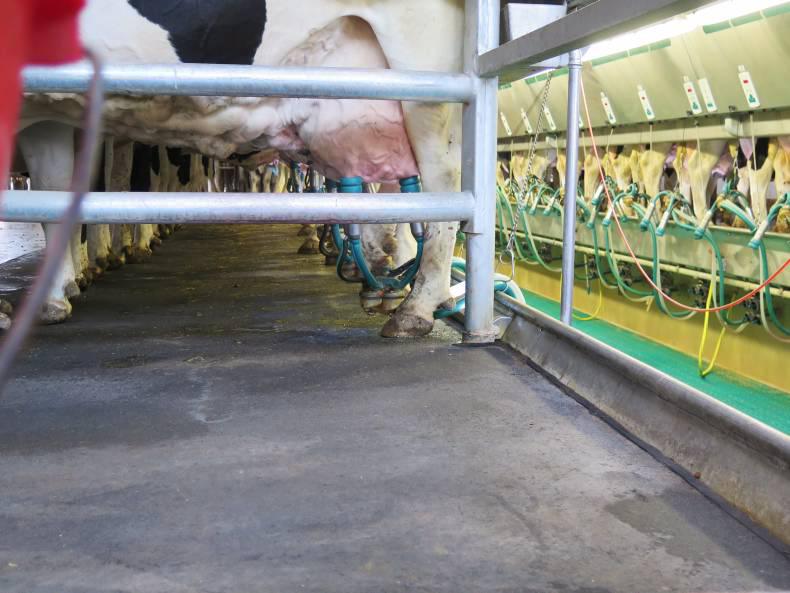
Worm dose: Some farmers dose their cows routinely for worms at this time of year, while others never do it. I was talking to the Glanbia vet Shane McElroy during the week about worm doses for dairy cows. He said that about 80% of the Glanbia milk bulk tank disease screens are coming back positive for stomach worms (ostertagia). There are no obvious symptoms of stomach worms, but Shane suggests that appetite would be depressed if stomach worms were present. Therefore, after dosing he says that cows’ intake should increase, which is why some products claim milk yield improves after dosing infected cows.
On the other hand, a cough is a symptom of lung worms. Stomach worms and lungworms are treated by a zero milk withdrawal pour-on worm dose, but this is expensive at about €4.50-€5.50/cow – depending on product and the weight of the animal. If cows are coughing then it’s better to dose. If cows aren’t coughing but you are concerned about stomach worms, then I’d suggest getting a sample of milk from the bulk tank tested. Most of the processors and some private labs offer this service and they screen for a variety of diseases over the course of the year, which allows you to track trends over time.
For those on the twice-a-year IBR inactive vaccination programme, now is the time to be giving the midsummer shot to coincide with the pre-calving shot in January.
Grass quality: Grass quality is really struggling on many farms, with lots of seed heads emerging, even at low covers. This is a symptom of stress from the last round. The best cure for this is to cut these paddocks for silage. Because growth is good after all the rain, and is likely to continue for the next two weeks at least, we can afford to let average farm covers drop this week by aggressively taking out paddocks for silage – with the aim to remove as much of the stemmy grass as possible and have clean regrowths coming back for the herd next month. If you are running down average farm cover to 150kg/cow, or thereabouts, you must cut these paddocks for silage immediately, or else you risk shortening rotation too much. See more on Grass+ page 36.
Those with clover in the swards are really seeing a benefit now as the clover is more digestible. At the Moorepark Open Day last week, we saw that the cows on the grass and clover swards at Clonakilty were producing almost 0.5kg of milk solids more per day, which is a massive difference. So far this year, there haven’t been huge differences in growth rates between the treatments, but it is usually from this month on that differences emerge.
Sticking with the open day, Pat Dillon was on to say that anyone who couldn’t attend last week but would like a copy of the booklet, can obtain one by contacting Margie Egan in Moorepark at 025-42292, or email margie.egan@teagasc.ie


SHARING OPTIONS