


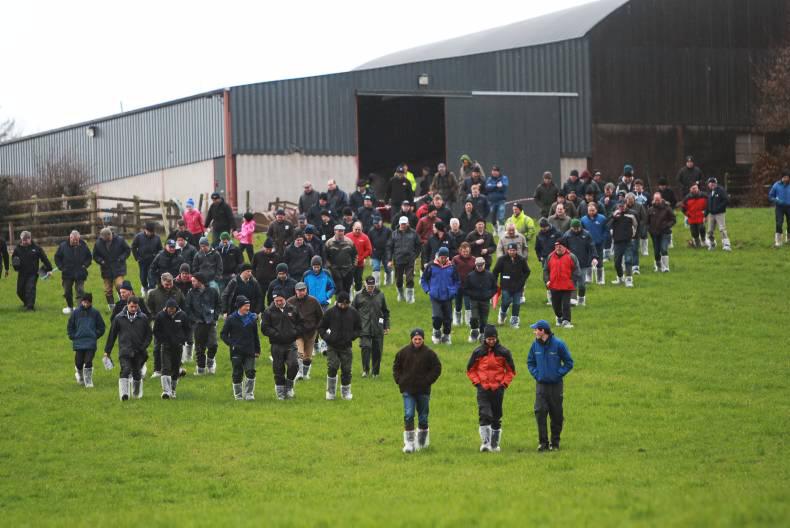
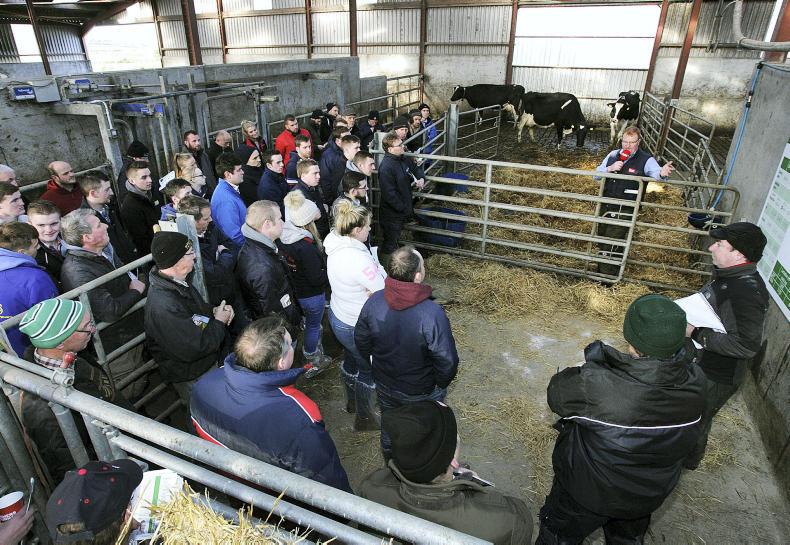
Wet conditions for the McGrade spring walk highlighted the challenges for dairy farming in this area, with an annual average rainfall of 1,500mm (60in) coupled with heavy soil types.
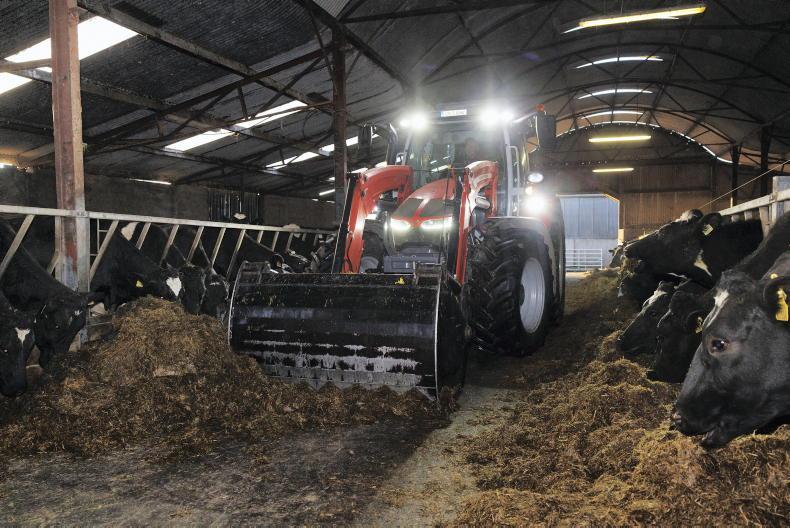
The ground conditions also helped visitors appreciate the system of production Kevin operates. With cows in a compact autumn-calving pattern, the bulk of milk is produced from good-quality silage when cows are housed during winter months.
The herd
Given the torrential rain, visitors missed seeing cows out at grass. However, a key element to Kevin’s system is his cow type and breeding policy.
Cows are bred to be durable, fertile and produce high yields of milk solids. Calving starts in August, with heifers calving first. The average calving date for the herd is 26 September, with cows generally getting two good months at grass post-calving before being housed for the winter.
Spring grazing began in March this year, with cows well over peak yield and on average over 150 days in milk.
Kevin holds the breeding policy central to the success of the business. With over 10 years of using EBI breeding, he can see a marked improvement in his herd.
Grazing management
On the day of the walk, 54% of the grazing platform had been grazed with only 21 days of grazing at that point. Remember, the demand is big with all cows calved and high intakes.
Kevin has been using young stock and the milking herd to graze when conditions allow. The priority is to get the first rotation completed to allow regrowth for the second rotation. The first paddock grazed this year now has a cover of 550kg DM/ha, with analysis showing grass to be 78 D-value, 19% protein and 12.2 ME.
Growth has been slow this spring, with nearly 1t less growth compared with the same period last year. Pre-grazing covers vary on the farm from 900kg to 1,300kg DM/ha, with cows struggling to clean paddocks with the on/off grazing.
Visitors walked a paddock which had been grazed the day prior to the walk showing minimal damage. A discussion followed on the four entrances to the 3ha paddock.
While the paddock was not cleaned out, Kevin explained any more grazing on this area would have resulted in more damage to the paddock. Flexibility is key when grazing in wet conditions and poaching is the number one crime on a heavy farm, explained Kevin.
Kevin explained how he manages grazing when conditions are less than optimal and finds concentrate complements grass better than silage in the diet. He feels silage fills cows and reduces appetite when cows get to grass.
Kevin will hold cows for an hour without access to silage in the collecting yard before returning to grass after a period in the house.
Grazing infrastructure
As visitors walked the grazing platform, it was clear to see the infrastructure in place on the farm. Kevin highlighted it as an essential part of the farm, especially when soil type is relatively heavy.
Good fencing, with multiple access points to paddocks, is vital to minimise the damage caused by poaching and getting cows in and out of paddocks.
Grass is walked weekly and provides vital information on individual paddocks, allowing Kevin to make decisions on grass supply to ensure quality is maintained throughout the season.
Soil fertility
Soil fertility was flagged as a priority area, with only 24% of the farm tested optimal for grass growth in terms of soil pH, phosphorus (P) and potassium (K).
The big offender for Kevin is K, with 70% of the farm deficient. While slurry has been applied on these areas over the past two years, the deficiency has not been rectified.
It will be addressed this year with compound fertiliser and on some very low-K fields, straight potash will be used. Addressing these issues will not only grow more grass, but also improve silage quality on the farm.
Planning ahead
Planning ahead for Kevin involves maximising farm income, with a 5.5% increase planned over the next three years in milk sales and stock sales.
Some of this will come from herd expansion, but mostly from improved efficiency.
The plan is to continue on the current path for the farm holding on to the autumn-calving profile and breeding the correct cow central to this approach.
Better milk components were highlighted on the day – delivering 10% of the farm’s milk sales income. This can continue to improve, with slight changes to Lakeland’s payment structure increasing the contribution from butterfat and protein.
Cow fertility is the next target area for Kevin – lowering the current 15% empty rate and increasing the 12-week in-calf rate are the targets.
This approach will lower the number of replacements needed for the herd and increase the time cows spend in milk. The compact calving profile is central to this, as breeding from already fertile cows will automatically improve overall herd fertility performance.
From a cost perspective, concentrate represents the major cost on the farm at 4.3p/l.
While there is not much opportunity to reduce this cost, Kevin is keen to hold the feed rate, but still increase output with better fertility and milk components, and also target silage and grass quality on the farm to drive output.
Other cost savings have been made on the farm, with energy costs and dairy supplies targeted.
Over the three-year period, 1p/l, or £8,500, will be taken off production costs, taking the cash cost of production before drawings, capital repayments and taxation from 21.3p/l in 2015 to 20p/l.
Clarke farm walk
Charles Clarke, Bailieborough, Co Cavan. Public farm walk tomorrow Friday 15 April from 11am to 1pm. Meet at Hideout pub, Cavan Road, Bailieborough, for shuttle bus to farm.


SHARING OPTIONS