


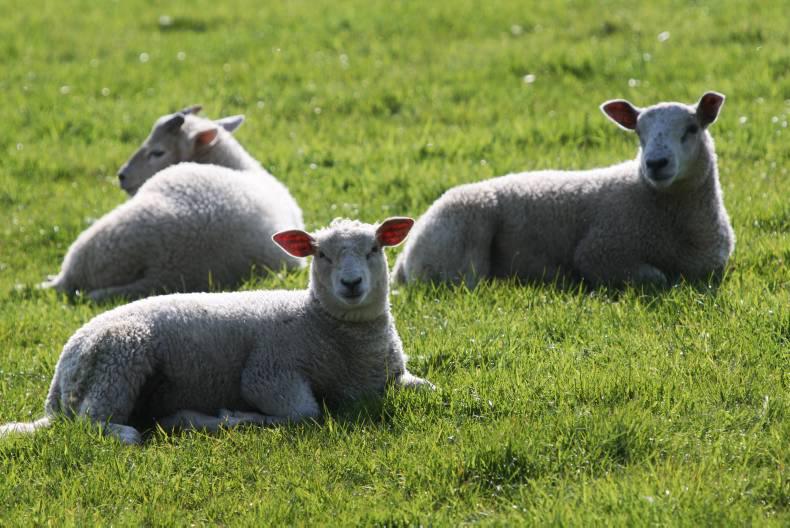
After a turbulent late spring and early summer, lamb prices have stabilised around a base of €4.60/kg, though there were reports last week of groups and regular sellers getting as high as €4.80-€4.90/kg. Sharp swings in lamb prices are a long-established feature of the sheep industry, and lamb has traditionally been the most expensive meat.
To try and understand the movements of the lamb trade, we need to consider the wider EU market for lamb.
EU production of sheep meat was stable in 2014, but this masks great swings between member countries. The UK increased its production by 427,000 head to 14.8m, Romania by 224,000 to 8.1m, and small increases occurred in smaller sheep producing countries like Germany, Holland and Sweden. This was offset by falls in Spain, the biggest producer in the EU, of 251,000 to 11.7m head; Greece by 126,000 to 6.7m; Italy by 120,000 to 6.2m; and Bulgaria by 103,000 to 1.1m.
EU consumption declining
Lamb is unique in that it is the only meat of which the EU consumes more than it produces. Some 20% of all lamb eaten in the EU is imported. By far the biggest external supplier of this deficit is New Zealand, who supplied 82% of EU imports last year, with most of the rest coming from Australia.
This may lead to the perception that lamb consumption is robust in Europe, but the reality is that it has suffered a long-term decline, with average EU per capita consumption just under 2kg in 2014. The main markets for Irish lamb are stronger, with the UK at 4.5kg per person annually and the home Irish market at 4.1kg per person, but the French are lower at 2.7kg.
The progressive year-on-year decline in consumption is a worry for sheep producers, even though EU consumption remains well ahead of production.
Live exports
Trade flows of sheep meat and live lambs and sheep are also worth noting. While Ireland is the biggest net exporter of beef within the EU and the UK is the biggest net importer, the situation is reversed in sheep meat trading. Ireland exports 19,000 tonnes annually to France, while the UK exports 43,000 tonnes, almost three times as much. Ireland also exports 5,000 tonnes to the UK and small but growing amounts to other northern EU countries.
The UK also has significant markets in Hong Kong, where it sends 12,000 tonnes annually, and Germany for 6,000 tonnes.
Live sheep exports to Africa and the Middle East are also an important feature of the EU sheep industry. Some 1.8m head were exported last year, with Libya the main market with 1.2m sheep, followed by Jordan at 0.5m. These are also the main markets for the 170,000 live lambs exported, with Libya taking 78,000 of them, Jordan 38,000 and Lebanon 25,000.


SHARING OPTIONS