


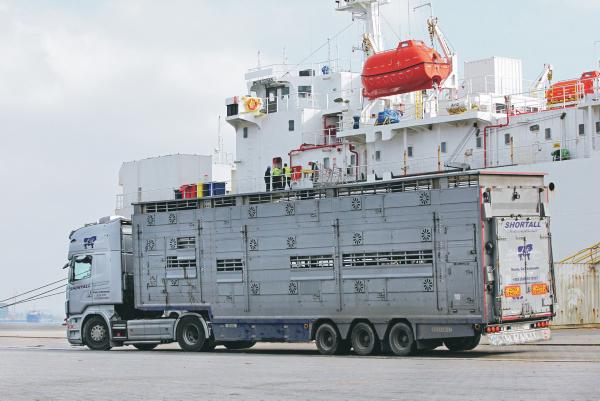
Where do you see the main export markets being for Irish weanling bulls and heifers in 2014?
The main export markets for live cattle for Irish exporters are Italy and the north African countries such as Morocco, Tunisia and Libya. We have existing customers that we will continue to supply, but we will also look at widening our customer base in all destinations.
Live exports to any market will be fundamentally driven by live cattle prices here. Our company’s main export markets will be for weanlings in the Libyan and Italian markets. In the past few weeks, there has been a strengthening of the beef price in Italy. This, along with an increase in French exports to north African countries, should result in reduced competition for live exports into the Italian market and increased demand for top-quality Belgian Blue, Limousin and Charolais cattle from Ireland.
What are the prospects in the Libyan market?
The Libyan market opened last year after being closed for 17 years. Before this, it was open due to export refunds, but now it is free trade. North African countries are getting wealthier and we need to be looking to these more affluent markets. Demand from Libya remains strong. We have contracts in place to export bulls from 300kg to 450kg to Libya. Currently, the Libyan market demands average and lesser quality (O/R grade) weanling bulls. With current weanling prices back slightly on last year, we are in a strong position to export stock.
There is also strong demand for Friesian bulls from 300kg to 450kg. I would urge farmers with bulls in this weight range not to panic and castrate them, but to also consider the live export avenue. For good quality Friesian bulls, prices of approximately €1.50/kg to €1.55/kg are attainable. The health cert for Libya requires that the bulls are vaccinated for IBR between seven and 30 days prior to departure.
Are there other avenues for farmers with heavy continental bulls over 400-450kg?
There is a live trade for all bulls from 300kg to 550kg. The main demand is for bulls from 300kg to 450kg. However, there is also an export market for heavier bulls up to 550kg. We have secured an order for the next five to six weeks for a number of heavy, slaughter-fit bulls at 600kg of all breeds except Friesian.
Farmers whose systems have been bulls should not castrate based on a knee-jerk reaction. There has been a swing towards castration of lighter bulls, but farmers should be aware of the fact that the export market requires bulls from 300kg to 450kg but not steers. If too many males are castrated, this will limit our export markets.
Will there be more life in the Italian market this year?
The Italian market has strengthened in the past few weeks. Beef prices have increased and there are now competing avenues for French cattle, which should hopefully improve our competitiveness. It should be a good year for exports to Italy; lower numbers will ultimately lead to higher prices. This will be good for Irish farmers who continued to breed for the Italian market. Strong Italian demand in the past few years has resulted in steady market prices of €2.80/kg to €3.20/kg. The downside for us is the lower supply of Irish-born Belgian Blue cattle is limiting the available volumes to export.
Are there other high-value export markets open to us?
Demand in Tunisia is for similar type cattle to what we export to Italy – high quality U+ and E grade Blues, Charolais and Limousin. This market adds competition for top-quality cattle. One of the downsides to this market for us is the fact that cattle cannot be shipped and need to be delivered by truck. The second is the fact that cattle for Tunisia must be from herds which are free from Johne’s disease. This is a huge barrier to the market.
These factors add substantial costs to the system for us and limit us to a certain extent from the market. However, increasing exports from France to Tunisia will help to reduce competition for markets closer to us.
The Algerian market is strong, but we cannot go there with live exports due to restrictions in the health certificate related to a 30-day quarantine period.
French live exports are not subject to the same quarantine period. In the last few weeks, two consignments consisting of approximately 7,000 head of stock were exported to Algeria from France. These were U+ cattle for which farmers received prices of €2.80/kg to €3.00/kg at the French port. This is positive for us, as it reduces the number of high-quality stock available to the Italian market.
Do you see any prospects for the live trade to Britain?
Personally, I would love to see the live market opened up between Ireland and Britain. Last year, we exported a number of truckloads of predominantly Belgian Blue/Limousin cattle to Britain. The opening of the route from Rosslare to Fishguard for live shipping of cattle is a positive one. These consignments were mainly for cattle finishers supplying the butcher trade.
We need a change of mindset on the behalf of the UK supermarkets to allow Irish born, British-finished cattle to receive similar prices on the supermarket shelf as British-born and finished cattle. Supermarkets and consumers need to be convinced that this beef product meets the same EU regulatory standards whether born in Ireland or Britain. Bord Bia and the IFA need to use their available resources to help change this mindset.
Italy imports cattle from many other European countries, yet there is no discrimination on the retail shelf for Italian-born and finished cattle over Irish-born cattle and those born in other countries. We are in the EU – there should be no divide between countries.
Will there be strong shipping demand for lambs to Libya this year?
The Libyan demand for lambs is primarily based around Muslim festivals. Spain and Romania are Libya’s other main sources of lamb. The message from our customers is that they are happy with the quality of our product, which they feel is superior to that which is coming from Spain and Romania. There is one slight issue: they prefer lambs with long tails. Last year, approximately 10% of the lambs we supplied to the market had long tails. I envisage that demand will be significant this year and will be mainly from June through to October, and again will be price-driven.
The main demand will be for 35-50kg lambs and it is critical that lambs are weaned correctly for the boat trip. This is the case for lowland lambs, and especially for light lambs. Lambs should be weaned a month and eating meal in order to be suitable for shipping.



SHARING OPTIONS