


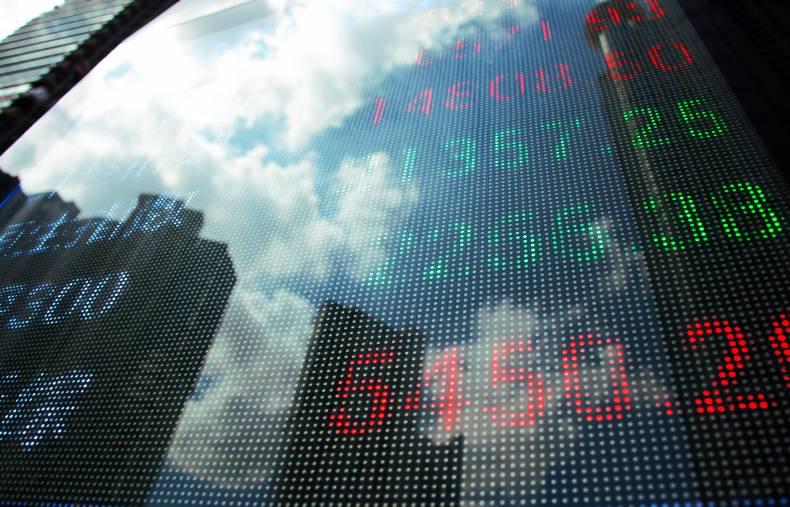
Global financial markets continue to be plagued by volatility amid fears for the economic health of the Chinese economy. On Monday, China’s benchmark stock exchange in Shanghai collapsed by 8.5%, with the knock-on effect rippling across the globe, sending western markets into freefall in what quickly became known as Black Monday.
More than €100bn alone was wiped off the value of the FTSE 100 in London and the Dow on Wall Street during Monday’s rout.
Chinese losses continued into Tuesday, with both indexes in Shanghai and Shenzhen slumping by a further 7.6% and 7.1% respectively. Stock markets in Europe and the US rallied strongly on Tuesday morning as they looked to reverse the previous day’s damage.
However, markets in the US abruptly plummeted at the close of Tuesday’s trade, reversing all of that morning’s gains.
The erratic trading continued on Wednesday, with markets in Shanghai and London recording early losses before rallying throughout afternoon sessions.
At the time of going to print, traders in New York were preparing for a major surge in buying when markets there reopened.
The volatility that has engulfed global financial markets over the past days stems from uncertainties around the economic health of China. As the world’s largest importer of metals, grain commodities and energy, China has been the engine room for global demand growth over the past decade.
Investors are nervous that a slowdown in the Chinese economy will lead to global supply gluts for oil and other commodities.
Markets plunged into turmoil last Friday and Monday when fresh data showed China’s manufacturing sector was shrinking at its fastest pace in six years, economic growth had weakened and exports were declining.
As a result, markets plummeted on Monday, sending commodity prices to their lowest level this century as panicked investors sold off risky assets.






SHARING OPTIONS