El Niño gathering strength and likely go into 2016
Forecasters say the El Niño weather event may increase rainfall on the US west coast, where drought has hampered milk production, but could cause droughts in Australia and New Zealand.
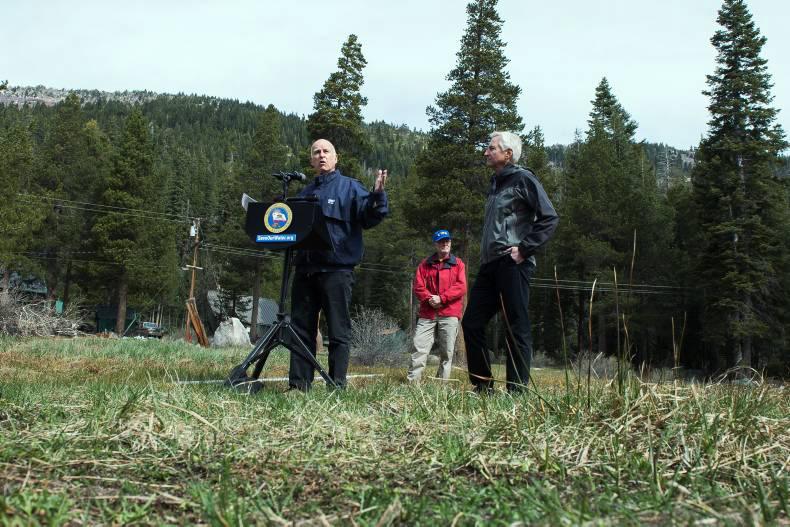
California governor Jerry Brown speaks on drought at a snow survey on 1 April 2015.
ADVERTISEMENT
There is more than a 90% chance that El Niño will continue through the Northern Hemisphere’s winter and an 80% chance it will last into early spring of 2016 according to the NOAA (National Oceanic and Atmospheric Administration).
El Niño is an abnormal, yet periodic, warming of the central and eastern equatorial Pacific Ocean. It occurs every two to seven years, but a strong event has not occurred since 1997. El Niño warms this patch of the ocean for six to 18 months for reasons still not well understood.
NOAA forecasts the potential temperature and precipitation changes associated with El Niño will be minimal through the Northern Hemisphere’s summer, but will intensify into late fall and early winter.
ADVERTISEMENT
There is an increasing chance that this year’s El Niño may become the strongest since 1997-1998 and play a stronger role in US and Australia and New Zealand weather.
El Niño typically supports wetter conditions in the south west of the US and droughts in Australia and New Zealand.
This content is available to digital subscribers and loyalty code users only. Sign in to your account, use the code or subscribe to get unlimited access.
The reader loyalty code gives you full access to the site from when you enter it until the following Wednesday at 9pm. Find your unique code on the back page of Irish Country Living every week.
CODE ACCEPTED
You have full access to the site until next Wednesday at 9pm.
CODE NOT VALID
Please try again or contact support.
There is more than a 90% chance that El Niño will continue through the Northern Hemisphere’s winter and an 80% chance it will last into early spring of 2016 according to the NOAA (National Oceanic and Atmospheric Administration).
El Niño is an abnormal, yet periodic, warming of the central and eastern equatorial Pacific Ocean. It occurs every two to seven years, but a strong event has not occurred since 1997. El Niño warms this patch of the ocean for six to 18 months for reasons still not well understood.
NOAA forecasts the potential temperature and precipitation changes associated with El Niño will be minimal through the Northern Hemisphere’s summer, but will intensify into late fall and early winter.
There is an increasing chance that this year’s El Niño may become the strongest since 1997-1998 and play a stronger role in US and Australia and New Zealand weather.
El Niño typically supports wetter conditions in the south west of the US and droughts in Australia and New Zealand.
If you would like to speak to a member of our team, please call us on 01-4199525.
Link sent to your email address
We have sent an email to your address. Please click on the link in this email to reset your password. If you can't find it in your inbox, please check your spam folder. If you can't find the email, please call us on 01-4199525.
ENTER YOUR LOYALTY CODE:
The reader loyalty code gives you full access to the site from when you enter it until the following Wednesday at 9pm. Find your unique code on the back page of Irish Country Living every week.









SHARING OPTIONS