


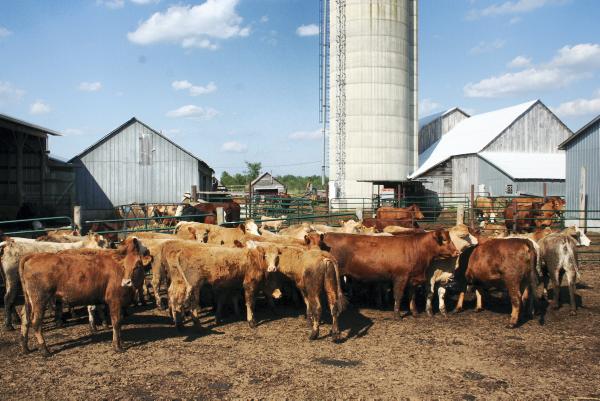
Eight months after the European Union and Canada reached political agreement on a multibillion euro trade deal, it appears that both sides are struggling to overcome major differences – central to which is agriculture.
Canadian prime minister Stephen Harper and his counterpart in the European Commission, José Manuel Barroso, agreed on the Comprehensive Economic Trade Agreement (CETA) last October. The two sides met again before the G7 summit in Brussels last week to try to find a solution to the problem. Unconfirmed reports suggest nothing was agreed.
Issues such as human rights guarantees, pharmaceuticals and image rights, as well as the volumes of agricultural goods which are due to be traded, are yet to be fully resolved. This has resulted in delays which have led to some commentators on both sides of the Atlantic believing that CETA, which held its first round of talks in 2009, could be renegotiated in its entirety.
As part of the political agreement last year, it was agreed that Canada would be permitted to export 50,000t of beef to Europe, while European dairy producers were permitted to send 17,000t of dairy produce to the world’s second-largest country.
European beef producers have long raised concerns that an influx of 50,000t of Canadian beef into the lucrative European restaurant market would adversely affect the trade here. Canadian dairy farmers, for their part, are fearful that 17,000t of high-value cheeses will lead to income hits.
In an attempt to ease unrest in the seafood producing provinces of Newfoundland and Labrador, the Canadian government is reported to have made a CN$400m offer to compensate seafood producers for the impact of lifting imports. Calls are being made to do the same for the dairy sector.




SHARING OPTIONS