A weaker pound is better for UK farming, according to Graham Redman.
ADVERTISEMENT
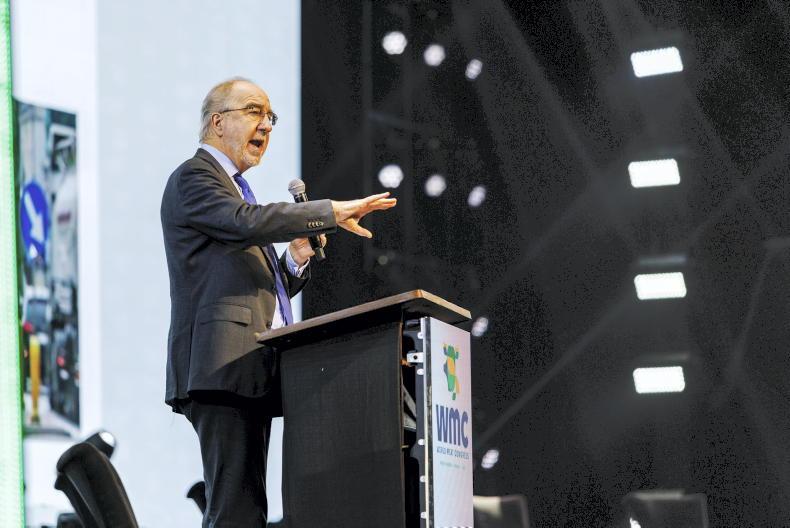
Graham Redman, Andersons, told the Irish Farmers JournalNavigating Global Trade conference in Belfast this Thursday morning that there is a strong co-relation between the exchange rate and UK farm profitability. He said that the relationship between the pound and euro is fundamental for the fortunes of the UK for two main reasons. Firstly, farmers’ subsidies are calculated in euro and then converted into sterling each September. As was seen this year, there was a short-term Brexit upside when the CAP payment was converted into sterling.
Eurozone
But, more importantly, he added that the majority of UK exports are made in the eurozone. Therefore, if the pound is strong, UK exports cost more in foreign currencies and imports into the UK become cheaper in sterling terms. If sterling weakens, as has been the case since the Brexit vote, it supports UK domestic prices. He also said that commodities are the centrepiece of the agri-economy. Following a currency devaluation, he said that commodities rise in price first as they are only prices at the point of sales so their response is instant. However, the impact for the cost of inputs is priced for a period of time and is therefore delayed. So the benefit to the weakening sterling has been instant on the sale of agri-outputs, but delayed in the price of inputs.
ADVERTISEMENT
He concluded that a weaker pound is better for UK farming.
Listen to an interview with Declan Billington, chairman of the Northern Ireland Food and Drinks Association, on Brexit prospects for the industry in our podcast below:
This content is available to digital subscribers and loyalty code users only. Sign in to your account, use the code or subscribe to get unlimited access.
The reader loyalty code gives you full access to the site from when you enter it until the following Wednesday at 9pm. Find your unique code on the back page of Irish Country Living every week.
CODE ACCEPTED
You have full access to the site until next Wednesday at 9pm.
CODE NOT VALID
Please try again or contact support.
Graham Redman, Andersons, told the Irish Farmers JournalNavigating Global Trade conference in Belfast this Thursday morning that there is a strong co-relation between the exchange rate and UK farm profitability. He said that the relationship between the pound and euro is fundamental for the fortunes of the UK for two main reasons. Firstly, farmers’ subsidies are calculated in euro and then converted into sterling each September. As was seen this year, there was a short-term Brexit upside when the CAP payment was converted into sterling.
Eurozone
But, more importantly, he added that the majority of UK exports are made in the eurozone. Therefore, if the pound is strong, UK exports cost more in foreign currencies and imports into the UK become cheaper in sterling terms. If sterling weakens, as has been the case since the Brexit vote, it supports UK domestic prices. He also said that commodities are the centrepiece of the agri-economy. Following a currency devaluation, he said that commodities rise in price first as they are only prices at the point of sales so their response is instant. However, the impact for the cost of inputs is priced for a period of time and is therefore delayed. So the benefit to the weakening sterling has been instant on the sale of agri-outputs, but delayed in the price of inputs.
He concluded that a weaker pound is better for UK farming.
Listen to an interview with Declan Billington, chairman of the Northern Ireland Food and Drinks Association, on Brexit prospects for the industry in our podcast below:
If you would like to speak to a member of our team, please call us on 01-4199525.
Link sent to your email address
We have sent an email to your address. Please click on the link in this email to reset your password. If you can't find it in your inbox, please check your spam folder. If you can't find the email, please call us on 01-4199525.
ENTER YOUR LOYALTY CODE:
The reader loyalty code gives you full access to the site from when you enter it until the following Wednesday at 9pm. Find your unique code on the back page of Irish Country Living every week.








SHARING OPTIONS