


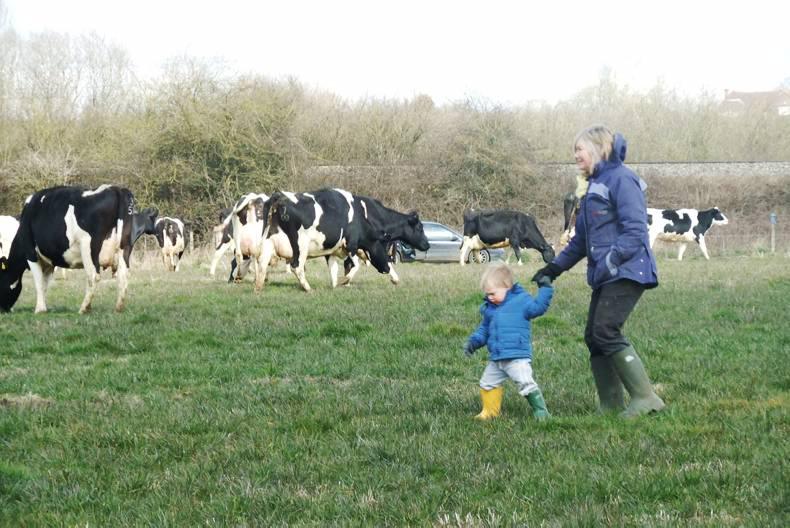
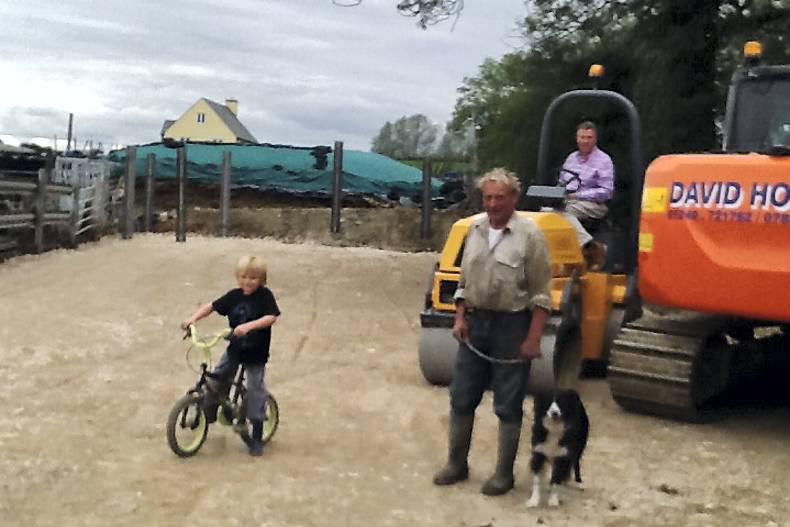
We have a family dairy farm in north Wiltshire, just off the M4. My grandfather founded one of the first black and white herds in Britain and my wife continued to breed a very strong herd, which produces milk from grass with good feet, udder and legs rather than milk yield. So, after many trips to Ireland, both social and business, we became aware that what the Irish farmers were doing from grass was what we wanted to achieve. We are currently doing 7,000 litres from a tonne of meal with year-round batch calving, three months’ serving, three months’ calving, three months’ serving and three months’ calving.
With our existing paddock system and recently installed farm tracks, we are hoping to achieve improved results from forage. Most local herds were housed early this year, but we have kept our cows out until mid-November to take advantage of the unusually vigorous autumn growth, which has helped tremendously as we are overstocked and under-foraged due to being shut up with TB.
Unfortunate
We, on the M4 corridor, were unfortunate to have six weeks of drought in July and August, with the dairy herd on full winter rations. We kept hearing of Welsh farmers with more than adequate rain, and Scottish farmers having to house animals because of saturated conditions. When the rain came, we probably over-fertilised and found that we had a large amount of high-protein grass producing ureas of 45 in the milk samples, making it very difficult for my daughter Ceri to make cheese. She and her husband, Chad, run a small factory on the farm, making a full range of dairy products, with cheese being the main one.
Because we supply First Milk with our surplus milk, we are in the unenviable position of receiving one of the lowest prices in Britain. When the tsunami of problems hit the world’s dairy industry, First Milk was in the worst possible position to survive, but it will survive because it has moved the debt on to the farmers by massively increasing the capital contribution. Such is the surplus of milk at the moment, that the stories are legion of processors giving some of their suppliers on annual contracts a matter of days to find a new outlet or taking them back on spot price. No one wants them, but we don’t see any coverage in the press about this. What sort of state is the British dairy industry in? How can we run a business on this basis?
We are trying to form a succession plan with our daughter and son-in-law and she is optimistic that it will come right, but how much time and how much optimism will it take?


SHARING OPTIONS