


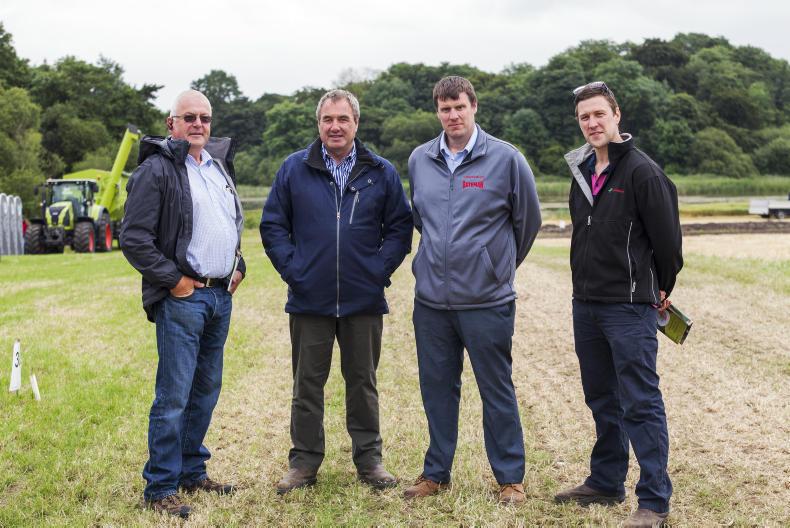
It had been an interesting but unsettling afternoon. I’d travelled down to Athy with an open mind to visit Jonny Greene’s farm with the BASE group. BASE Ireland is part of a European association of farmers who are committed to conservation agriculture.
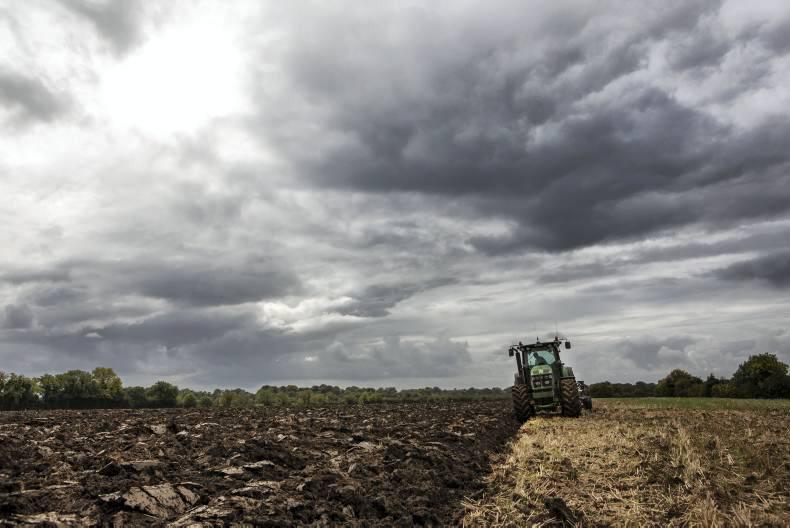
These are the sort of guys who throw up at the sight of a plough. Even a min-till cultivator is enough to induce nausea, because BASE ideology is essentially about direct drilling.
So is BASE full of fundamentalists and fanatics? No. I felt quite comfortable in their company, provided you don’t mention the P word – which suited me fine. I’m not ploughing’s greatest fan and we share a common goal of soil improvement through sustainable cropping.
Of course, direct drilling is not new. It’s been around since the 1950s, but has failed to make a significant impact. But declining margins, soil deterioration and grassweed problems have resurrected direct drilling from oblivion.
In the UK, where blackgrass has become an epidemic, direct drilling has a newly recognised role in minimising grassweed germination. Conversely, the critics suggest that blackgrass (and sterile brome) has become a problem because of non-ploughing, but don’t listen to them. Poor rotations are much more of an issue.
Too revolutionary
But direct drilling has always been too revolutionary for most farmers, many of whom would see strip-till (or min-till) as a sustainable halfway house. Soil workability improves and carbon release is reduced and labour and fuel costs are lowered.
I’ve been a happy bunny in the min-till camp for a long time now. But the visit to Greene’s farm has left me pondering and unsettled. I’m like a happily married man who becomes enthralled by a flaxen-haired foreign temptress. I’ll explain.
Jonny Greene and his father banished the plough about 15 years ago. They observed, as many of us have, general improvement in their (drought-prone) soils and increased trafficability.
Ultimately, they progressed on to the Claydon drill, which led to further soil enhancement and decent yields. But, unlike most of us, the pioneering Greenes weren’t content to stop there.
The New Zealand-built Cross Slot disc direct drill was born 20 years ago, the brainchild of two soil scientists. It has three particularly notable qualities: it’s built like a battleship and can precisely drill into very high levels of crop residue like, for example, into cover crops (the Cross Slot system and cover crops go together like turkey and ham). They’re also wickedly expensive. Think new combine sort of money and that’s for just a three-metre drill.
This machine is so tough I’d say even the roughest and thickest Irish tillage farmer couldn’t break it or block it up. It’s built to cope with stones and neither will it pull them up like a tine drill does.
That’s not to suggest that Messrs Greene bought the Cross Slot for these reasons. In fact, it’s far from it – they have gentle hands and ideal tillage soils on a lovely farm.
No, I suspect they bought the Cross Slot primarily for one reason; arguably there isn’t another direct drill built today that will as accurately (and uniquely) place seed and fertiliser in all drilling situations.
Superb
But drills are only one aspect. Is the concept of direct drilling right? I still can’t answer that, but I can tell you Greene’s crops looked absolutely superb and were extremely convincing.
Would the system work on the very different soils of the Kildalkey plains? That’s what is unsettling me now, but you know what? Jonny Greene is married to a Kildalkey native and I’m beginning to think that might be as close as a Cross Slot gets to our gloopy goo.




SHARING OPTIONS