


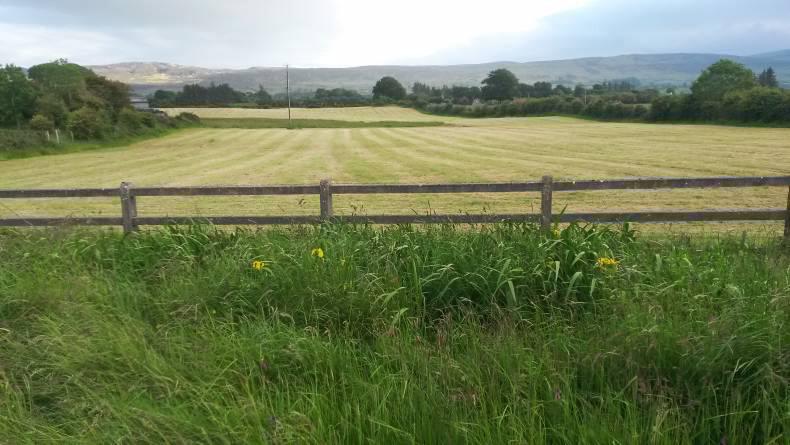
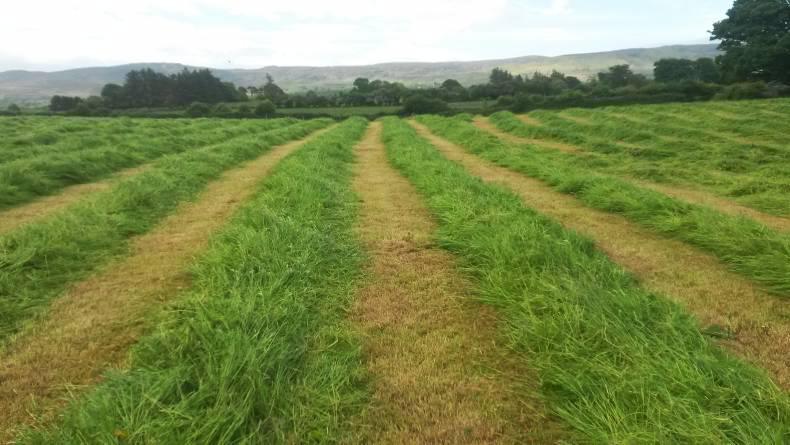
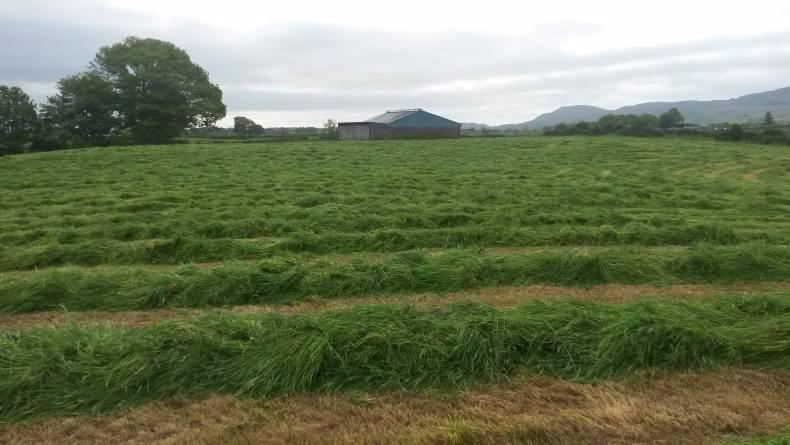
As Sligo was securing its place in the Connacht final last Saturday, I was unfortunately otherwise occupied. Due to the poor growth in May and a holiday booked for the beginning of June, the cutting and baling of this year’s silage crop was delayed and ended up clashing with Sligo’s fixture in the Connacht semi-final.
As I mentioned in my previous article, the cutting date this year is about two weeks later than last year. These two weeks were needed in order to allow the crop to bulk up while at the same time I am hopeful of not affecting the overall quality too much.
All silage made is round bales for the convenience of saving and feeding out during the winter.
In prior years I would arrange to split the amount of ground cut at any one time. I had two reasons for this, number one was in order to get some top quality silage as early as possible and the second reason was to limit the possibility of silage being cut or baled wet.
This method seemed to work, as in 2014 the test results from silage that was cut at the end of May showed a dry matter digestibility (DMD) of 72%.
This year, however, I am not expecting the crop to be of the same quality, due to the later cutting date.
As all silage ground is now back available for grazing and plenty of grass available for stock, I am starting to rearrange the groups of cattle on the farm.
All the autumn bulls have been weaned and are gaining on average 1.8 kgs per day over the past month.
I have just started feeding a small amount of meal to these bulls and keeping them on the best available grass.
These bulls will be sold live in the next 4-6 weeks. Heifer weanlings are remaining solely on grass until housing in November when they will be weighed and a decision made as to which ones to let to the bull.
Cows are being grouped together after weaning and kept on a restricted supply of grass from now until calving.
The big worry at this time of year is the possibility of summer mastitis. I am using various methods of prevention in the hope of avoiding any problems. Garlic licks have been introduced and cows will be brought in weekly to apply tar to their udders.
This will be continued for the month of July and into August until the risk period has passed.
Hopefully by that stage, Sligo are still progressing nicely through the championship and the first of the autumn calving cows will have calves on the ground!


SHARING OPTIONS