


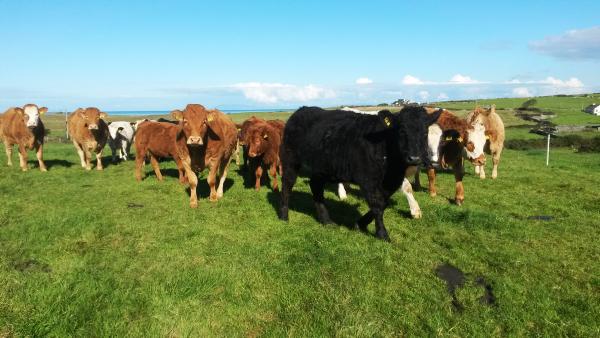
With the majority of the autumn herd now calved, attention is turning to breeding and getting cows back in calf as quickly as possible. There is still plenty of good quality grass available on the farm and priority is being given to calved cows.
Any cows that are yet to calve are being used to graze down paddocks before closing for the winter. Breeding heifers are also being kept on good quality grass to ensure they reach their target weight at breeding.
Usually breeding starts here on 1 November, so as to commence calving in the middle of August. Plenty of the cows are showing strong signs of standing heat already and the date and tag number of each cow showing signs is been recorded. This should help me identify and confirm cows that are on heat once the breeding season starts.
This year I am thinking about starting the breeding season one week earlier than normal. The average gestation period of cows calved to date is 288 days, which means some cows are in calf closer to 10 months rather than the perceived nine months.
Ensuring cows and heifers are served and hold in calf has to be one of the most important jobs on any suckler farm. This may seem like an obvious statement, but if the breeding females don’t calve, then a suckler farmer has no product to sell. For every day extra that a cow in the herd does not calve, the sales value of that product is reduced.
For every missed cycle for each cow or heifer, I use a simple formula for calculating the lost sales value. This formula: days, multiplied by kgs of live weight gain per day, multiplied by price per kg (21 x 1.25 x €2.40), gives me a loss in sales value of €63 for every 3 weeks that a cow or heifer is not served. Over a 20 cow herd this is €1,260 in lost sales, which multiplies if two or more cycles are missed.
Budget 2015
The cows and their heat cycle is not the only thing I’ll be keeping a close eye on this week. Budget 2015 which is being announced today, Tuesday, is an event of major interest to me, both from the point of view of the day job and the farm.
From tax rates and income bands to the overall state of the economy and social welfare rates, this is an announcement that will affect all in society for the next year and beyond. With my farming hat on, I am looking for a reduction in the income tax rate, increase of the standard rate band and no increase in capital taxes.
Hopefully as a result the Agri-taxation Review there will be some innovative measures to promote land transfer to the next generation of farmers. While actually very little is announced during the budget speech itself due to television time restraints, the real detail will be announced by the Department of Agriculture later in the evening.
Further details regarding the next Rural Development Programme and government funding of this plan would be very welcome. For the first time in a number of years, the budget may even bring some good news. Here’s hoping.


SHARING OPTIONS