


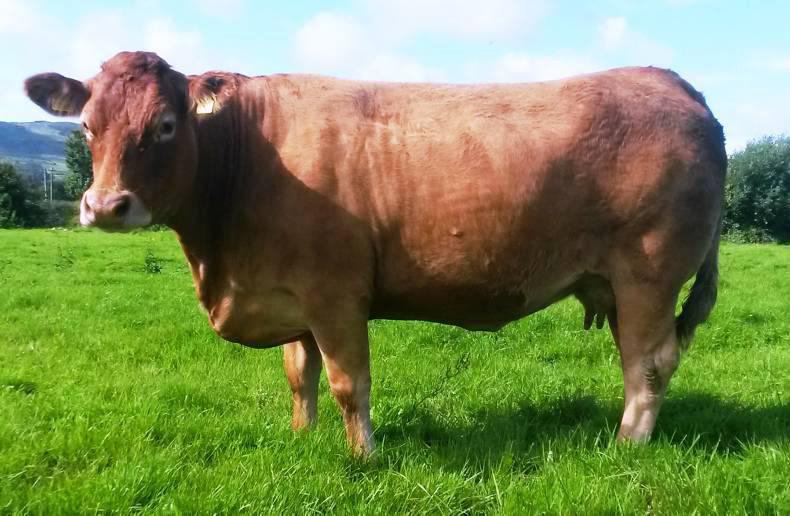
The first of this year’s autumn-born calves have started to arrive. The first heifer or cow calved was a bought-in Belgian Blue heifer with an Angus dam going back to the dairy herd. The heifer, a two and a half-year-old, needed a little help to deliver the newborn, which was an AI-sired Limousin bull.
All calves are weighed and measured and, this year, I intend to weigh all cows soon after calving. This particular calf weighed 51kg and the heifer weighed 550kg four days after giving birth.
This information is recorded on my own spreadsheets and entered on to ICBF.com. Details such as calving ease, calf vigour and calf size are also recorded and I will review this information before selecting the next bull to use on each cow.
This week, I was able to view the new updated replacement index of the herd, which was published on ICBF.com
Some changes have been made to how the index is compiled and these changes include increasing the weighting of milk and fertility traits.
These two traits are calculated using farmer records, such as farm weights and calving intervals. Therefore, the more accurate information that I can record, the more accurate my herd €urostar profile will be. I certainly feel that the index is getting more accurate each year and more into line with how I view my own cows.
When taking a subjective view of each cow in the herd, the weanling weight of the calf is what I consider the most important factor in judging my best and worst performers. What I would consider my worst-performing cows are rating low on the new replacement index and cows I consider my best performers are rating higher up the index. There are also a number of mid-ranking cows, which I feel should be rated higher and I expect these cows to move up the index as more data is recorded.
By way of example, one Limousin cow (number 268) sired by a popular Limousin bull has a replacement index value of minus €2 compared with another Limousin cow, (number 263) sired by a stock bull who has a replacement index of €151. The first cow is a one-star compared with the second, which is a five-star cow on the replacement index.
Both of these cows were born in 2007; however, cow number 263 consistently produces heavier calves at weanling than cow number 268. Another difference in performance between the two is that cow 268 has a calving interval of 380 days compared with cow 263 which has a calving interval of 356 days.
With cow 268 currently weighing 850kg, it looks like the right decision was taken earlier this year to cull this cow and bring in a more productive replacement.


SHARING OPTIONS