


We have had a very busy period on the farm recently and not because of calving cows or lambing ewes, I had to attend hospital for a small operation which meant spending four days in St Vincent’s Hospital, Dublin.
The health sector takes a lot of bashing but I received wonderful care from all that I had dealings with.
Knowing that I was going under the knife, we had to get a lot of routine jobs with the sheep done as after my hospital stay I was told to “take it easy” for a few weeks.
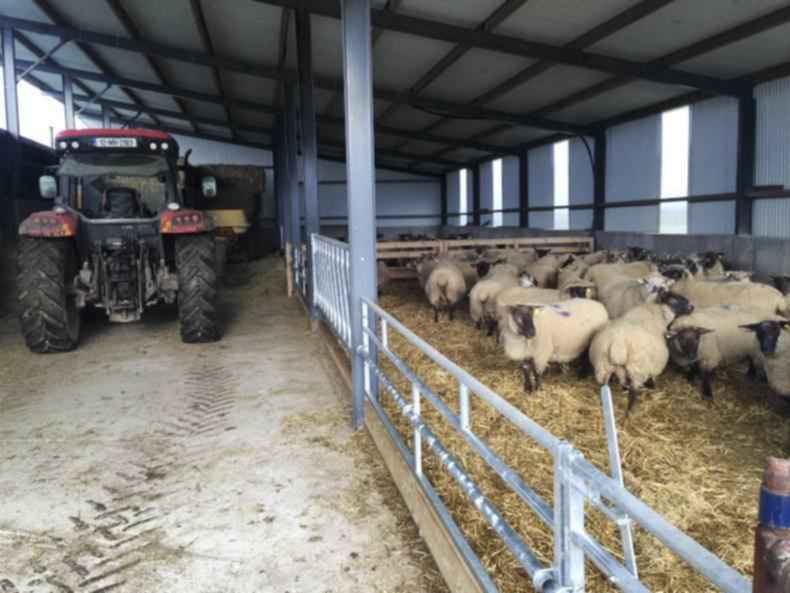
On this farm all ewes are housed according to lambing dates and scanning results and, most importantly, depending on weather/grass conditions. Lambing is due to commence from 10 February and housing began in the first week of Januar,y with multiple births being put in groups of 50 or thereabouts.
Feed
Good hay/haylage is offered ad lib, and we do get the haylage/silage analysised every year by our local feed supplier, depending on the year. We try to avoid feeding baled silage to ewes as they drag too much of it into the pen, thus leading to wet bedding and foot problems. Pit silage is a different story if you make it.
Along with the hay, we normally start feeding the ewes an 18% protein nut fairly soon after housing at .5kg/hd. We have found that feeding a little bit less nuts per day over a longer period decreases the amount of forage the ewe consumes and leads to less prolases in our experience.
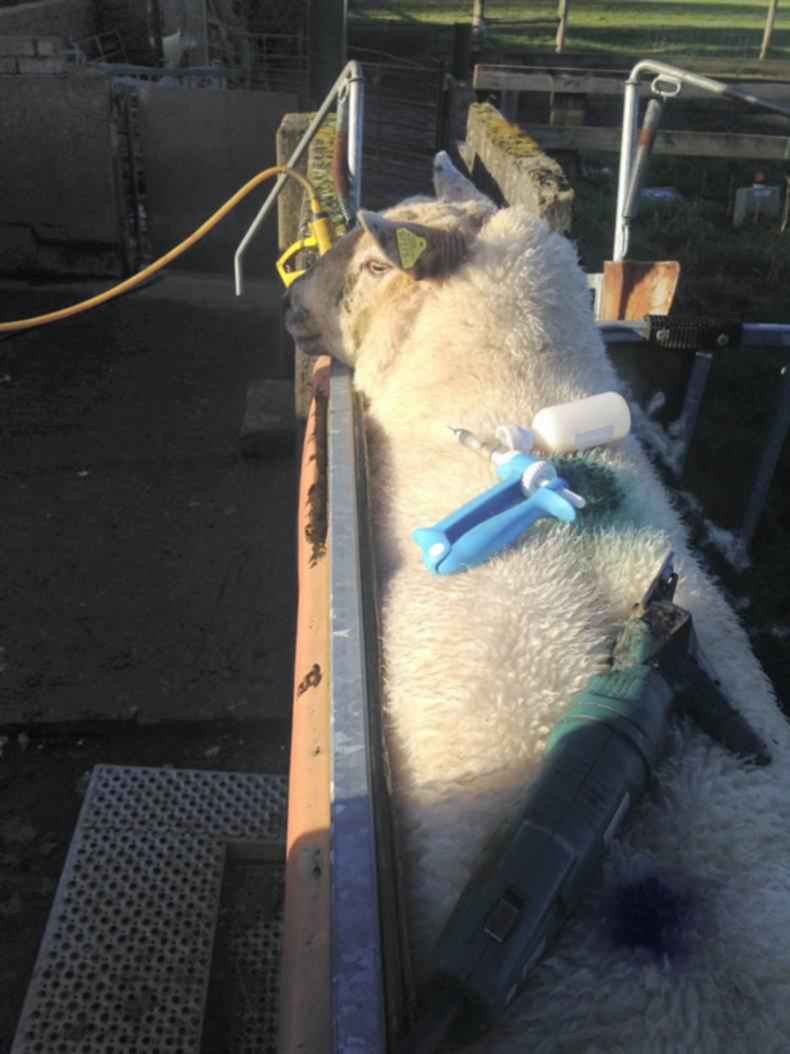
As ewes are housed here, they are all crutched, vaccinated, condition scored and fluke dosed. We normally do a faecal egg count through our vets. Lame and thin ewes are left out on good grass - we find housing these is a recipe for trouble - and will offer them 1kg/hd of nuts. Lame ewes may be housed just on point of lambing. This year we are going to try and keep them at grass altogether.
Combi-clamp
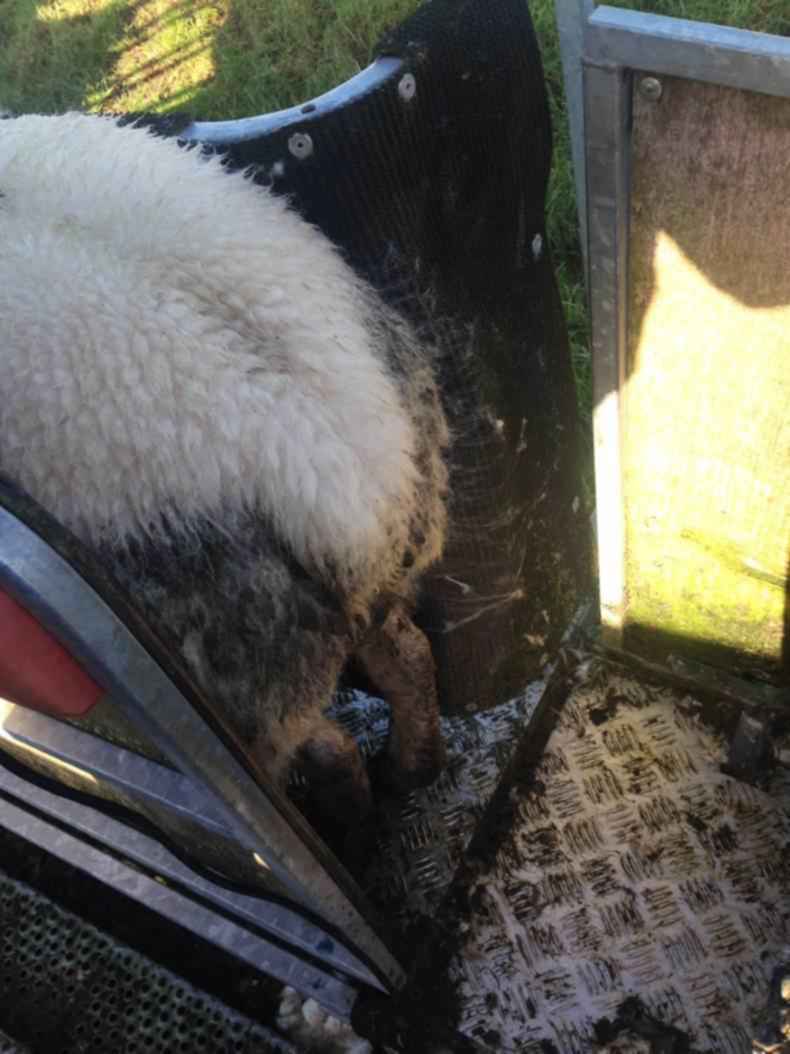
About ten years ago we bought a combi-clamp for taking the heavy work out of sheep handling. It is worked just by the weight of the operator. When a sheep passes through, you step on and she cannot move and then you have access to her head and tail.
It is designed to be adapted to all sizes of sheep. Combi-clamps are made by Ritchie’s in Scotland and it was expensive at the time, but has paid for itself tenfold since. Jobs like crutching, dosing, checking udders/teeth, etc, on ewes was a wrestling match before and now they are done with no physical handling of the ewe, apart from holding her head to dose. We could have ordered a weigh cells and an EID reader on the combi-clamp, looking back we probably should have.
Health
As farmers we sometimes put our health on the back burner, using excuses like “who will mind farm/stock etc and do feeding?” Well, with a small bit of notice and organisation it can all be done. It was no bother to my dad and I think mam even went down the yard to hold a gate for him!
It also put pressure on Fiona, my partner, looking after our daughter and her own business.
Luckily, we got all the heavy work done pre-hospital and we had offers of help from many friends.
As you read this I am back out the other side healthier and the farm is still here. I would just like to thank everyone for helping out.
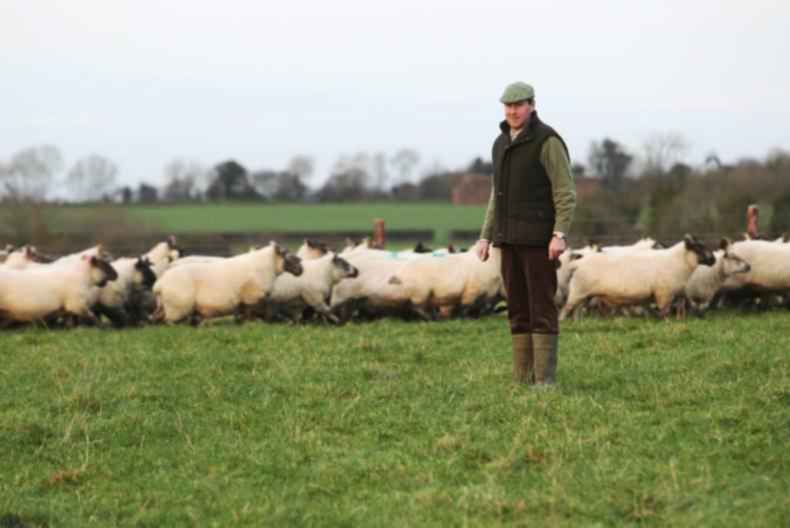
Ronan Delany runs a sheep and beef enterprise with a small herd of pedigree Belted Galloway cattle at Dunshaughlin, Meath. You can follow him on Twitter @gaulstownfarms.



SHARING OPTIONS