


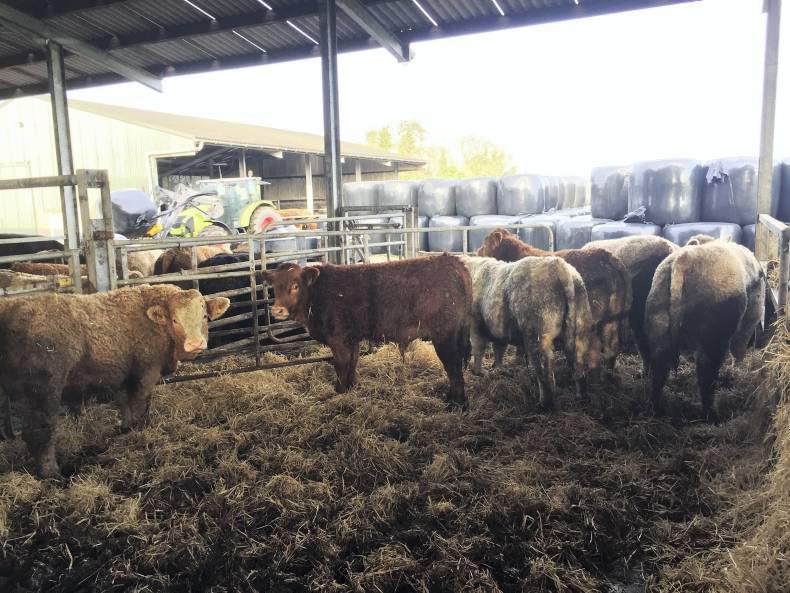
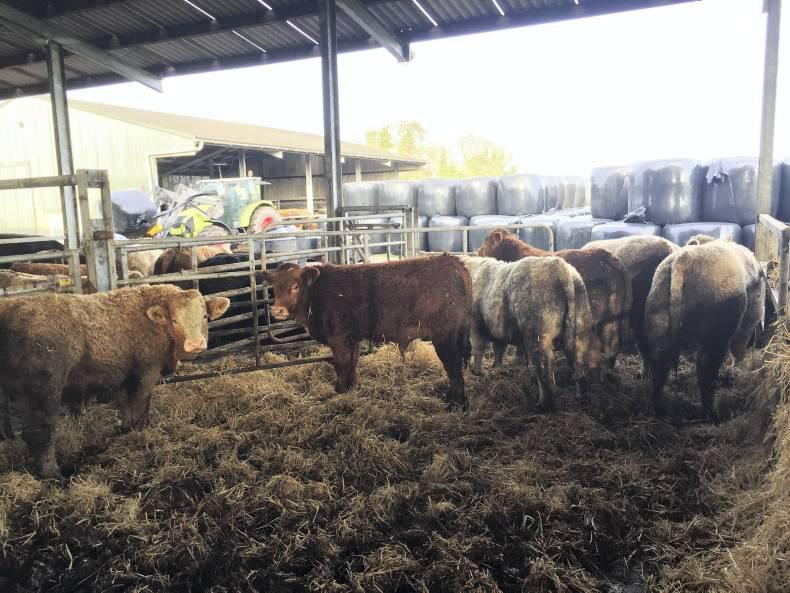
I was doubly happy waving-off our beef heifers last week. A much-needed pen was freed up just in time to completely wean our final batch of bulls. Also, carcass weights were up on last year. With similar birthdays, we gained an average of 12kgs of deadweight on 2014 – albeit killing nine days later. At best, a continental heifer will gain 0.8 kg of carcass daily on our diet (72% DMD silage + 4kg). Progress is progress.
Though we wean onto straw here, animals spend the winter on rubber slats. The full complement is now on rubber. The next hooves to hit the straw pens will be those of expectant mothers, who at present get restricted silage daily along with a mineral.
First calvers
In the coming days I might separate “fat” and “thin” cows and feed accordingly. I have my eye on a couple of 2015 first-calvers who look on the thin side. They’re mingling with their older herdmates now. However, part of me is aware that I’m judging them against mature cows that throve a little too hard during what was a superb grazing season.
Spring-calving cows need to be weaned at a body condition score (BCS) of about 3.25 and calve at a BCS of 2.5. The BCS is a measure of an animal’s reserves, or fatness. At a score of 3.25 we should just-about feel the “wings” of the spine with firm pressure at the loin. At a BCS of 2, individual ribs shouldn’t be obviously visible.
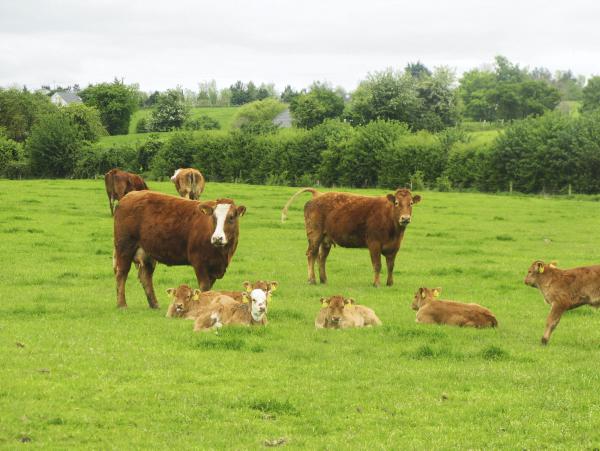
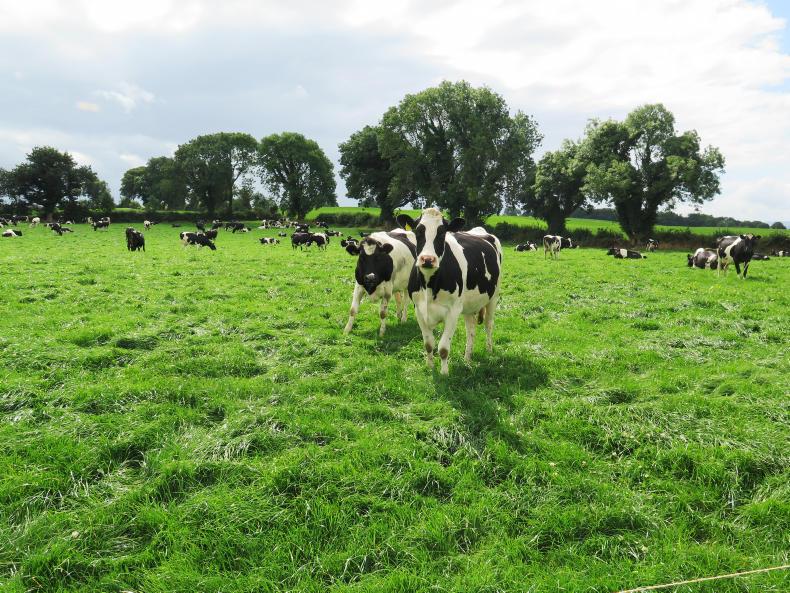
However, though we throw a net over all suckler cows in terms of these targets, breed plays a huge role in terms of where the animal deposits fat in her body. Dairy breeds tend to deposit more fat around their internal organs than continental animals. Although my Holstein-cross-Blonde cows may score poorer than my Limousin-cross-Simmentals; bigger internal fat reserves in my Holstein cow are not picked up through BCS.
In reality, both cows may have similar percentages of body fat to sustain them during the winter. Sorry Holsteins, your secret is a secret no-more. Don’t get too comfortable in that “thin cow” pen.



SHARING OPTIONS