


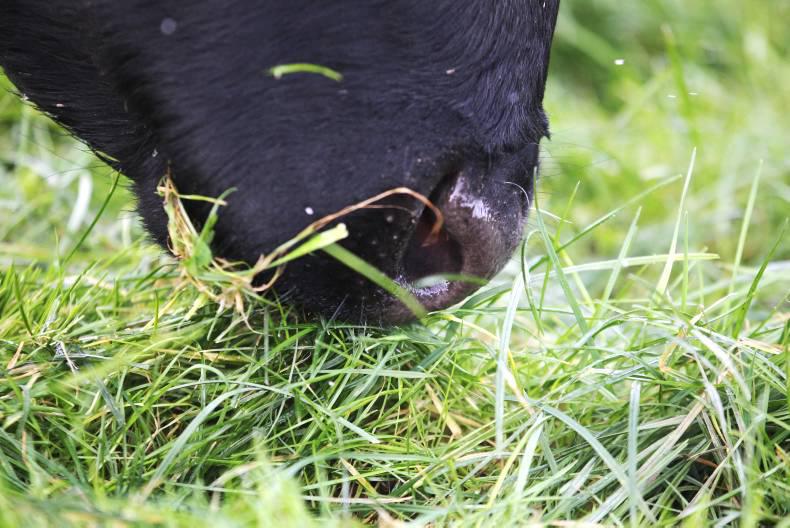
Spring seems to have arrived at last, with ground conditions improving massively over the last few weeks. We have taken the opportunity to move on to some ground that was reseeded last autumn and the cows are cleaning it out very well without much damage. Milk seems to be increasing and protein is rising again.
Cows are already starting to show very strong heats, so they haven’t suffered any big setbacks from their extended winter in cubicles, apart from a couple of cows that had teats walked on over the last week.
They were inside in cubicles when injured, but having closed the gate a few nights with five or six cows bulling, a couple of cut teats isn’t a bad result.
On the wetter farms in the area, the cows are still in on a silage diet, but this week should see most of them out to grass in line with the traditional St Patrick’s Day turnout. When this happens, there will be another flood of milk going into the local factories. Hopefully, all the seams will hold and we can find a home for all of this product.
Glanbia has been very busy lately putting loan facilities and another fixed milk price scheme in place for the next few years.
The loan scheme is very interesting, with repayments increasing and reducing in line with milk price. With loans available of up to €300,000 and a total fund of €100m available, it’s a significant development in the agri finance market.
Rather than using traditional securities, such as property or shares, farmers will now effectively be able to use their milk supply as security for this type of loan. It might be especially attractive to anyone buying cows to expand their herd.
However, this money will be paid back on time and anyone who takes up the scheme will have to be prepared to see a big hole in cashflow when loans are being paid back.
It will be interesting to see if these loans will be as easy to monitor and present to the accountant as traditional bank loans, especially with the complication of variable payments, etc.
The fixed milk price scheme of 29c/litre seems very skimpy on the face of it, especially as for the first 18 months the 29c/l includes any co-op top up.
At the same time, it is 4c/l ahead of the current market price, which is showing no sign of lifting. Also, with good levels of protein and fat, this might effectively be a final milk price of 33c/l to 35c/l.
Everyone will have to make up their own mind on this scheme and hopefully anyone who does take it up will see the market price pass out the fixed price at some point of the scheme. If this happens half-way through, it will break even, and if it happens before that, the scheme will probably be a loser.
The offered 29c/l base might be more valuable to some farms for the next year rather than waiting for the market to go to 35c/l. The longer this slump goes on, the more risk there is to all businesses.




SHARING OPTIONS