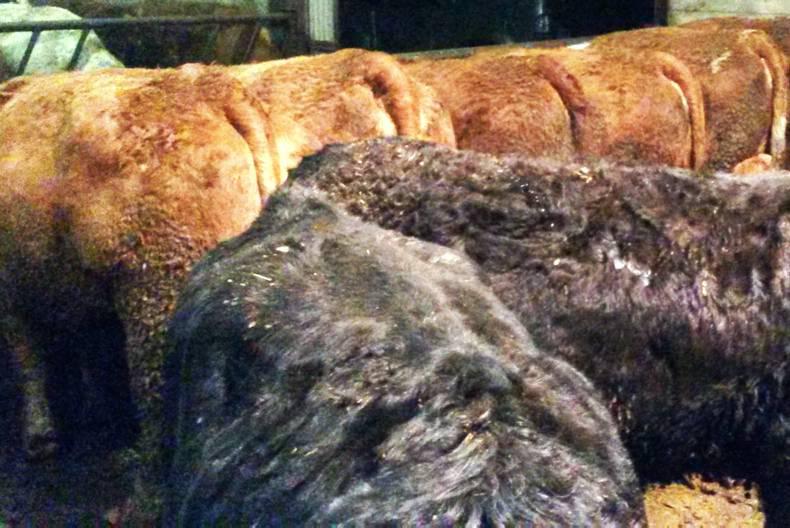
The day every cattle farmer dreads and fears most has to be the annual herd TB test. The hassle, inconvenience and work involved in passing all cattle through the crush twice in three days brings on a feeling only matched by an upcoming dentist appointment. An additional inconvenience with testing at this time of year is dirty ear-tags, and at times you might think a trip to Specsavers is required to read some ear-tag numbers.
The only words that allow a farmer to relax again are: “all clear”. Thankfully, we passed our latest TB test with no issues and, as ever, the words “all clear” are welcomed like a newborn calf leaping around in the spring sun.
Now that the dreaded herd test is over I can get on with planning for the last couple of months of the winter. A second lice treatment for all stock and an IBR vaccination for the calves are two of the first jobs on the list.
Next up is scanning the cows to hopefully confirm all are in calf. While the vet was on the farm for the herd test, I took the opportunity to take some blood samples to have analysed for possible mineral deficiencies.
Cows and breeding heifers are treated yearly with mineral and copper boluses and this was a good opportunity to test the mineral levels of the cows and breeding heifers to ensure my current mineral treatment plan is sufficient.
Expense
Managing a herd of suckler cows is an expensive business with a low profit margin, so every effort has to be made to ensure that cows are performing to their maximum potential. A little extra cost now, for the blood mineral analysis, may save costs in the future. However, the other outcome possible is that there is a deficiency in some minerals which if corrected can lead to increased output and a more profitable suckler herd.
With profit in mind and jobs such as lice treatment on hold until after the herd test, the last of the figures required to complete the profit monitor were entered to the ICBF website this week. With all boxes ticked to show completed sections, the profit monitor figures were emailed to my Teagasc adviser in minutes.
Hopefully the next week will see me get the results of the mineral analysis and the profit monitor results, which should make for some interesting reading.
I should then be able to decide if I want a visit to the dentist, optician or the bank manager. Or maybe if things are really bad, a visit to the doctor will be added to the list.
Related stories
TB in deer threatening farmers' livelihoods, says Wicklow IFA
Farmers want action on TB
The day every cattle farmer dreads and fears most has to be the annual herd TB test. The hassle, inconvenience and work involved in passing all cattle through the crush twice in three days brings on a feeling only matched by an upcoming dentist appointment. An additional inconvenience with testing at this time of year is dirty ear-tags, and at times you might think a trip to Specsavers is required to read some ear-tag numbers.
The only words that allow a farmer to relax again are: “all clear”. Thankfully, we passed our latest TB test with no issues and, as ever, the words “all clear” are welcomed like a newborn calf leaping around in the spring sun.
Now that the dreaded herd test is over I can get on with planning for the last couple of months of the winter. A second lice treatment for all stock and an IBR vaccination for the calves are two of the first jobs on the list.
Next up is scanning the cows to hopefully confirm all are in calf. While the vet was on the farm for the herd test, I took the opportunity to take some blood samples to have analysed for possible mineral deficiencies.
Cows and breeding heifers are treated yearly with mineral and copper boluses and this was a good opportunity to test the mineral levels of the cows and breeding heifers to ensure my current mineral treatment plan is sufficient.
Expense
Managing a herd of suckler cows is an expensive business with a low profit margin, so every effort has to be made to ensure that cows are performing to their maximum potential. A little extra cost now, for the blood mineral analysis, may save costs in the future. However, the other outcome possible is that there is a deficiency in some minerals which if corrected can lead to increased output and a more profitable suckler herd.
With profit in mind and jobs such as lice treatment on hold until after the herd test, the last of the figures required to complete the profit monitor were entered to the ICBF website this week. With all boxes ticked to show completed sections, the profit monitor figures were emailed to my Teagasc adviser in minutes.
Hopefully the next week will see me get the results of the mineral analysis and the profit monitor results, which should make for some interesting reading.
I should then be able to decide if I want a visit to the dentist, optician or the bank manager. Or maybe if things are really bad, a visit to the doctor will be added to the list.
Related stories
TB in deer threatening farmers' livelihoods, says Wicklow IFA
Farmers want action on TB
SHARING OPTIONS